

When you're looking to improve your home's comfort and energy efficiency, insulation batts are one of the most popular and practical solutions available. These pre-cut blankets of insulation material fit neatly between wall studs, ceiling joists, and floor frames, creating a thermal barrier that keeps your home warmer in winter and cooler in summer. Whether you're renovating an older property in Melbourne or building from scratch, understanding how insulation batts work and which type suits your project will help you make smarter decisions and get better results.
What Are Insulation Batts and How Do They Work
Insulation batts are pre-cut sections of thermal insulation material designed to fit snugly between standard building frame spacing. They're typically manufactured in dimensions that match common Australian building practices, such as 90mm, 430mm, or 580mm widths to suit timber or steel framing.
The most common materials used for insulation batts include:
- Glasswool: Made from recycled glass and sand, offering excellent thermal and acoustic performance
- Polyester: Synthetic, non-itchy fibre that's safe to handle and hypoallergenic
- Rockwool: Mineral wool made from volcanic rock, providing superior fire resistance
- Natural fibres: Including sheep's wool and hemp, ideal for eco-conscious projects
These materials work by trapping air within their fibrous structure. Since air is a poor conductor of heat, this trapped air slows down heat transfer between the inside and outside of your home. The thicker and denser the batt, the more air it traps, and the better it performs thermally.
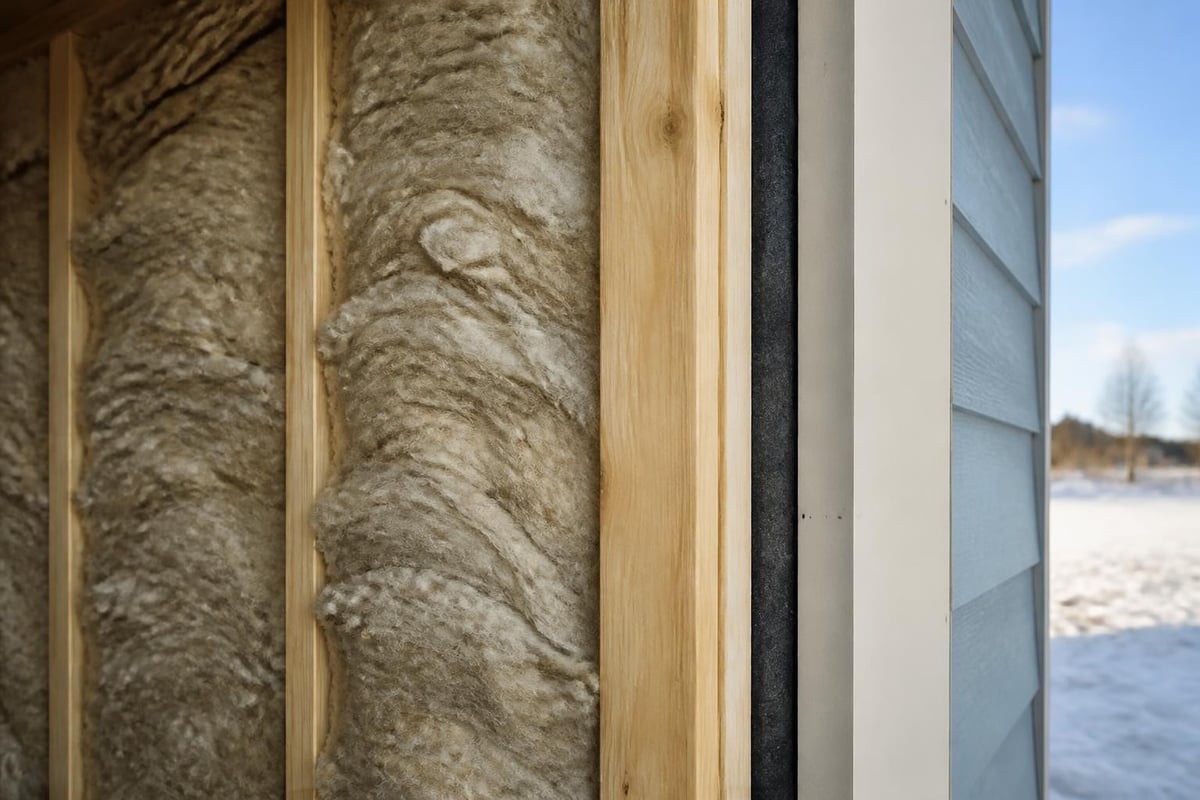
Understanding R-Values for Batts
The thermal performance of insulation batts is measured using R-values. Higher R-values mean better insulation performance. In Melbourne and across Victoria, the required R-value depends on your climate zone and where you're installing the batts.
According to ENERGY STAR guidance on R-values, Australian homes in climate zone 6 (which includes Melbourne) typically require:
| Application | Minimum R-Value | Recommended R-Value |
|---|---|---|
| Ceiling batts | R3.5 | R4.0 - R6.0 |
| Wall batts | R1.5 | R2.0 - R2.5 |
| Underfloor batts | R1.5 | R2.0 - R2.5 |
Choosing the right R-value matters. Under-insulating means you'll lose energy and comfort, while over-insulating in walls (limited by stud depth) can compress the batts and reduce their effectiveness.
Types of Insulation Batts for Different Applications
Not all insulation batts are created equal. Different areas of your home have different requirements, frame depths, and performance targets.
Ceiling Batts
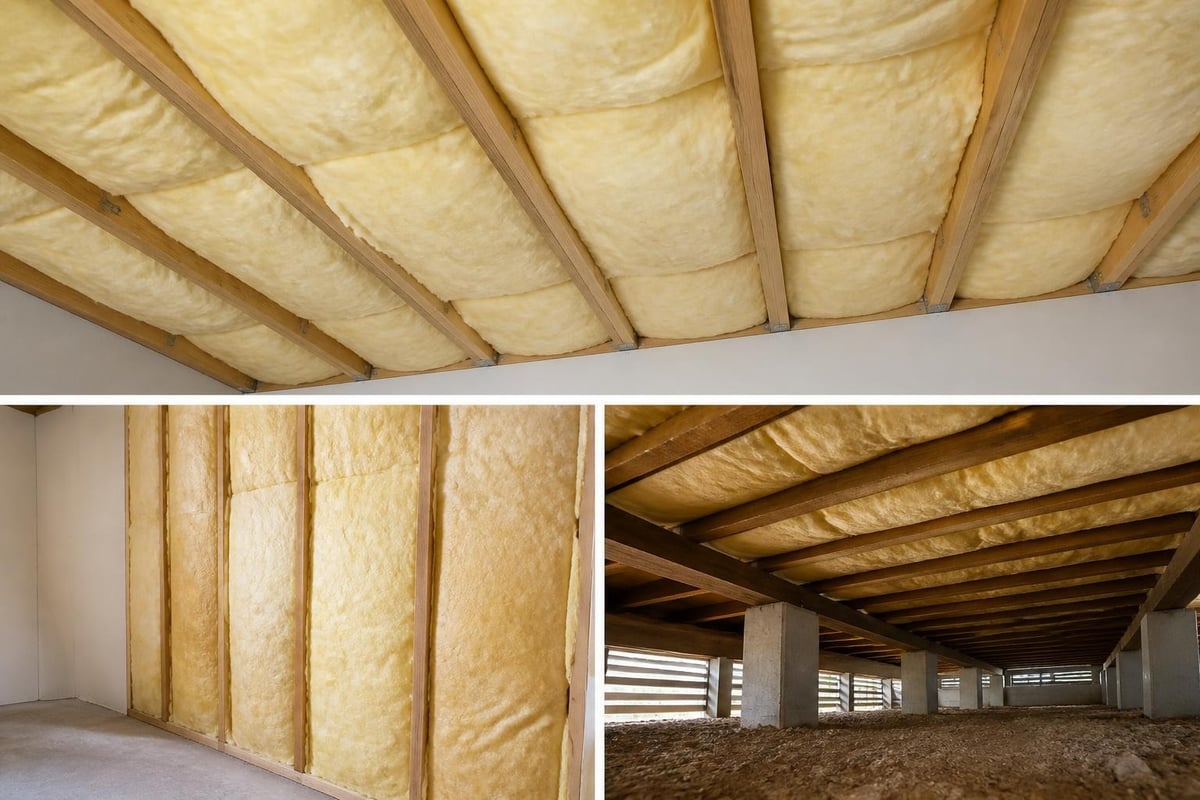
Ceiling insulation is critical because heat naturally rises. In summer, your roof space can reach extreme temperatures, and without proper ceiling batts, that heat radiates down into your living areas. Ceiling batts are typically thicker than wall batts, ranging from 90mm (R1.5) up to 210mm (R6.0) or more.
Most Melbourne homes benefit from R4.0 to R6.0 ceiling insulation. The Earthwool Blanket Unfaced R3.2 130mmx1200mmx13.5m 16.2m² - Knauf is a popular choice for standard ceiling applications, offering good thermal performance and easy handling thanks to advanced ECOSE® Technology.
Wall Batts
Wall batts are typically thinner because they need to fit within standard 90mm timber or 92mm steel stud frames. They usually range from R1.5 to R2.5. Wall batts improve both thermal comfort and acoustic performance, making your home quieter as well as more energy-efficient.
For Melbourne's climate, R2.0 or R2.5 wall and ceiling insulation provides year-round comfort. Wall batts also reduce noise transfer between rooms and from outside, especially useful in busy suburban areas.
Underfloor Batts
If your home has a suspended timber floor, underfloor insulation batts can dramatically improve comfort. Cold floors are a common complaint in Melbourne winters, and uninsulated floors can account for 10-20% of total heat loss.
Underfloor batts are designed to be supported by mesh, wire, or battens installed beneath the floor joists. They typically come in R1.5 to R2.5 ratings and specific widths to suit joist spacing. Proper installation is crucial to prevent sagging and maintain performance over time.
Choosing the Right Insulation Batts for Your Project
With so many options available, selecting the right product depends on several factors beyond just R-value.
Material Considerations
Glasswool batts remain the most popular choice in Australia due to their balance of performance, cost, and availability. Modern glasswool products like Knauf's Earthwool range use bio-based binders that are softer to touch and produce less dust during installation.
Polyester batts are ideal if you or your trades have skin sensitivities. They're completely non-itchy, contain no breathable fibres, and maintain their shape well over time. They're particularly good for DIY renovators who want comfortable handling.
Rockwool batts excel in fire-rated walls, party walls in townhouses, and anywhere superior acoustic performance matters. They're denser and heavier than glasswool, providing excellent sound absorption.
For those interested in sustainable building, natural insulation options like sheep's wool offer renewable, low-embodied-energy alternatives. The U.S. Department of Energy Life Cycle Inventory provides detailed environmental impact data useful for comparing insulation materials.
Faced vs Unfaced Batts
Some insulation batts come with a facing (typically kraft paper or foil), while others are unfaced.
Faced batts include:
- Kraft-faced: Acts as a vapour retarder in some climates
- Foil-faced: Provides radiant heat reflection and can contribute additional R-value when installed with an air gap
Unfaced batts are:
- More flexible in application
- Required when using separate vapour barriers
- Easier to handle in tight spaces
- Better for compression-fit installations
In most Melbourne applications, unfaced batts are preferred because Australia's building practices typically use separate wall wraps and vapour control layers rather than relying on faced batts.
Density and Performance
Batt density (measured in kg/m³) affects both thermal and acoustic performance. Standard glasswool batts range from 9-14 kg/m³, while high-density acoustic batts can reach 22-30 kg/m³.
Higher density means:
- Better sound absorption (important for acoustic insulation applications)
- More rigid batts that hold their shape
- Improved thermal performance in some cases
- Higher material cost
Installation Best Practices for Insulation Batts
Even the best insulation batts won't perform properly if installed incorrectly. According to the North American Insulation Manufacturers Association installation guidance, proper installation can mean the difference between theoretical and actual R-value performance.
Pre-Installation Preparation
Before installing batts, ensure your building cavities are ready:
- Check frame spacing: Measure stud or joist spacing to confirm it matches your batt dimensions
- Complete services: Install electrical wiring, plumbing, and ducting first
- Seal air leaks: Fill gaps around pipes, wires, and penetrations
- Check for moisture issues: Fix any leaks, drainage problems, or damp areas
- Ensure ventilation: Roof spaces need adequate ventilation to prevent condensation
Cutting and Fitting Techniques
Proper cutting ensures batts fit snugly without compression or gaps:
- Use a sharp insulation knife or safety knife with a long blade
- Cut batts slightly oversized (5-10mm wider) for a friction fit
- Make straight, clean cuts by compressing the batt against a straight edge
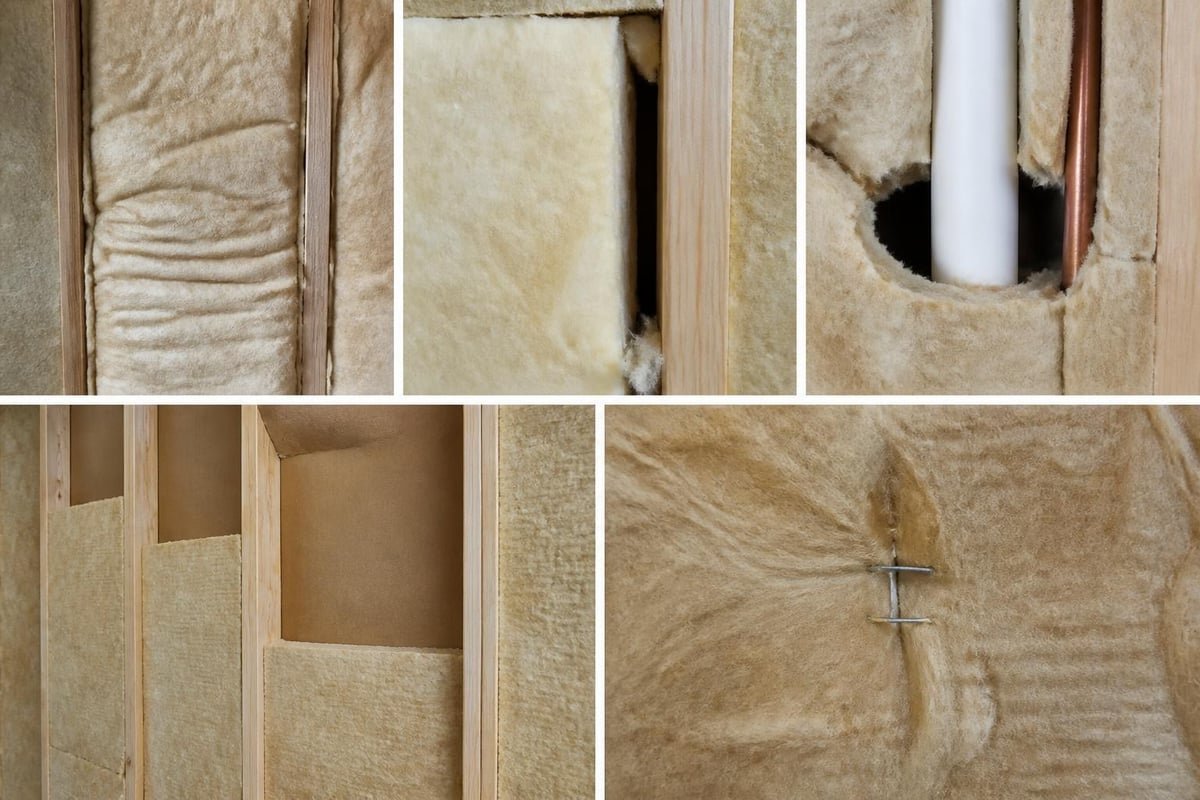
- Split batts around obstacles like wiring or pipes rather than compressing them
- Never compress batts to fit – compression reduces R-value significantly
According to Building Science Corporation's technical guidance, gaps and compression are the two most common installation errors that reduce real-world performance.
Critical Installation Details
The NAIMA technical tips and critical details guide provides pictorial guidance on proper installation. Key points include:
| Installation aspect | Correct practice | Common mistake |
|---|---|---|
| Cavity fill | Batts touch all six sides | Gaps at top, bottom, or edges |
| Around wiring | Split batt behind wiring | Compress batt in front of wiring |
| Obstructions | Cut and fit around precisely | Leave voids or compress heavily |
| Multiple layers | Stagger joints, no gaps | Stack joints, create air channels |
| Stapling | Inset stapling to sides | Face stapling that compresses edges |
Safety Considerations
Working with insulation batts requires appropriate safety measures:
- Wear long sleeves, pants, gloves, and safety glasses
- Use a properly fitted dust mask (P2 rated minimum)
- Work in well-ventilated areas
- Keep insulation dry and protected from weather
- Follow manufacturer's handling instructions
- Be aware of fire safety requirements per ASTM E970 testing standards
For detailed guidance on professional-quality installation, the Massachusetts Weatherization Field Guide offers updated best practices applicable to Australian conditions.
Acoustic Performance and Soundproofing with Batts
While thermal performance is the primary reason people install insulation batts, acoustic benefits are equally important. Batts absorb sound energy, reducing noise transfer between rooms and from outside.
Sound Transmission Class (STC) Ratings
Acoustic performance is measured using STC ratings. Higher numbers mean better sound blocking:
- Uninsulated stud wall: STC 33-35
- Wall with standard R2.5 batts: STC 39-42
- Wall with high-density acoustic batts: STC 45-52
For sound insulation in walls, high-density batts (20+ kg/m³) deliver noticeably better performance. They're essential for home theatres, music rooms, bedrooms adjacent to noisy areas, and party walls in townhouses or duplexes.
Multi-Layer Systems
For maximum acoustic control, combine:
- High-density acoustic batts between studs
- Resilient channels or acoustic clips
- Multiple layers of plasterboard
- Acoustic sealant at all joints and penetrations
This comprehensive approach addresses both airborne sound (voices, music) and impact sound (footsteps, vibration).
Cost Considerations and Project Planning
Understanding the costs involved helps you budget accurately and make informed decisions.
Typical Batt Pricing (2026)
Prices vary based on material, density, and R-value:
- Standard glasswool ceiling batts (R3.5-R4.0): $8-15 per m²
- High-performance ceiling batts (R5.0-R6.0): $15-25 per m²
- Wall batts (R2.0-R2.5): $6-12 per m²
- Underfloor batts (R1.5-R2.5): $7-14 per m²
- Acoustic batts (high-density): $12-20 per m²
- Polyester batts: Generally 20-40% more than equivalent glasswool
Cost vs Value Analysis
When comparing options, consider total installed cost, not just material price:
| Cost factor | Impact on decision | Considerations |
|---|---|---|
| Material cost | 40-60% of total | Higher R-values cost more but perform better |
| Installation labour | 30-50% of total | DIY saves money; complex jobs need professionals |
| Long-term energy savings | Ongoing benefit | Higher R-values pay back faster in Melbourne's climate |
| Acoustic benefits | Quality of life | Worth premium for bedrooms, living areas |
| Durability | 50+ year lifespan | Quality batts maintain performance indefinitely |
DIY vs Professional Installation
Many homeowners successfully install ceiling and wall batts themselves, especially in new builds or accessible renovation projects. However, professional installation makes sense when:
- Working in difficult-to-access roof spaces
- Installing in existing walls (requiring removal and replacement of linings)
- Dealing with complex framing or irregular cavities
- Needing compliance documentation for rental properties or building consent
- Tackling large-scale projects where speed matters
Moisture Control and Vapour Management
Proper moisture control is critical for long-term batt performance and building durability. According to EPA guidance on moisture control, moisture mismanagement is a leading cause of insulation failure and building damage.
Understanding Vapour Barriers
In Melbourne's climate (mixed heating and cooling), vapour barriers aren't always required with batts. However, understanding when they're needed prevents problems:
When to use vapour barriers:
- Bathrooms, laundries, and wet areas
- Air-conditioned spaces in hot, humid conditions
- Cold storage or temperature-controlled rooms
When NOT to use vapour barriers:
- Standard Melbourne residential walls (can trap moisture)
- Where breathable build wraps provide adequate protection
- Ceiling spaces with adequate ventilation
Preventing Condensation Issues
To avoid moisture problems with insulation batts:
- Ensure adequate ventilation in roof spaces and subfloor areas
- Use breathable sarking and wall wraps that allow moisture to escape
- Seal air leaks that can carry moisture into cavities
- Maintain continuous insulation without cold spots where condensation forms
- Keep batts dry during storage and installation
Wet insulation performs poorly and can lead to mould growth. If batts get wet during construction, they must be allowed to dry completely before enclosing.
Environmental Considerations and Sustainability
Modern insulation batts have evolved significantly in their environmental profile. Many products now incorporate recycled content and bio-based binders.
Recycled Content and Embodied Energy
Glasswool batts typically contain 60-80% recycled glass, significantly reducing embodied energy compared to virgin materials. Polyester batts often incorporate recycled PET bottles, giving new life to plastic waste.
When evaluating environmental impact, consider:
- Embodied energy: Energy consumed in manufacturing
- Recycled content: Percentage of post-consumer or post-industrial recycled material
- Formaldehyde emissions: Modern products like Earthwool use formaldehyde-free binders
- End-of-life recyclability: Whether the product can be recycled after removal
Operational Energy Savings
The environmental benefit of insulation batts far outweighs their embodied energy. Over a typical 50-year building lifespan, properly installed batts save 50-100 times more energy than was required to manufacture them.
In Melbourne, upgrading from no ceiling insulation to R4.0 batts can reduce heating and cooling energy by 40-50%, translating to significant carbon emission reductions over time.
Common Problems and How to Avoid Them
Even with careful planning, certain issues can compromise insulation batt performance. Understanding these helps you avoid costly mistakes.
Gap and Compression Issues
Gaps as small as 2-5% of the insulated area can reduce effective R-value by 20-40%. This happens when:
- Batts are cut too small
- Irregular framing creates odd-shaped cavities
- Installers rush and skip difficult areas
Compression reduces thickness and therefore R-value. Common compression problems include:
- Forcing thick batts into shallow cavities
- Compressing batts around ductwork or wiring
- Face-stapling instead of inset-stapling
- Storing batts under heavy loads before installation
Thermal Bridging
Timber or steel framing creates thermal bridges – paths for heat to bypass insulation. While batts themselves perform well, the overall system performance depends on minimizing thermal bridging through:
- Using continuous insulation on exterior walls where possible
- Choosing advanced framing techniques
- Adding thin foam sheathing over frames before cladding
- Ensuring batts fill entire cavities without voids
Settling and Sagging
While quality batts maintain their shape well, poor installation can lead to settling or sagging, especially in underfloor applications. Prevent this by:
- Using proper support (wire, mesh, or battens) for underfloor batts
- Ensuring friction-fit installations are snug but not compressed
- Choosing rigid or semi-rigid batts for vertical applications
- Following manufacturer's installation instructions precisely
Choosing and installing the right insulation batts makes a real difference to your home's comfort, energy bills, and environmental footprint in Melbourne's variable climate. Whether you're tackling ceiling insulation, wall batts, or underfloor systems, taking the time to understand R-values, materials, and proper installation techniques ensures you get lasting performance from your investment. Insulation Supplies Australia offers Victoria's widest range of quality insulation batts with expert advice, competitive pricing, and fast delivery across Melbourne, making it simple to find exactly what your project needs and get it delivered to your door.