

Wool insulation batts represent one of the most sustainable and high-performing natural insulation options available to Australian homeowners, renovators and builders in 2026. Whether you're comparing glasswool, sheep's wool or other batt materials, understanding the unique characteristics of wool-based products helps you make informed decisions about thermal comfort, acoustic performance and environmental impact. This guide explores the different types of insulation batts wool, their applications, performance specifications and how they stack up against synthetic alternatives.
What Are Insulation Batts Wool
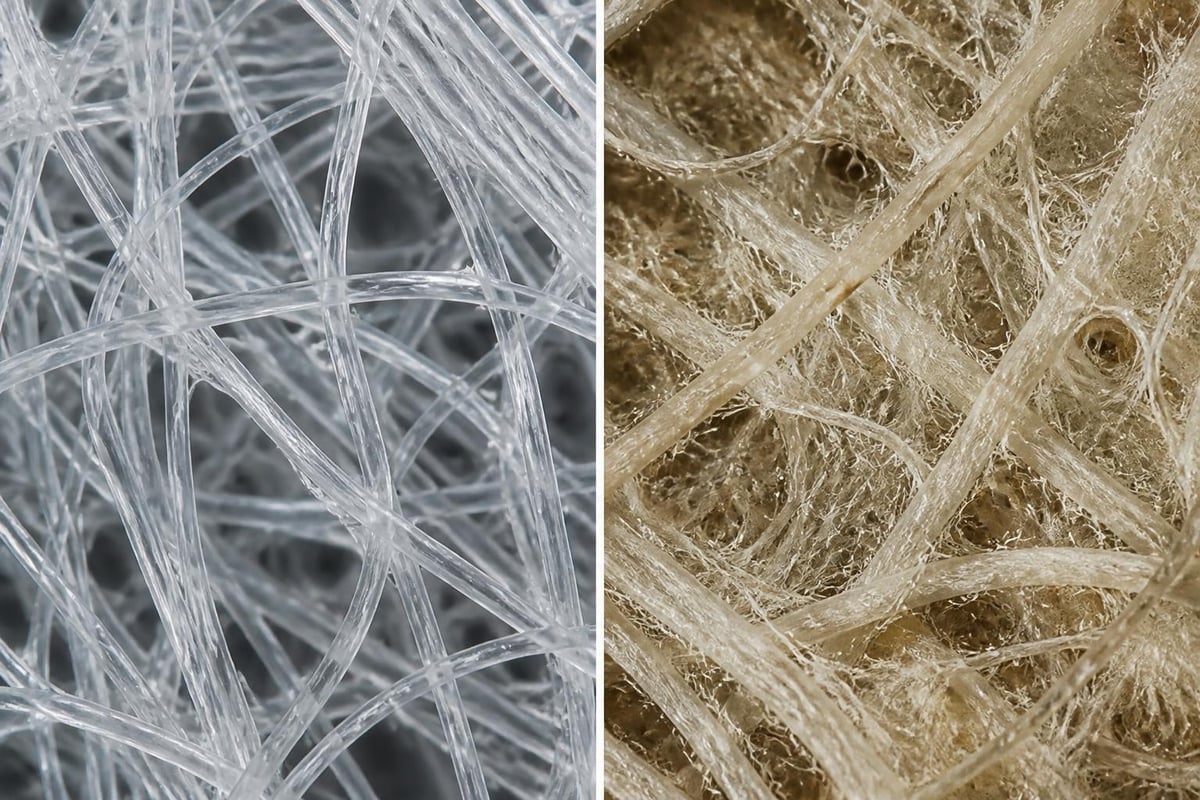
Insulation batts wool refers to pre-cut insulation sections manufactured from wool fibres, available in two main categories: glasswool (also called fibreglass) and natural sheep's wool. Both types share the fundamental structure of wool fibres creating millions of tiny air pockets that resist heat transfer.
Glasswool batts dominate the Australian market due to their proven performance, competitive pricing and widespread availability. These products use recycled glass and sand melted at high temperatures, then spun into fine fibres that trap air effectively.
Sheep's wool insulation batts offer a completely natural alternative manufactured from raw wool fibre, often sourced from farming by-products. The fibres are cleaned, treated (typically with boron compounds for fire and pest resistance) and formed into batts similar in appearance to glasswool products.
Key Characteristics of Wool Batt Insulation
- Thermal resistance: R-values ranging from R1.5 to R6.0+ depending on thickness and density
- Acoustic control: Excellent sound absorption across speech and noise frequencies
- Moisture management: Natural wool fibres can absorb and release moisture without losing thermal performance
- Durability: Long-lasting performance when properly installed and protected from prolonged moisture exposure
- Ease of installation: Pre-cut sizes fit standard Australian stud and joist spacing
The cellular structure of wool fibres creates natural air pockets that resist convective heat transfer while remaining permeable to vapour, supporting healthy building envelope performance.
Types of Wool Insulation Batts Available
Understanding the different wool batt products helps you select the right insulation for specific applications and performance requirements.
Glasswool Batts
Glasswool batts represent the most common form of insulation batts wool in Australian construction. Modern glasswool products incorporate ECOSE Technology or similar binder systems that reduce formaldehyde content and improve handling characteristics.
Standard glasswool batts suit ceiling, wall and underfloor applications with R-values matched to climate zone requirements. Products like the Earthwool range deliver reliable thermal performance with reduced environmental impact compared to traditional glasswool manufacturing.
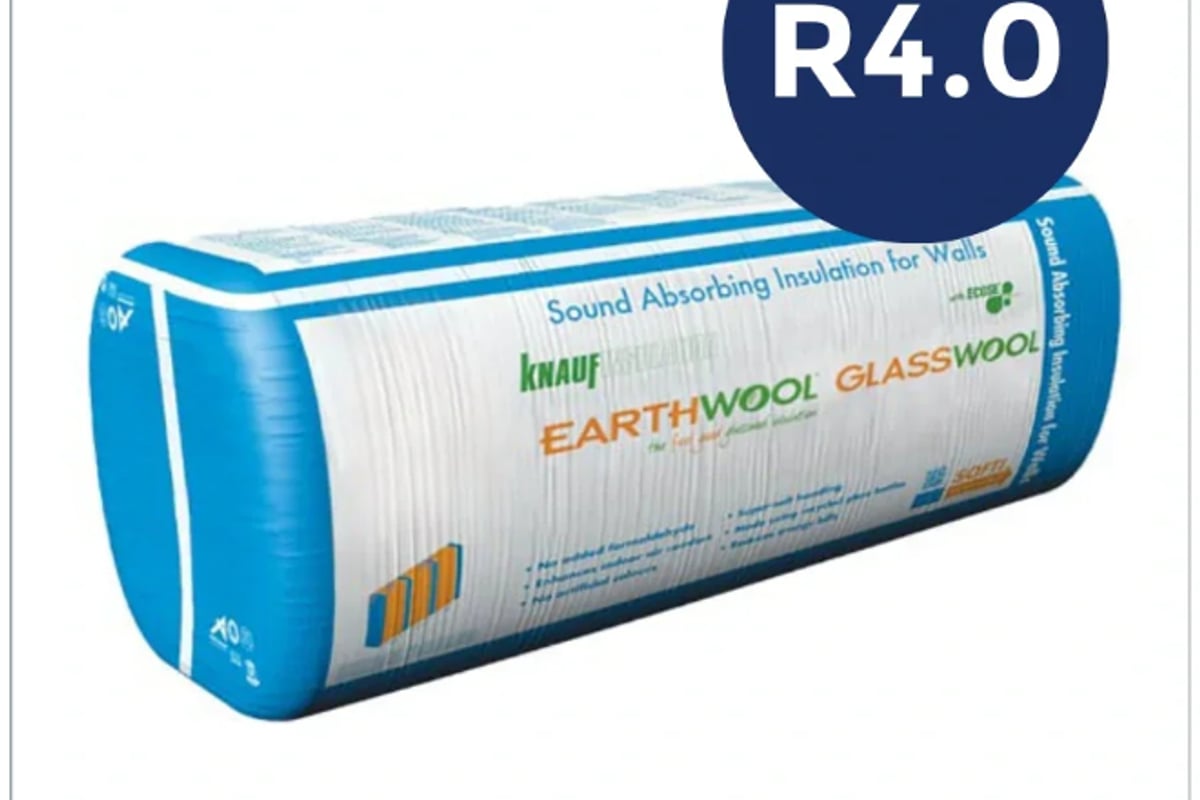
High-density acoustic glasswool offers enhanced sound absorption for walls, ceilings and floors where noise control matters. The Earthwool Sound Shield R4.0 by Knauf provides outstanding acoustic and thermal performance in a single product, manufactured using advanced ECOSE Technology for softer handling and lower dust. Measuring 140mm thick and weighing 22.6kg/m³, these batts deliver superior noise reduction ideal for residential and multi-residential applications where both thermal efficiency and acoustic comfort are priorities.
Cavity wall batts feature water-repellent treatments for masonry cavity applications where moisture exposure occurs during construction or from condensation risk.
Sheep's Wool Batts
Natural sheep's wool insulation batts provide an alternative for homeowners prioritising completely bio-based materials. These products typically achieve R-values comparable to glasswool at similar thicknesses.
Performance characteristics include:
- Thermal conductivity: λ values around 0.038-0.040 W/mK
- Moisture buffering: Can absorb up to 35% of their weight in moisture while maintaining insulation value
- Air quality: No synthetic binders or volatile organic compounds
- Carbon storage: Negative embodied carbon when lifecycle impacts are assessed
The hygrothermal performance of bio-based walls including sheep's wool has been extensively studied, demonstrating excellent moisture management in whole-wall assemblies.
| Batt Type | Typical R-Value Range | Primary Applications | Key Advantage |
|---|---|---|---|
| Standard Glasswool | R1.5 - R6.0 | Ceiling, wall, underfloor | Cost-effective, widely available |
| High-Density Acoustic | R2.5 - R4.0 | Party walls, studios, home theatres | Superior sound absorption |
| Cavity Wall Glasswool | R1.4 - R2.0 | Masonry cavity walls | Water-repellent treatment |
| Sheep's Wool | R2.0 - R4.0 | All applications | 100% natural, moisture buffering |
Performance Benefits of Wool Insulation Batts
Wool-based insulation batts deliver multiple performance advantages that extend beyond simple thermal resistance values.
Thermal Efficiency
The primary function of insulation batts wool is reducing heat transfer through building envelope assemblies. Wool fibres create stable air pockets that resist conductive heat flow effectively.
R-value selection depends on climate zone, application location and budget. Melbourne's climate zone 6 requires minimum R2.5 ceiling insulation in most cases, though higher values improve comfort and reduce energy costs. Understanding climate zones in Australia helps you select appropriate R-values for your location.
Wool batts maintain their thermal performance across temperature variations better than some rigid foam products that experience thermal drift over time.
Acoustic Performance
Both glasswool and sheep's wool excel at absorbing sound energy, making them ideal for acoustic insulation applications. The fibrous structure converts sound waves into minimal heat energy through friction.
Sound absorption coefficients (NRC ratings) typically range from 0.80 to 1.00 for medium and high-density wool batts, indicating excellent performance across speech and music frequencies.
Key acoustic applications include:
- Party walls between townhouses, units and semi-detached dwellings
- Internal walls surrounding bedrooms, home offices and media rooms
- Floor/ceiling assemblies in multi-storey homes
- Raked ceilings beneath roof spaces in open-plan living areas
Combining insulation batts wool with appropriate construction details (resilient channels, acoustic seals, mass layers) optimises sound insulation in walls and other assemblies.
Moisture Management
Natural wool fibres possess hygroscopic properties, meaning they absorb and desorb moisture vapour in response to relative humidity changes. This moisture buffering helps regulate indoor humidity and protects building materials from sustained high moisture levels.
Glasswool batts don't absorb moisture into fibres themselves but allow vapour transmission through the batt thickness. This vapour permeability supports healthy wall and roof assemblies when combined with appropriate vapour control layers.
Water-repellent glasswool products designed for cavity walls shed bulk water while maintaining vapour permeability. This prevents sagging and performance loss if batts contact moisture during construction or from occasional condensation.
Environmental Considerations
Sustainability credentials matter increasingly to Australian homeowners and builders selecting insulation products.
Embodied Carbon and Lifecycle Impacts
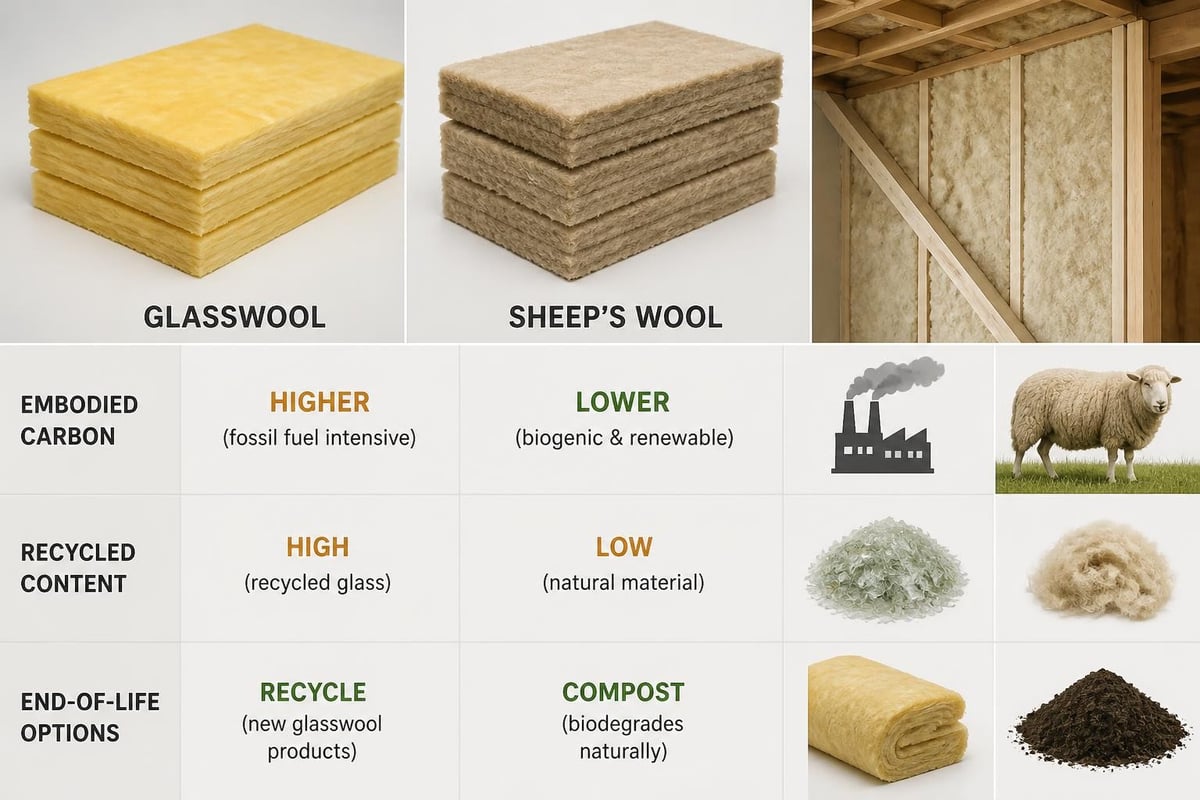
Sheep's wool insulation batts offer exceptional environmental performance when full lifecycle impacts are considered. The BAU-EPD for Isolena sheep's wool insulation demonstrates negative Global Warming Potential (GWP) values due to biogenic carbon storage in the wool fibres.
Glasswool batts have improved environmental profiles significantly in recent decades:
- Recycled content: Modern glasswool typically contains 60-80% recycled glass
- Manufacturing efficiency: Energy use per tonne has decreased through process improvements
- Reduced formaldehyde: ECOSE and similar technologies eliminate formaldehyde-based binders
- Longevity: 50+ year service life without performance degradation
Certifications and Standards
Look for third-party certifications when comparing insulation batts wool products:
- Environmental Product Declarations (EPDs): Verified lifecycle impact data available through programmes like Environdec
- Natureplus: European eco-label for sheep's wool products meeting strict health and environmental criteria (natureplus certification)
- CodeMark and BRANZ Appraisals: Australian compliance documentation for Building Code requirements
- ISO 9001 and ISO 14001: Quality and environmental management system certifications
Reading about natural insulation in Melbourne provides additional context for sustainable product selection.
Installation Applications for Wool Batts
Insulation batts wool suit multiple building applications, each with specific installation requirements and performance considerations.
Ceiling Insulation
Ceiling applications represent the largest market for glasswool batts in Australian homes. Heat rises, making ceiling insulation the highest priority for energy efficiency.
Installation process:
- Measure joist spacing and ceiling area to calculate batt quantities
- Select R-value appropriate for climate zone (minimum R3.5-R5.0 for most Australian locations)
- Lay batts between ceiling joists with edges touching but not compressed
- Cut batts to fit around services, penetrations and framing members
- Maintain clearances around recessed lights and heat-generating equipment
The best approach for ceiling insulation in Melbourne balances R-value, budget and installation complexity.
Wall Insulation
Wall cavities in timber-framed and steel-framed construction accommodate insulation batts wool cut to fit standard stud spacing. Most Australian homes use 90mm studs at 600mm centres, requiring batts sized accordingly.
Wall batt specifications:
- Thickness: 90mm for standard walls, 140mm for high-performance or acoustic applications
- Width: 580mm or 430mm to suit stud spacing
- Length: 1160mm, 1350mm or 2700mm depending on wall height and handling preference
Friction-fit batts stay in place during construction without additional fixings in most cases. For walls requiring enhanced acoustic performance, higher density products deliver better sound absorption.
Underfloor Insulation
Suspended timber floors benefit significantly from insulation batts wool installed between floor joists. This application reduces heat loss in winter and improves comfort in rooms above unheated subfloor spaces.
Underfloor batts require support systems to hold them in position:
- Wire mesh or plastic netting stapled to joist undersides
- Battens or timber strips fixed across joists at intervals
- Proprietary underfloor batt holders designed for quick installation
Products specifically designed for underfloor applications often include facing materials or come in convenient sizes for floor joist spacing. For comprehensive guidance, explore options for underfloor insulation suited to your project.
Roof Insulation
Metal roof applications use insulation batts wool or blankets placed directly under roofing to reduce radiant heat gain and improve thermal comfort. These installations typically incorporate reflective foil layers on one or both faces.
Roof insulation considerations:
- Compression: Avoid excessive compression that reduces effective R-value
- Ventilation: Maintain airflow paths to prevent condensation risk
- Fixings: Secure batts to prevent sagging or displacement in high wind areas
- Fire rating: Select products with appropriate bushfire attack level (BAL) ratings for your location
Combining bulk insulation with reflective layers optimises performance for roof insulation applications.
Comparing Wool Batts to Alternative Insulation Types
Understanding how insulation batts wool compare to other products helps you make informed material selections.
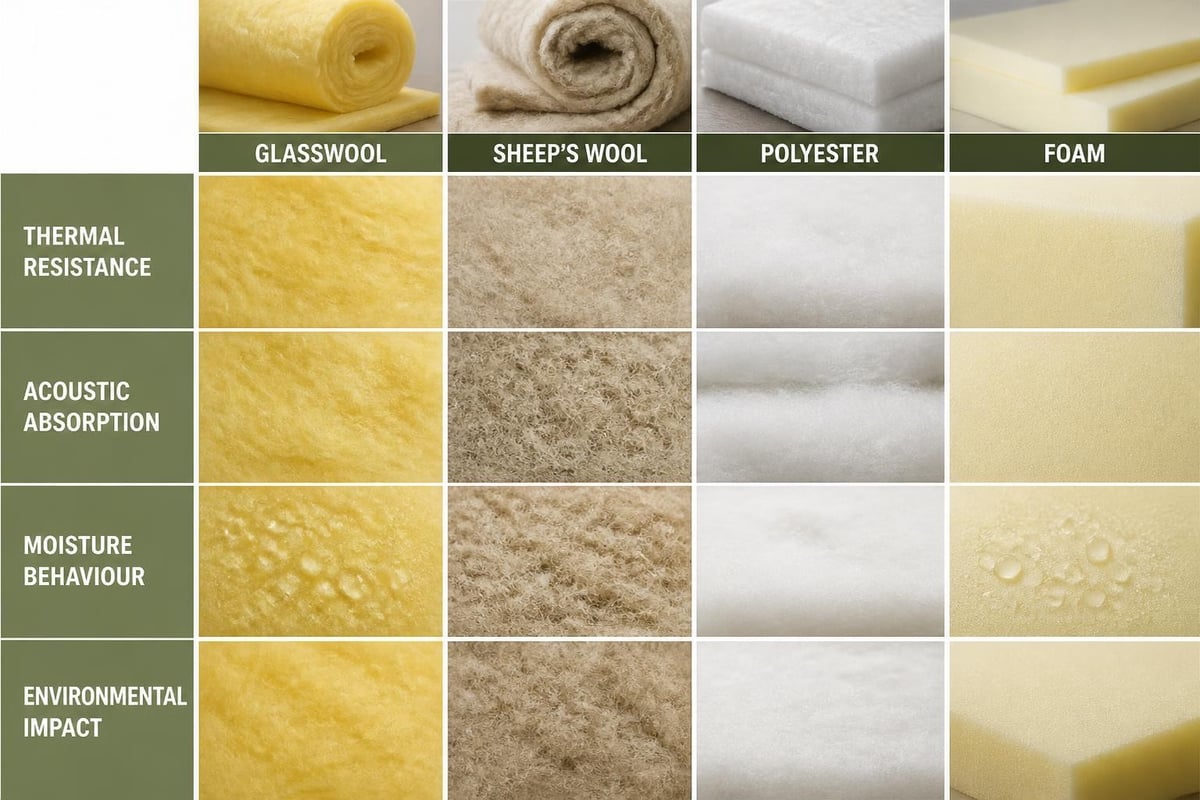
| Insulation Type | R-Value per 100mm | Cost Relative to Glasswool | Acoustic Performance | Moisture Tolerance | Ease of Cutting/Fitting |
|---|---|---|---|---|---|
| Glasswool Batts | R2.5 - R3.0 | Baseline | Excellent | Good (vapour permeable) | Excellent |
| Sheep's Wool Batts | R2.5 - R2.8 | 200-300% higher | Excellent | Excellent (hygroscopic) | Excellent |
| Polyester Batts | R2.3 - R2.5 | 120-150% higher | Very good | Excellent (non-absorbent) | Excellent |
| EPS Board | R2.5 - R2.7 | Similar | Poor | Poor (non-permeable) | Good (requires saw) |
| XPS Board | R2.8 - R3.0 | 150-200% higher | Poor | Excellent (closed cell) | Good (requires saw) |
Glasswool batts offer the most cost-effective solution for most residential applications when balancing thermal performance, acoustic control and budget. Sheep's wool suits projects prioritising natural materials and environmental credentials despite higher upfront costs.
Rigid foam boards (EPS, XPS) excel in applications requiring compressive strength or resistance to ground moisture but don't provide the acoustic benefits of fibrous insulation batts wool.
Safety and Handling
Working with insulation batts wool requires appropriate safety measures to protect installers from dust and fibre exposure.
Personal Protective Equipment
Always wear suitable PPE when handling any type of insulation batts wool:
- Dust mask or respirator: P2 rated minimum to filter fine fibres
- Safety glasses or goggles: Protect eyes from airborne particles
- Gloves: Reduce skin irritation and improve grip
- Long sleeves and long pants: Minimise skin contact with fibres
- Enclosed footwear: Protect feet in construction environments
Modern glasswool products manufactured with ECOSE Technology or similar binder systems reduce skin irritation compared to traditional formulations, but PPE remains essential.
Installation Best Practices
Following proper installation techniques ensures optimal performance and safety:
- Work in well-ventilated areas to minimise dust accumulation
- Cut batts slightly oversize to ensure snug friction-fit without gaps
- Avoid compression that reduces effective R-value and acoustic performance
- Seal penetrations around services, pipes and cables with appropriate materials
- Maintain clearances from hot surfaces, flues and recessed lights
- Dispose of offcuts responsibly - many areas offer recycling for glasswool waste
Proper preparation and technique make insulation installation safer and more effective.
Cost Considerations and Value
Evaluating insulation batts wool requires considering both upfront costs and long-term value through energy savings and comfort improvements.
Pricing Factors
Several variables influence the cost of wool insulation batts:
- R-value and thickness: Higher thermal resistance requires more material
- Density: Acoustic-grade high-density products cost more per square metre
- Product technology: ECOSE or similar advanced binder systems may command premium pricing
- Brand and quality: Recognised manufacturers with CodeMark certification versus budget alternatives
- Order quantity: Larger projects typically achieve better per-unit pricing
Glasswool batts generally cost $6-15 per square metre for standard R2.5-R4.0 products, while sheep's wool batts range from $18-40 per square metre depending on specifications.
Return on Investment
Insulation delivers measurable returns through reduced heating and cooling costs. The exact payback period varies based on:
- Climate: Greater temperature extremes increase energy savings
- Building characteristics: Older homes with minimal existing insulation benefit most
- Energy costs: Higher electricity and gas prices accelerate payback
- HVAC system efficiency: Modern systems maximise insulation benefits
Most Australian homes recover insulation costs within 3-7 years through lower energy bills, with ongoing comfort and amenity benefits continuing for decades.
Common Questions About Wool Insulation Batts
How Long Do Wool Batts Last
Quality glasswool and sheep's wool batts maintain thermal performance for 50+ years when properly installed and protected from sustained moisture exposure or physical damage. The fibres don't decompose or settle significantly over time.
Can Wool Batts Get Wet
Glasswool batts tolerate occasional moisture exposure without permanent damage. Once dried, thermal performance returns to normal. However, sustained wetness can cause sagging in non-faced products.
Sheep's wool batts actually absorb moisture vapour while maintaining insulation value, then release it when conditions dry. This hygroscopic behaviour supports healthy building performance.
Are Wool Batts Flammable
Both glasswool and treated sheep's wool batts meet Australian fire safety requirements for building insulation. Glasswool is non-combustible with a fire rating of zero. Sheep's wool receives fire-retardant treatments (typically boron compounds) achieving required performance standards.
Do I Need Faced or Unfaced Batts
Facing materials (typically foil or paper) serve specific purposes:
- Reflective foil facing: Adds radiant barrier performance in roof and wall applications
- Paper facing: Acts as air barrier or provides installation gripping surface
- Unfaced batts: Suit most ceiling and wall applications where separate vapour control or air barrier layers are specified
Most Australian residential applications use unfaced batts with separate air barrier and vapour control strategies.
Can I Install Wool Batts Myself
DIY installation of ceiling and underfloor insulation batts wool is feasible for capable homeowners with appropriate safety equipment and access. Wall insulation typically requires installation during construction before cladding attachment.
Professional installation ensures correct R-values, complete coverage, proper clearances and compliance with building regulations. The cost difference between DIY and professional installation is often modest relative to the total project investment.
Insulation batts wool deliver proven thermal and acoustic performance across residential and commercial applications, whether you choose glasswool or natural sheep's wool products. Understanding R-values, density specifications and proper installation techniques ensures you achieve optimal comfort, energy efficiency and value from your insulation investment. Insulation Supplies Australia offers a comprehensive range of glasswool batts and related insulation products with expert guidance to help Victorian homeowners, renovators and builders select the right solution for every application, backed by convenient online ordering and delivery across Melbourne and regional Victoria.