

Noise pollution from neighbours, traffic, or even between rooms in your own home can seriously impact your comfort and wellbeing. Whether you're building a new home, renovating an existing property, or simply trying to create quieter living spaces, soundproofing batts insulation offers an effective and affordable solution. These purpose-built acoustic products absorb sound waves, reduce noise transmission, and help create the peaceful environment you deserve. Understanding how they work, what to look for, and how to install them properly will help you achieve the best results for your project.
What Is Soundproofing Batts Insulation and How Does It Work?
Soundproofing batts insulation is a specialised type of thermal insulation designed specifically to reduce noise transfer between rooms and from external sources. Unlike standard thermal batts, these products are engineered with higher density and specific fibre structures that absorb sound energy.
When sound waves hit a wall, ceiling, or floor, they create vibrations that travel through the building materials. Soundproofing batts work by:
- Absorbing sound energy within the fibrous material structure
- Reducing vibration transfer between building elements
- Creating air gaps that interrupt sound wave transmission
- Adding mass to wall and ceiling cavities
The effectiveness of soundproofing batts insulation depends on several factors, including material density, thickness, fibre composition, and how well the product fills the cavity space. Higher-density batts generally perform better at blocking noise, particularly low-frequency sounds like traffic rumble or bass music.
Understanding STC and NRC Ratings
Two key measurements help you compare the acoustic performance of different insulation products.
Sound Transmission Class (STC) measures how well a building assembly (wall, floor, or ceiling) blocks sound from passing through. Higher STC numbers indicate better soundproofing. An STC rating of 50 or above provides good privacy, while STC 60+ offers excellent noise isolation.
Noise Reduction Coefficient (NRC) measures how much sound a material absorbs rather than reflects. The Insulation Institute provides detailed guidance on how these ratings work in practice and what they mean for your project.
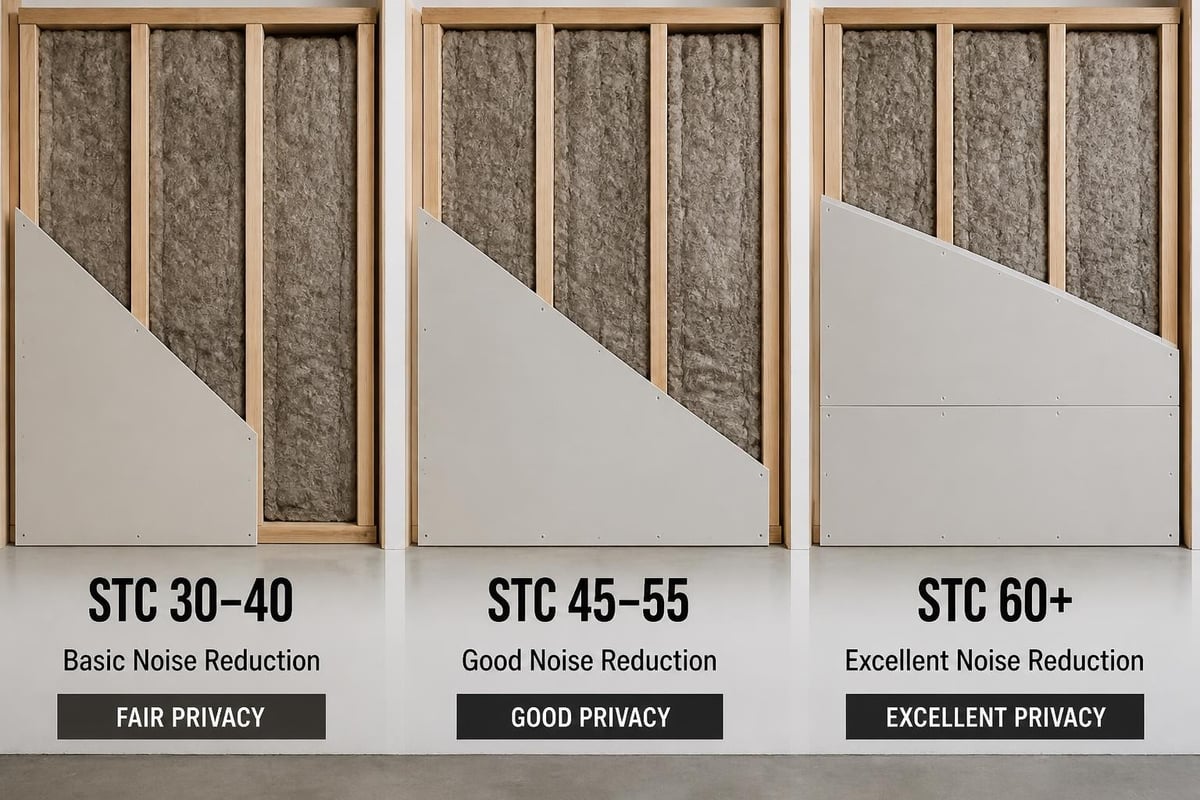
| STC Rating | Privacy Level | Typical Applications |
|---|---|---|
| 25-30 | Poor | Single stud wall, no insulation |
| 35-40 | Fair | Standard wall with basic batts |
| 45-50 | Good | Wall with acoustic batts, suitable for bedrooms |
| 50-55 | Very Good | Home theatre, music rooms |
| 60+ | Excellent | Recording studios, multi-residential |
Types of Soundproofing Batts Insulation Materials
Several material types are commonly used for acoustic insulation in Australian homes, each with distinct characteristics and performance levels.
Glasswool Acoustic Batts
Glasswool is one of the most popular materials for soundproofing batts insulation. Made from recycled glass and sand, these batts offer excellent sound absorption properties at competitive prices.
Key benefits include:
- High density options (up to 24 kg/m³) for superior acoustic performance
- Non-combustible and fire-resistant
- Good thermal insulation properties as a bonus
- Soft to handle with modern formulations like ECOSE Technology
- Wide range of sizes to suit various cavity depths
Glasswool batts work particularly well in wall and ceiling applications where both thermal and acoustic performance matter.
Polyester Acoustic Batts
Polyester soundproofing batts insulation is manufactured from recycled PET plastic bottles. These products are hypoallergenic, non-itchy, and safe to handle without protective equipment.
Advantages of polyester batts:
- 100% recyclable and environmentally friendly
- No airborne fibres or dust during installation
- Safe for DIY installation without gloves or masks
- Moisture-resistant and won't sag over time
- Suitable for people with allergies or sensitivities
Rockwool and Stone Wool Batts
Stone wool or rockwool batts are made from volcanic rock and slag. They offer exceptional fire resistance and excellent acoustic performance, particularly for high-density applications.
These products typically cost more than glasswool alternatives but deliver superior performance in demanding applications like sound insulation walls in multi-storey buildings.
Where to Use Soundproofing Batts Insulation in Your Home
Strategic placement of acoustic insulation delivers the best noise reduction results. Understanding which areas benefit most helps you prioritise your project and budget effectively.
Internal Walls Between Rooms
Installing soundproofing batts insulation in internal walls significantly reduces noise transfer between bedrooms, bathrooms, living areas, and home offices.
Priority walls for acoustic treatment:
- Bedroom walls – particularly those facing noisy living areas or neighbouring properties
- Bathroom walls – to contain plumbing noise and maintain privacy
- Home office walls – for quiet work environments and video calls
- Entertainment room walls – to contain TV and music system noise
The Australian Building Codes Board specifies minimum requirements for sound insulation between dwellings in multi-residential buildings, though these standards also serve as good benchmarks for single homes.
Ceilings and Floors
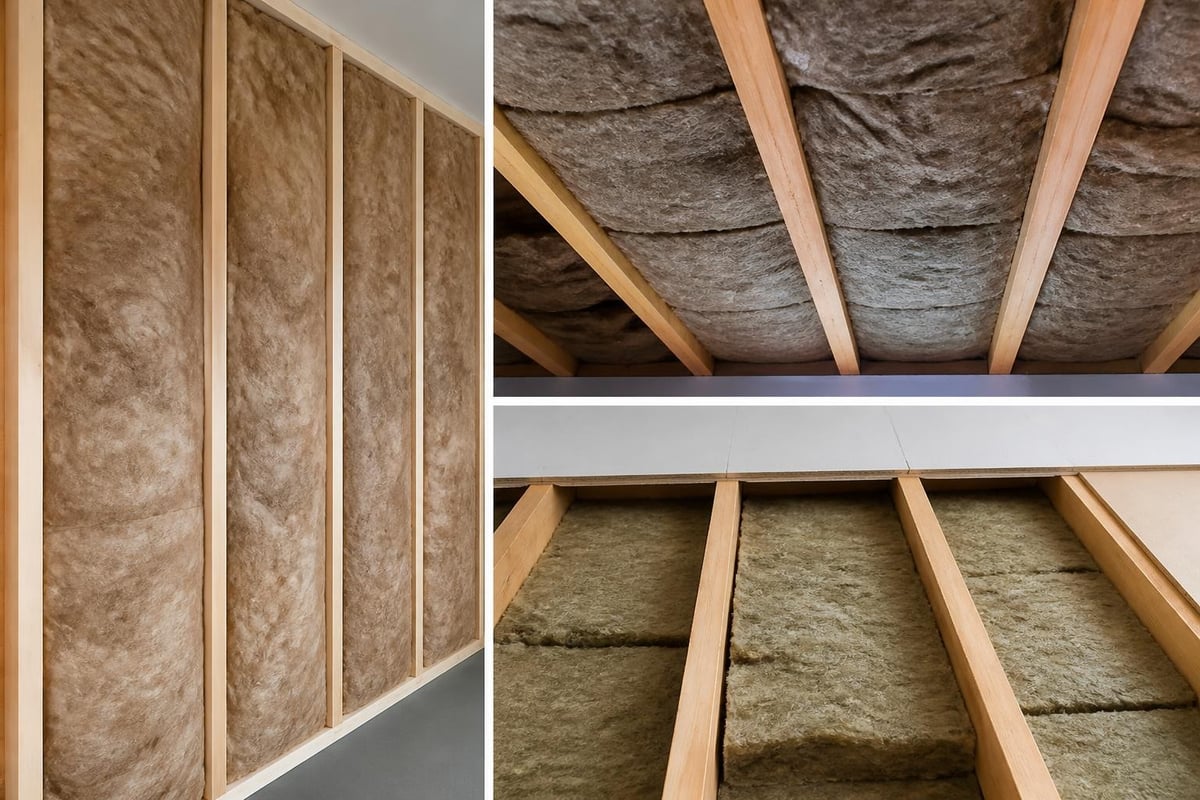
Sound travels easily between levels in multi-storey homes. Ceiling cavities above bedrooms and floor systems benefit enormously from soundproofing batts insulation.
Installation considerations:
- Use higher density batts (20 kg/m³ or above) for better low-frequency absorption
- Combine with resilient ceiling systems for maximum performance
- Fill the entire cavity depth without compression
- Consider both impact noise (footsteps) and airborne noise (voices, TV)
Research from the National Research Council Canada demonstrates how different batt densities and installation methods affect measured STC ratings in floor-ceiling assemblies.
External Walls Facing Noise Sources
Homes near busy roads, railways, airports, or commercial areas benefit from soundproofing batts insulation in external walls, even when thermal insulation is already present.
Higher-density acoustic batts provide better sound blocking than standard thermal products. Combining acoustic batts with good sealing and quality windows creates an effective noise barrier.
Choosing the Right Soundproofing Batts Insulation
Selecting appropriate products requires balancing performance, budget, and application requirements. Several factors influence your choice.
Density and Thickness
Material density is the single most important factor affecting acoustic performance. Higher density means more mass to absorb sound energy.
| Density Range | Performance Level | Best Applications |
|---|---|---|
| 8-12 kg/m³ | Basic | Thermal walls with minor acoustic benefit |
| 14-18 kg/m³ | Good | Standard internal walls, light noise reduction |
| 20-24 kg/m³ | Very Good | Bedrooms, offices, moderate noise issues |
| 24+ kg/m³ | Excellent | Home theatres, music rooms, severe noise |
Batt thickness also matters. Thicker batts absorb a wider range of frequencies, particularly lower sounds that are harder to block. Common thicknesses for soundproofing batts insulation include:
- 70mm for standard stud walls
- 90mm for timber-framed walls
- 140mm for enhanced acoustic performance in critical areas
R-Value and Thermal Performance
While soundproofing batts insulation is designed primarily for noise reduction, most products also provide thermal insulation. This dual benefit makes them cost-effective for Australian climates.
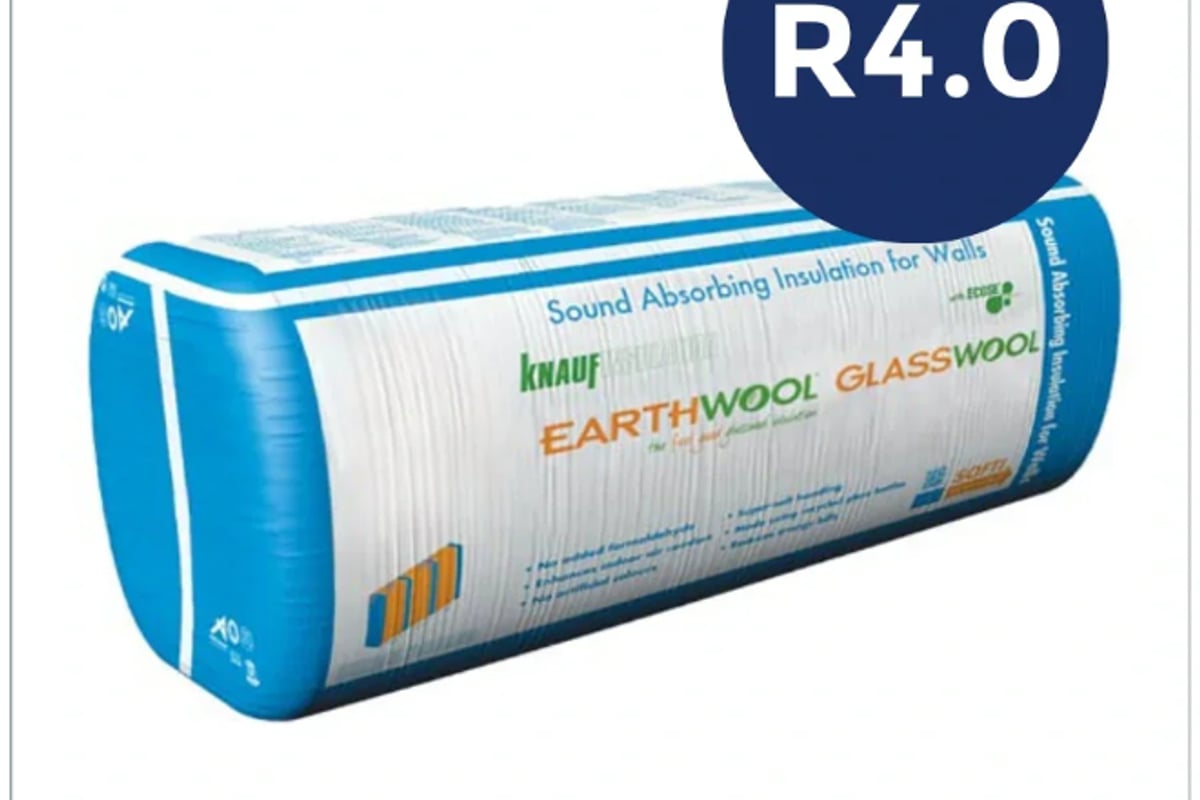
The Earthwool Sound Shield R4.0 140mm batts, for example, deliver both excellent acoustic performance with their 22.6 kg/m³ density and strong thermal resistance. These batts suit Victorian homes where seasonal temperature extremes and noise control are both priorities.
Size and Coverage
Soundproofing batts insulation comes in various widths to suit different stud spacings:
- 580mm width – fits standard 600mm centre stud spacing
- 420mm width – for 450mm stud centres (less common)
- Custom widths – for special applications
Always measure your wall or ceiling cavity spacing before ordering. Correct sizing ensures batts fit snugly without gaps that compromise acoustic performance.
Installing Soundproofing Batts Insulation Properly
Installation quality directly affects how well your soundproofing batts insulation performs. Even premium products underperform if installed incorrectly.
Preparation and Safety
Before you begin installation:
Safety equipment:
- Gloves (optional for polyester, recommended for glasswool)
- Dust mask or respirator
- Safety glasses
- Long sleeves and pants
- Work boots
Tools required:
- Sharp utility knife or insulation saw
- Measuring tape
- Straight edge for cutting guides
- Stapler (if friction-fitting isn't suitable)
- Ladder or scaffolding for ceiling work
Step-by-Step Installation Process
1. Measure and cut accurately
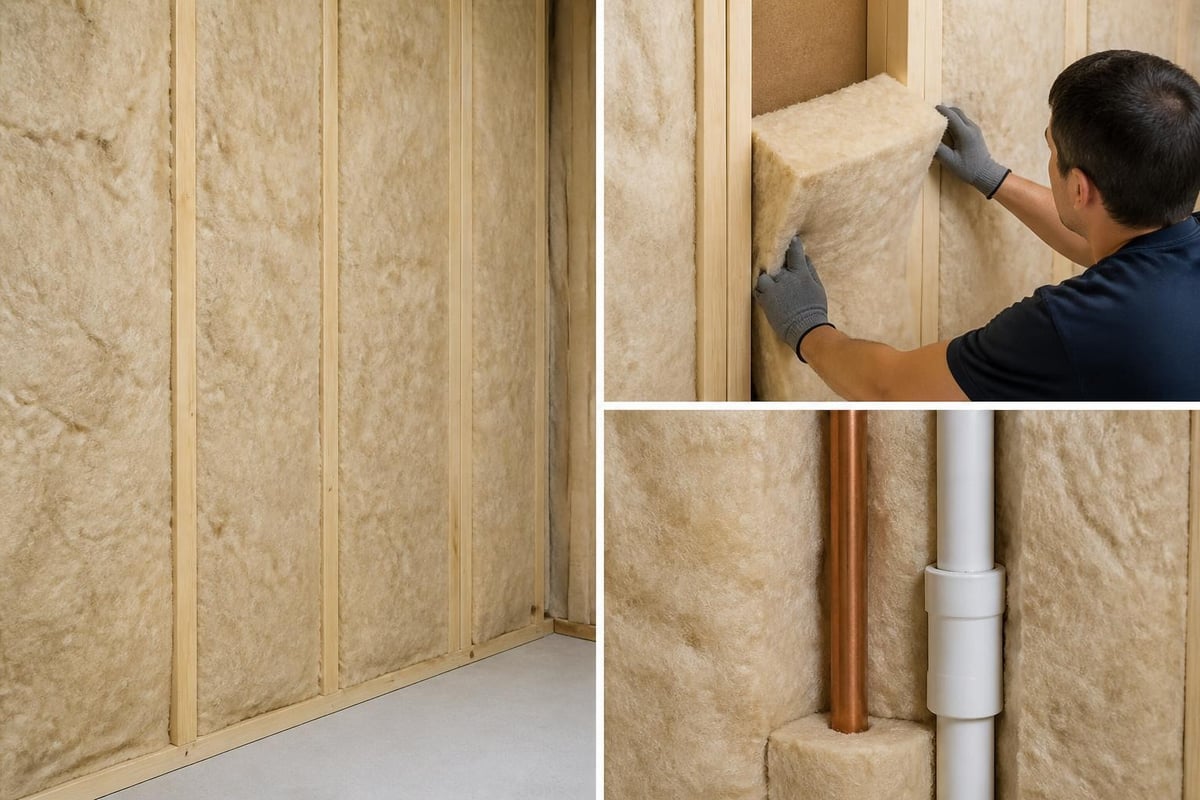
Measure each cavity individually rather than assuming all are identical. Cut batts 10-20mm wider than the cavity to ensure a firm friction fit.
2. Fill cavities completely
Push batts firmly into place so they contact all cavity edges. Gaps around batts create flanking paths for sound to bypass the insulation.
3. Avoid compression
Never compress soundproofing batts insulation to fit. Compression reduces thickness and density, dramatically reducing acoustic performance. If batts are too thick, use a thinner product rather than squashing them.
4. Cut around obstacles
Carefully cut around electrical boxes, pipes, and other penetrations. These gaps need sealing with acoustic caulk to maintain sound isolation.
5. Install in layers for maximum effect
For critical applications, consider installing batts in multiple stud cavities or using double-stud walls with separate framing to decouple the wall surfaces.
The Cold Formed Steel Institute's research report shows measured STC improvements when cavity insulation is installed correctly versus poorly fitted batts.
Common Installation Mistakes to Avoid
Even experienced DIYers make errors that compromise soundproofing batts insulation performance.
Gaps and voids are the number one problem. Sound finds the path of least resistance, so even small gaps significantly reduce overall STC ratings. Pay special attention to:
- Corners where walls meet
- Around door and window frames
- Electrical outlet boxes
- Top and bottom plates
Compressed insulation loses both thickness and the air pockets needed for sound absorption. If your framing depth doesn't match your chosen batt thickness, select a thinner product rather than forcing thicker batts to compress.
Poor sealing of the wall assembly undermines even perfect batt installation. Use acoustic sealant at all junctions, penetrations, and service entries.
Enhancing Soundproofing Batts Insulation Performance
Batts alone provide good noise reduction, but combining them with complementary strategies delivers significantly better results.
Resilient Channels and Decoupling
Resilient channels are metal strips that create a small air gap between wall studs and plasterboard. This decoupling reduces sound vibration transfer.
How it works:
- Install soundproofing batts insulation in wall cavities as normal
- Attach resilient channels horizontally across studs
- Screw plasterboard to channels, not directly to studs
- The floating plasterboard vibrates independently, blocking more sound
Studies referenced in ASTM standards for batt insulation testing demonstrate measurable STC improvements when combining cavity insulation with decoupling strategies.
Mass-Loaded Barriers
Adding mass to walls improves sound blocking, particularly for low-frequency noise. Options include:
- Two layers of plasterboard instead of single-layer
- Mass-loaded vinyl between plasterboard layers
- Dense fibre-cement sheets as an alternative to standard plasterboard
Combining these mass-addition techniques with high-density soundproofing batts insulation creates highly effective acoustic barriers.
Sealing Air Gaps
Sound travels through air, so any gaps in your wall assembly create noise leaks. Focus on:
Door seals – Install door sweeps and perimeter seals on bedroom and office doors. Even small gaps under doors dramatically reduce wall soundproofing effectiveness.
Electrical boxes – Use putty pads around electrical boxes or install acoustic-rated boxes designed to maintain wall STC ratings.
Service penetrations – Seal around pipes, cables, and ducts with acoustic-grade flexible sealant, not standard silicone.
Cost Considerations and Budget Planning
Understanding soundproofing batts insulation costs helps you plan projects effectively and make informed product choices.
Product Pricing Factors
Several elements affect the price you'll pay:
Density – Higher-density batts cost more per square metre but deliver better acoustic performance. Budget around 20-40% more for premium acoustic products versus standard thermal batts.
Brand and technology – Products featuring advanced manufacturing like ECOSE Technology or enhanced fire ratings command premium prices but offer superior handling and performance.
Coverage area – Buying in bulk typically reduces per-square-metre costs. Calculate your total requirement before ordering.
Installation Costs
DIY installation saves money but requires time and proper safety equipment. Professional installation ensures optimal performance but adds labour costs.
Typical pricing for professional installation:
- Internal wall batts: $8-15 per square metre (labour only)
- Ceiling batts: $10-18 per square metre (labour only)
- Complex jobs with resilient channels: $20-30 per square metre
These rates vary based on project complexity, access difficulty, and regional labour markets across Victoria.
Comparing Value Across Options
When evaluating soundproofing batts insulation, consider total system performance rather than just material cost.
A research paper from the Journal of Building Engineering provides detailed acoustic testing results comparing different insulation materials and densities, helping quantify performance differences that justify price premiums.
| Approach | Material Cost | Installation Cost | Total Cost | Typical STC Improvement |
|---|---|---|---|---|
| Basic thermal batts | $ | $ | $$ | +3 to +5 |
| Medium-density acoustic batts | $$ | $ | $$$ | +8 to +12 |
| High-density acoustic batts | $$$ | $ | $$$$ | +12 to +18 |
| Acoustic batts + resilient channels | $$$ | $$$ | $$$$$$ | +18 to +25 |
Soundproofing Batts for Specific Applications
Different room types and noise challenges require tailored approaches.
Home Theatres and Music Rooms
These spaces need exceptional sound containment to avoid disturbing other household members and neighbours.
Recommended specifications:
- Minimum 90mm thick soundproofing batts insulation at 22+ kg/m³ density
- Double-layer plasterboard on walls and ceiling
- Resilient channel or clip systems
- Solid-core doors with full perimeter seals
- Acoustic caulk at all joints
Combining these elements with proper underfloor insulation below home theatres provides comprehensive noise isolation.
Bedrooms and Quiet Zones
Privacy and peaceful sleep are priorities. Focus on walls between bedrooms and between bedrooms and active living areas.
Practical approach:
- 70-90mm soundproofing batts insulation at 18-22 kg/m³
- Quality door seals and sweeps
- Double-glazed windows if external noise is significant
- Carpeted floors to reduce impact noise transmission
Home Offices and Study Areas
With more Australians working from home in 2026, quiet home office spaces matter more than ever.
Key considerations include blocking household noise during video calls and containing keyboard/conversation sounds from disturbing others. Medium to high-density acoustic insulation batts in surrounding walls provide an effective solution.
Maintaining and Upgrading Soundproofing Batts Insulation
Once installed, soundproofing batts insulation requires minimal maintenance but occasional assessment helps ensure continued performance.
Long-Term Performance
Quality glasswool and polyester batts maintain their acoustic properties indefinitely when protected from moisture and physical damage. Unlike some foam products, they don't degrade or settle significantly over time.
Inspection checklist:
- Check for water damage or moisture after plumbing leaks or roof problems
- Verify batts haven't been compressed or displaced during subsequent renovation work
- Ensure no gaps have opened at cavity edges or around service penetrations
- Confirm plasterboard remains firmly attached to framing
Upgrading Existing Insulation
If your home already has thermal insulation but lacks acoustic performance, upgrading is possible but requires removing plasterboard to access cavities.
Upgrade options:
- Replace existing thermal batts with higher-density soundproofing batts insulation
- Add acoustic batts to currently empty internal wall cavities
- Supplement existing batts with mass-loaded barriers when reinstalling plasterboard
- Combine batt upgrades with resilient channel installation for maximum improvement
Consider targeting the most problematic rooms first rather than upgrading your entire home at once.
Comparing Soundproofing Batts Insulation to Other Methods
Understanding how batts compare to alternative noise reduction strategies helps you choose the right combination for your needs.
Foam Panels vs Batts
Foam panels designed for acoustic foam applications work differently than soundproofing batts insulation.
Acoustic foam:
- Absorbs echoes and controls reverberation within a room
- Applied to wall/ceiling surfaces, not inside cavities
- Primarily improves sound quality, not sound blocking
- Suitable for recording studios, home theatres (internal acoustics)
Soundproofing batts:
- Block sound transmission between rooms
- Installed inside wall, floor, and ceiling cavities
- Reduce noise transfer and improve privacy
- Suitable for residential noise control between spaces
Most effective solutions combine both approaches where needed.
Reflective Foil vs Fibrous Batts
Reflective foil products like bubble wrap foil insulation excel at radiant heat control but provide minimal sound blocking.
Foil products reflect heat but sound waves easily pass through thin, rigid materials. Fibrous soundproofing batts insulation absorbs acoustic energy and provides significantly better noise reduction.
For comprehensive home comfort, use foil products for thermal barriers in specific applications and fibrous batts where noise control matters.
Solid Materials and Mass Addition
Adding solid mass (extra plasterboard, dense boards, mass-loaded vinyl) improves sound blocking, especially for low frequencies.
Best practice:
Combine mass addition with cavity soundproofing batts insulation. The batts absorb mid and high frequencies while the added mass blocks low-frequency sounds. This combination delivers broader-spectrum noise reduction than either approach alone.
Environmental and Health Considerations
Modern soundproofing batts insulation products are increasingly environmentally responsible and safe to handle.
Sustainable Materials
Many current products incorporate recycled content:
- Glasswool batts – Up to 80% recycled glass
- Polyester batts – Made from recycled plastic bottles
- Rockwool batts – Natural rock and industrial slag
These products are also recyclable at end-of-life, reducing landfill waste.
Health and Safety
Modern manufacturing technologies have significantly improved handling safety.
ECOSE Technology used in premium glasswool batts eliminates traditional chemical binders, resulting in:
- Reduced airborne dust and fibres
- Softer, less irritating materials
- Lower embodied energy in manufacturing
- Improved indoor air quality
Polyester batts are naturally non-itchy and hypoallergenic, making them ideal for sensitive individuals and DIY installation without protective equipment beyond basic dust protection.
Fire Safety
Soundproofing batts insulation typically provides good fire resistance.
Material fire ratings:
- Glasswool – Non-combustible, won't support flame spread
- Rockwool – Excellent fire resistance, rated for fire barriers
- Polyester – Self-extinguishing, meets building code requirements
Always verify product fire ratings match your application requirements, particularly in multi-storey buildings or areas requiring specific fire-resistance ratings.
Soundproofing batts insulation delivers effective, affordable noise reduction when you choose appropriate products for your application and install them correctly. By understanding density requirements, STC ratings, and proper installation techniques, you can create quieter, more comfortable living spaces throughout your home. Insulation Supplies Australia stocks a comprehensive range of acoustic batts from trusted manufacturers, backed by expert advice to help you select the right products for your project. With competitive pricing, convenient online ordering, and fast delivery across Victoria, ISA makes it simple to get the soundproofing insulation you need delivered when you need it.