

When you're tackling a renovation, building a new home, or improving energy efficiency in Victoria, choosing the right insulation format can make all the difference. An insulation blanket offers a flexible, continuous thermal barrier that adapts to various building applications, from roofs and walls to underfloor systems. Unlike rigid boards or loose batts, blanket insulation comes in rolls that you can cut to size, making installation faster and reducing waste on site.
What Is an Insulation Blanket
An insulation blanket is a flexible roll of thermal insulation material designed to deliver continuous coverage across large surface areas. According to ASHRAE's definition of blanket thermal insulation, this format typically consists of mineral fibres, glasswool, or other insulating materials formed into a mat and supplied on a roll.
The key advantage of the blanket format is its ability to conform to irregular surfaces and maintain thermal continuity without gaps or seams. This continuous coverage helps reduce thermal bridging and improves overall building performance.
Common Materials Used in Blanket Insulation
Most insulation blankets available in Australia are manufactured from glasswool, which is produced by melting recycled glass and spinning it into fine fibres. Modern products often use advanced technologies like ECOSE®, which eliminates formaldehyde and reduces embodied energy during manufacturing.
Alternative materials include:
- Polyester blankets for specific acoustic applications
- Reflective foil laminates for radiant barrier systems
- Mineral wool for high-temperature industrial use
- Multi-layer synthetic composites for underfloor applications
Each material offers different thermal performance characteristics, fire ratings, moisture resistance, and handling properties that suit particular building scenarios.
Where to Use an Insulation Blanket in Your Home
Blanket insulation excels in applications where you need continuous thermal coverage over large, relatively flat surfaces. Understanding where this format works best helps you maximise comfort and energy efficiency throughout your property.
Roof and Ceiling Applications
Installing an insulation blanket between roof rafters or ceiling joists creates an effective thermal barrier that reduces heat transfer through your roof assembly. The flexible format allows you to drape the material over irregular framing members and cut around obstacles without compromising coverage.
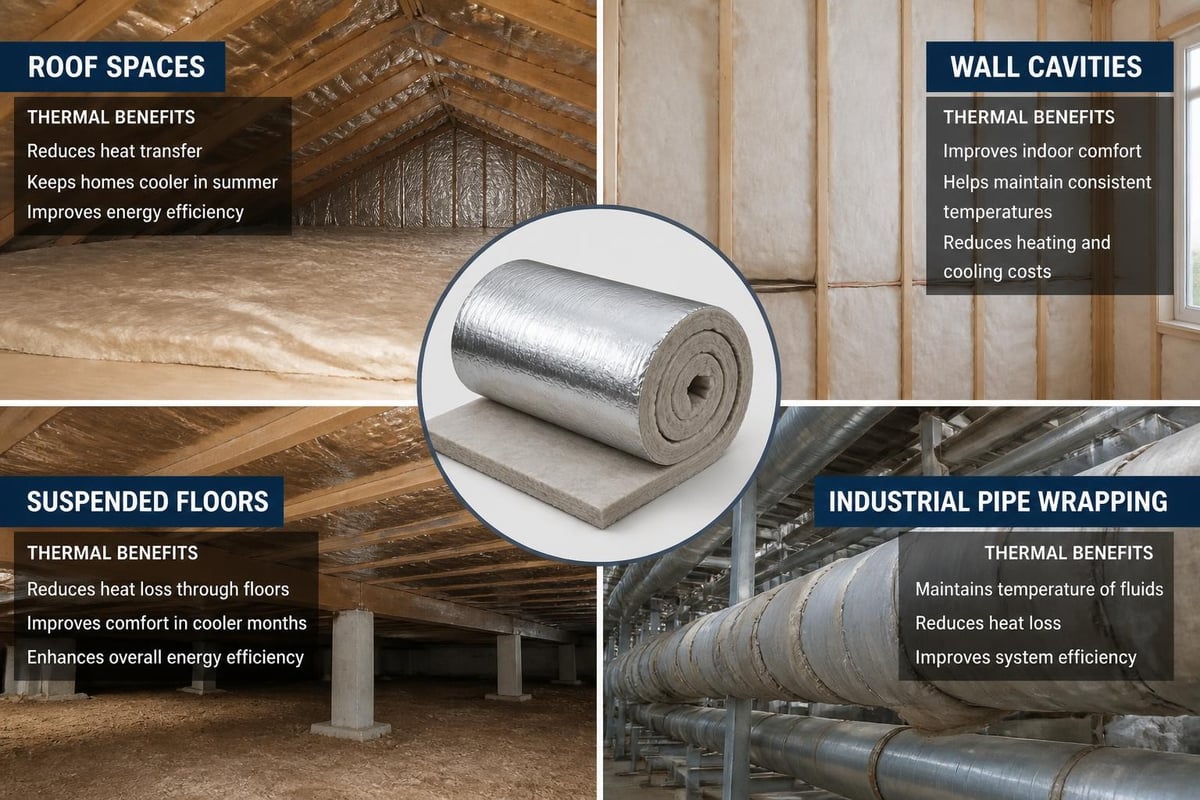
For metal roof installations, blanket products deliver superior performance because they maintain direct contact with the underside of the roofing while providing acoustic dampening. The Earthwool Blanket Unfaced R3.2 by Knauf offers excellent thermal efficiency and acoustic control for these applications, with its soft-to-handle glasswool construction making installation easier for DIY renovators.
Wall Cavity Insulation
While batts remain the most common choice for standard stud walls, blanket insulation works well in continuous wall applications or where you're retrofitting insulation into existing cavities. The flexibility of the roll format helps you navigate around electrical cables, plumbing, and other services without leaving gaps.
For exposed masonry walls or cavity brick construction, you can combine blanket insulation with proper moisture management systems. Learning about build wrap helps you understand how to protect wall cavities while allowing water vapour to escape.
Underfloor Systems
Suspended timber floors benefit significantly from blanket insulation installed between floor joists. This format covers large spans quickly and creates a continuous thermal barrier that blocks cold air rising from beneath your home.
The combination of thermal resistance and draught-stopping capability makes blanket products particularly effective for underfloor insulation in Victoria's climate zones, where winter heat loss through floors can significantly impact comfort and energy bills.
Benefits of Choosing Blanket Format Insulation
Understanding the practical advantages of blanket insulation helps you make informed decisions when comparing different product formats for your project.
Speed of Installation
Rolling out blanket insulation covers large areas faster than placing individual batts. For roof spaces and long floor joists, this efficiency translates into labour savings and shorter project timelines.
Reduced Waste
Because you cut blanket insulation to exact lengths on site, you minimise off-cuts and waste material. This flexibility proves especially valuable in older homes with non-standard joist spacing or irregular room dimensions.
Continuous Coverage
The roll format naturally creates fewer seams and joints compared to batts, reducing the risk of gaps that compromise thermal performance. This continuity improves overall R-value effectiveness and helps prevent thermal bridging.
Versatility Across Applications
A single product can often serve multiple purposes throughout your home. The same blanket roll that insulates your roof can be cut to fit underfloor spaces or wrap around hot water pipes, making inventory management simpler for builders and renovators.
| Application Type | Primary Benefit | Typical R-Value Range |
|---|---|---|
| Roof/Ceiling | Heat gain reduction | R3.0 – R4.0 |
| Walls | Year-round comfort | R1.5 – R2.5 |
| Underfloor | Heat loss prevention | R1.5 – R2.5 |
| Pipe Wrapping | Energy efficiency | R0.5 – R1.0 |
How to Choose the Right Insulation Blanket
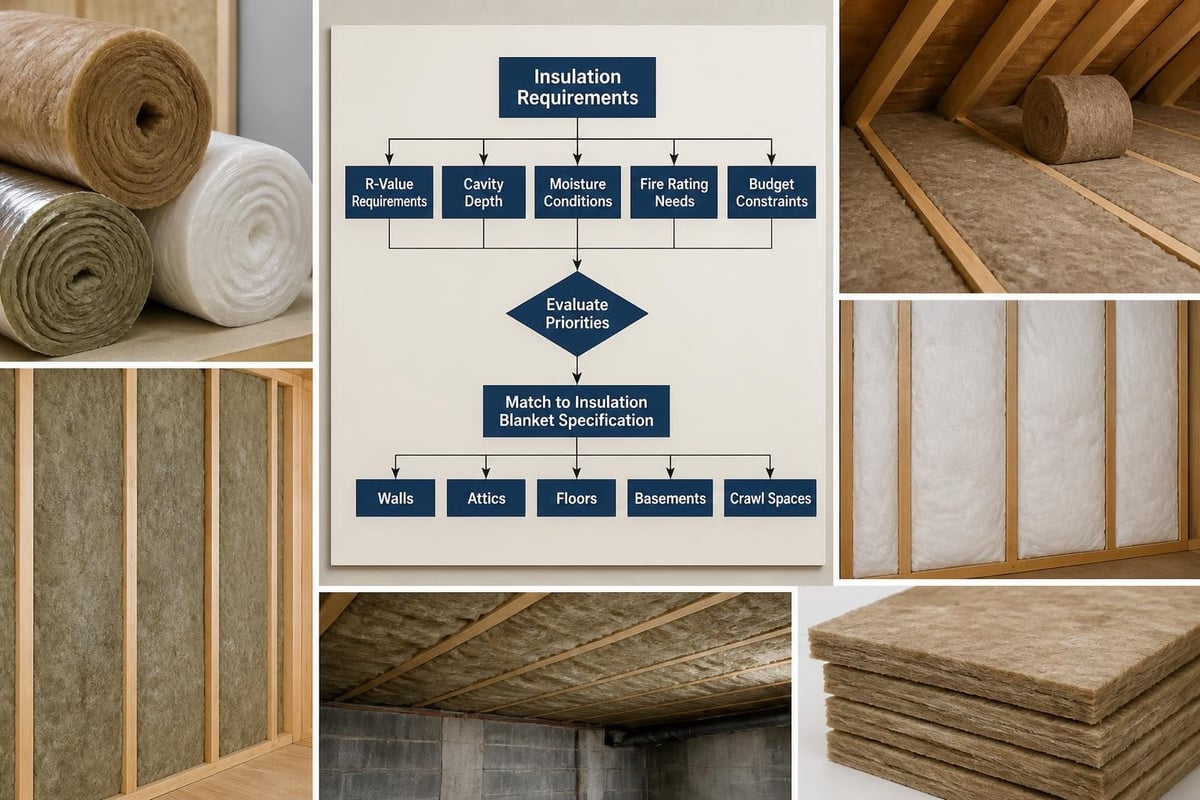
Selecting the appropriate blanket product requires balancing thermal performance requirements, budget constraints, installation conditions, and long-term durability expectations.
Understanding R-Values for Different Zones
Victoria's climate zones determine minimum R-value requirements for different building elements. Climate zones in Australia range from mild temperate in coastal areas to cold temperate in alpine regions, each requiring different thermal resistance levels.
For ceiling applications in Melbourne and surrounding areas, you'll typically need R3.5 to R4.0 to meet Building Code requirements and achieve meaningful energy savings. Wall cavities generally require R1.5 to R2.5, while underfloor spaces benefit from R1.5 to R2.0 depending on your specific location.
Thickness and Density Considerations
The thickness of your insulation blanket determines both its R-value and whether it fits within available cavity depths. Standard roof blankets range from 90mm to 140mm thick, while wall products typically measure 60mm to 90mm.
Higher-density blankets pack more insulating material into the same thickness, delivering better thermal performance and improved acoustic control. However, they also cost more per square metre and may be slightly more difficult to handle during installation.
Faced vs Unfaced Products
Some insulation blankets include a facing material laminated to one or both surfaces. These facings serve different purposes:
- Foil facing provides a radiant barrier and vapour control
- Paper facing acts as a friction layer to hold insulation in place
- Unfaced products offer maximum breathability and flexibility
For most residential applications in Victoria, unfaced blanket insulation works well because it allows walls and roofs to dry naturally. When moisture control becomes critical, you can combine unfaced insulation with separate vapour control layers positioned correctly within the building assembly.
Installation Best Practices for Blanket Insulation
Proper installation technique determines whether your insulation blanket delivers its full rated performance. Following proven methods ensures you maximise thermal efficiency and avoid common pitfalls.
Preparation and Safety
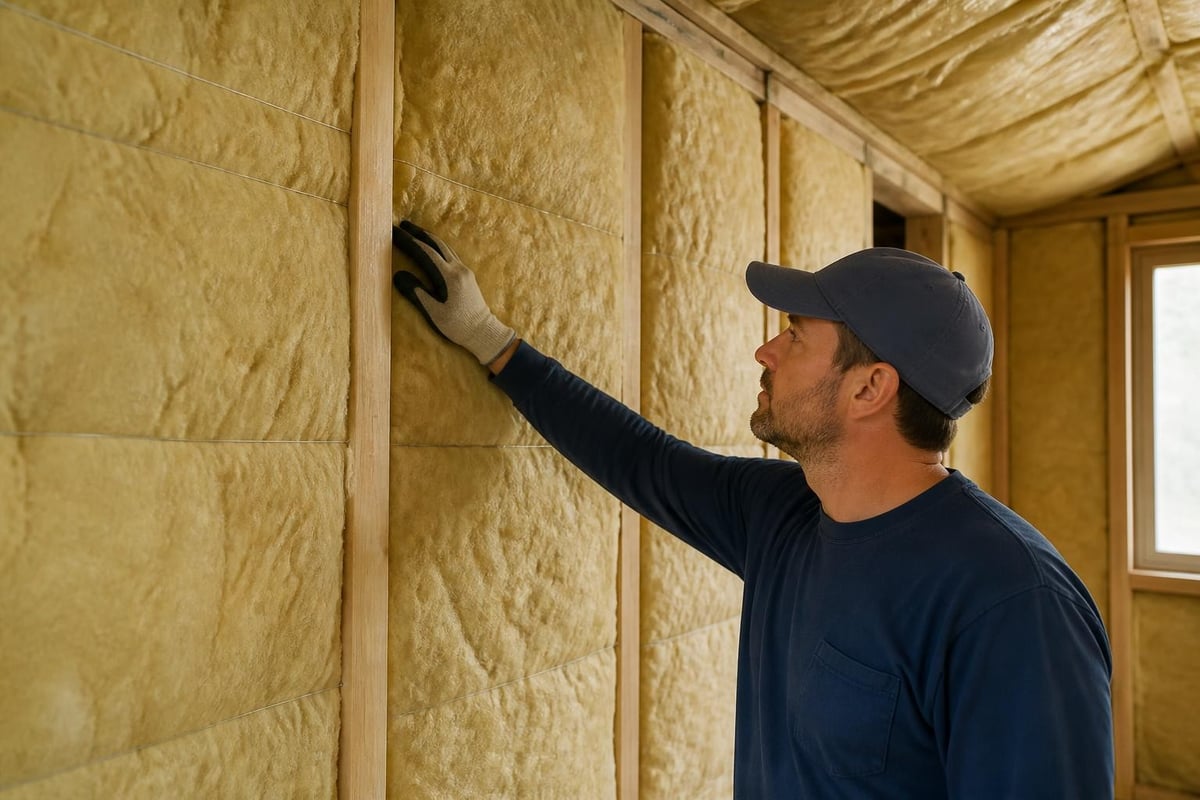
Before starting installation, clear the work area of debris, ensure adequate lighting, and verify that all electrical and plumbing rough-in work is complete. Wear appropriate personal protective equipment including gloves, long sleeves, safety glasses, and a dust mask when handling glasswool products.
Check that the cavity depth matches your chosen insulation thickness. Compressing blanket insulation reduces its R-value because thermal performance depends on trapped air within the material. If your insulation is too thick for the available cavity, choose a thinner product rather than forcing it to fit.
Cutting and Fitting Techniques
- Measure the required length accurately before cutting
- Use a long straightedge or timber batten as a cutting guide
- Compress the blanket slightly while cutting with a sharp knife
- Cut cleanly through in one pass for straight, neat edges
- Fit snugly against framing without gaps or compression
When working around obstacles like electrical cables or junction boxes, cut notches in the blanket rather than forcing it past the obstruction. This maintains continuous coverage without compressing the material.
Securing the Blanket in Place
Different applications require different fixing methods:
Roof Installations
Drape the blanket over ceiling joists or between rafters, allowing the material to rest naturally without sagging. Some installers use temporary battens or wire supports to hold the insulation in position until ceiling linings are installed.
Wall Cavities
Friction-fit the blanket between studs, ensuring it makes contact with the back of the cavity without gaps at edges. For deeper cavities, you may need to add temporary supports to prevent the insulation from slumping before wall cladding is installed.
Underfloor Systems
Support blanket insulation from below using wire mesh, stainless steel rods, or purpose-designed plastic clips attached to floor joists. The insulation should make contact with the underside of the floor while maintaining its loft for full thermal performance.
Comparing Blanket Insulation to Other Formats
Understanding how blanket insulation compares to batts, boards, and loose-fill products helps you choose the most appropriate solution for each area of your building project.
Blanket vs Batts
Both formats use similar materials, but their packaging and handling characteristics differ significantly. Batts come pre-cut to standard widths and lengths that suit typical stud and joist spacing, making them ideal for new construction with regular framing.
Blanket products offer more flexibility for:
- Irregular or non-standard spacing
- Continuous coverage over long runs
- Retrofitting older buildings
- Reducing packaging waste
- Applications requiring custom lengths
For standard residential framing, batts often install faster because you don't need to measure and cut each piece. However, blankets reduce waste and provide better value when you're working with varying cavity sizes.
Blanket vs Rigid Boards
Rigid board insulation excels in specific applications where structural stability, high compressive strength, or extreme moisture resistance are priorities. However, boards require careful fitting and taping of joints to prevent thermal bridging.
| Feature | Blanket Insulation | Rigid Board Insulation |
|---|---|---|
| Flexibility | High – conforms to surfaces | Low – requires flat substrate |
| Joint sealing | Overlaps naturally | Requires tape or sealant |
| Acoustic performance | Excellent absorption | Limited sound dampening |
| Cost per m² | Generally lower | Usually higher |
| Moisture sensitivity | Varies by material | Often water-resistant |
Understanding these differences helps you select blanket insulation where its flexibility and acoustic properties add value, while reserving rigid boards for applications like slab insulation where structural requirements dictate the choice.
Maintenance and Long-Term Performance
Once properly installed, insulation blankets require minimal maintenance while delivering decades of thermal performance. Understanding how to protect your investment ensures lasting comfort and energy efficiency.
Protecting Against Moisture
Although modern glasswool blankets resist moisture better than older products, prolonged exposure to liquid water can reduce their effectiveness. Ensure your roof remains watertight and address any leaks promptly to prevent insulation from becoming saturated.
In underfloor applications, maintaining adequate ground clearance and ventilation prevents moisture accumulation that could affect insulation performance. If you're installing blanket insulation in areas prone to dampness, consider moisture-resistant facings or drainage layers as part of your building assembly.
Preventing Compression Over Time
Foot traffic, stored items, or settling building components can compress insulation blankets and reduce their thermal performance. Avoid using roof spaces for storage directly on top of ceiling insulation. If you need storage access, install walkways or platforms that distribute weight across ceiling joists.
Regular visual inspections during routine roof maintenance help you identify any compressed or displaced insulation before it significantly impacts energy efficiency. Refluffing or replacing affected sections restores full thermal performance.
Special Applications for Insulation Blankets
Beyond standard residential building cavities, blanket insulation serves numerous specialised purposes where flexibility and removability add significant value.
Pipe and Duct Insulation
Wrapping hot water pipes with insulation blanket reduces heat loss as water travels from your heater to taps throughout your home. The Department of Energy recommends insulating plumbing pipes to improve efficiency and prevent condensation on cold water lines.
Removable insulation jackets made from blanket material allow you to insulate valves, flanges, and other fittings that require periodic access for maintenance. These jackets simply unfasten when you need to service equipment, then reattach to restore thermal protection.
Industrial and Commercial Applications
Industrial facilities use high-temperature blanket insulation to protect workers from hot surfaces and improve process efficiency. These specialised products meet stringent standards including ASTM C1695 for flexible removable blanket insulation, which specifies fabrication and performance requirements for hot service applications.
The National Insulation Association provides guidance on designing removable and reusable blanket systems for commercial and industrial settings, where regular equipment access makes permanent insulation impractical.
Acoustic Treatment
The fibrous structure of blanket insulation makes it highly effective for absorbing sound energy and reducing noise transmission through building assemblies. When acoustic performance matters as much as thermal efficiency, choosing products with higher density and proper installation technique delivers measurable improvements.
For comprehensive noise control, explore acoustic insulation batts designed specifically to meet both thermal and acoustic performance requirements in residential and commercial construction.
Cost Considerations and Value for Money
Balancing upfront material costs against long-term energy savings helps you make financially sound insulation decisions that deliver real value throughout your home's lifetime.
Material Costs per Square Metre
Blanket insulation pricing varies based on thickness, density, R-value, and manufacturer. Generally, you'll pay between $8 and $20 per square metre for residential-grade products, with premium high-density options commanding higher prices.
When comparing costs, calculate the total installed price including:
- Material cost per m²
- Delivery charges
- Installation labour (if hiring professionals)
- Required accessories (fixings, supports, protective equipment)
- Waste allowance (typically 5-10% for cutting and fitting)
Return on Investment Through Energy Savings
Properly specified and installed insulation blankets reduce heating and cooling energy consumption, delivering ongoing savings that offset initial costs. In Victoria's climate, quality ceiling insulation can reduce energy bills by 20-45% depending on your home's existing thermal performance.
The Energy Efficient Home Improvement Credit available in some jurisdictions demonstrates how governments recognise insulation's value in reducing building energy consumption and associated emissions.
Comparing Value Across Products
Price shouldn't be your only consideration when selecting insulation blanket products. Factor in:
- Thermal performance (R-value per dollar spent)
- Handling characteristics (ease of installation affects labour costs)
- Durability and longevity (quality products last decades)
- Environmental credentials (recycled content, manufacturing emissions)
- Fire safety ratings (compliance with Building Code requirements)
Higher-quality products often justify their premium pricing through superior performance, easier installation, and longer service life that together deliver better long-term value than cheaper alternatives.
Environmental Impact and Sustainability
As Australians increasingly prioritise sustainable building practices, understanding the environmental credentials of insulation blanket products helps you make choices that align with your values while delivering thermal performance.
Recycled Content and Manufacturing
Modern glasswool blanket insulation typically contains 70-80% recycled glass recovered from post-consumer and post-industrial sources. This reduces raw material extraction and lowers the embodied energy of manufacturing compared to products made entirely from virgin materials.
Advanced manufacturing processes like ECOSE® Technology further reduce environmental impact by eliminating formaldehyde binders and reducing energy consumption during production. These innovations create products that are both healthier to handle and gentler on the environment.
Lifecycle Performance Benefits
The energy savings delivered by insulation blanket over decades of service far outweigh the environmental cost of manufacturing and installation. A properly insulated home consumes less heating and cooling energy, reducing greenhouse gas emissions associated with electricity and gas consumption throughout the building's lifetime.
When properly installed and protected from moisture, quality blanket insulation maintains its thermal performance for 40-50 years or more, providing continuous environmental benefits with no ongoing inputs or maintenance requirements.
End-of-Life Considerations
Most glasswool insulation blanket products can be recycled at end of life, though collection infrastructure remains limited in Australia. As sustainable building practices evolve, manufacturers are developing take-back programmes and recycling pathways to close the loop on insulation materials.
In the meantime, the exceptional longevity of blanket insulation means most products installed today will outlast the buildings they insulate, reducing the volume of material requiring disposal compared to shorter-lived building components.
Common Mistakes to Avoid When Installing Blanket Insulation
Even experienced DIY renovators occasionally make installation errors that compromise insulation performance. Being aware of these common pitfalls helps you avoid them and achieve optimal results.
Compressing the Material
Forcing insulation blanket into cavities that are too shallow or packing it too tightly around obstacles reduces the trapped air space that provides thermal resistance. If your cavity depth doesn't accommodate your chosen product's full loft, select a thinner blanket rated for the available space rather than compressing a thicker product.
Leaving Gaps and Voids
Small gaps around the perimeter of insulation panels or near framing members create thermal bridges that allow heat to bypass your insulation layer. Take time to fit blanket insulation snugly against all cavity boundaries, cutting carefully around obstacles rather than leaving open spaces.
Incorrect Vapour Control Positioning
When using faced insulation blankets or adding separate vapour control layers, positioning these barriers on the wrong side of the building assembly can trap moisture and lead to condensation problems. In Australian climates, vapour barriers are rarely necessary in residential construction, but when required, they should face the warm (heated) side of the building.
Inadequate Support in Horizontal Applications
Insulation blanket installed horizontally beneath floors or above suspended ceilings requires proper support to prevent sagging. Wire mesh, rigid battens, or purpose-designed clips maintain the insulation in contact with the floor or ceiling surface while preventing it from drooping and creating air gaps that reduce thermal performance.
Standards and Compliance for Insulation Blankets
Understanding the regulatory framework governing insulation products helps ensure your project meets Building Code requirements and delivers safe, durable thermal performance.
Australian Standards References
Thermal insulation products must comply with relevant Australian Standards that specify manufacturing quality, performance testing methods, and labelling requirements. Key standards include:
- AS/NZS 4859.1 – Thermal insulation materials for buildings (general criteria and technical provisions)
- AS 1530 – Methods for fire tests on building materials and structures
- AS 2899 – Installation of thermal insulation in residential buildings
These standards ensure insulation blanket products deliver their claimed thermal performance and meet minimum safety requirements for residential and commercial applications.
Fire Safety Ratings
The National Construction Code (NCC) specifies fire performance requirements for insulation materials based on building classification and location within the building assembly. Most glasswool blanket insulation achieves non-combustible classification, making it suitable for all residential applications without additional fire barriers.
When fire safety considerations influence material selection, verify that your chosen insulation blanket carries appropriate fire test certifications and complies with NCC requirements for your specific application.
Material Specifications
Technical standards like ASTM C547 for mineral fibre pipe insulation and ISO 18097 for maximum service temperature provide authoritative specifications for insulation material properties and performance limits. While these primarily apply to commercial and industrial applications, they inform product development and quality standards across the insulation industry.
Choosing the right insulation blanket for your Victorian home or renovation project delivers immediate comfort improvements and decades of energy savings. Whether you're insulating a ceiling, wrapping underfloor joists, or improving wall thermal performance, understanding product specifications, proper installation techniques, and long-term maintenance requirements ensures you get the best results from your investment. Insulation Supplies Australia helps homeowners, renovators, and builders across Victoria find quality insulation blanket products at competitive prices, with expert advice and fast delivery to make your project easier from start to finish.