
Choosing the best roof insulation for your home is one of the smartest investments you can make in 2026. Your roof is the largest surface area exposed to the sun's heat in summer and cold air in winter, making it responsible for up to 35% of heat gain and 25% of heat loss in a typical Australian home. Whether you're building new, renovating, or simply looking to cut energy bills and improve comfort, understanding your options will help you make the right choice for your Melbourne property.
Why Roof Insulation Matters in Melbourne
Melbourne's climate presents unique challenges with hot summers, cold winters, and everything in between. The best roof insulation works year-round to keep your home comfortable and energy-efficient.
During summer, uninsulated roofs can reach temperatures exceeding 70°C, radiating intense heat into your living spaces. In winter, warm air rises and escapes through poorly insulated ceilings, forcing your heating system to work harder. Quality roof insulation creates a thermal barrier that addresses both scenarios.
Key benefits of proper roof insulation include:
- Lower energy bills throughout the year
- More consistent indoor temperatures
- Reduced reliance on heating and cooling systems
- Improved acoustic comfort by dampening external noise
- Increased property value and building performance
Melbourne homes typically fall within Climate Zone 6 according to the National Construction Code, requiring minimum R-values of R4.1 for ceiling insulation in most applications. However, many homeowners choose higher R-values for better performance and long-term savings.
Understanding R-Values and Thermal Performance
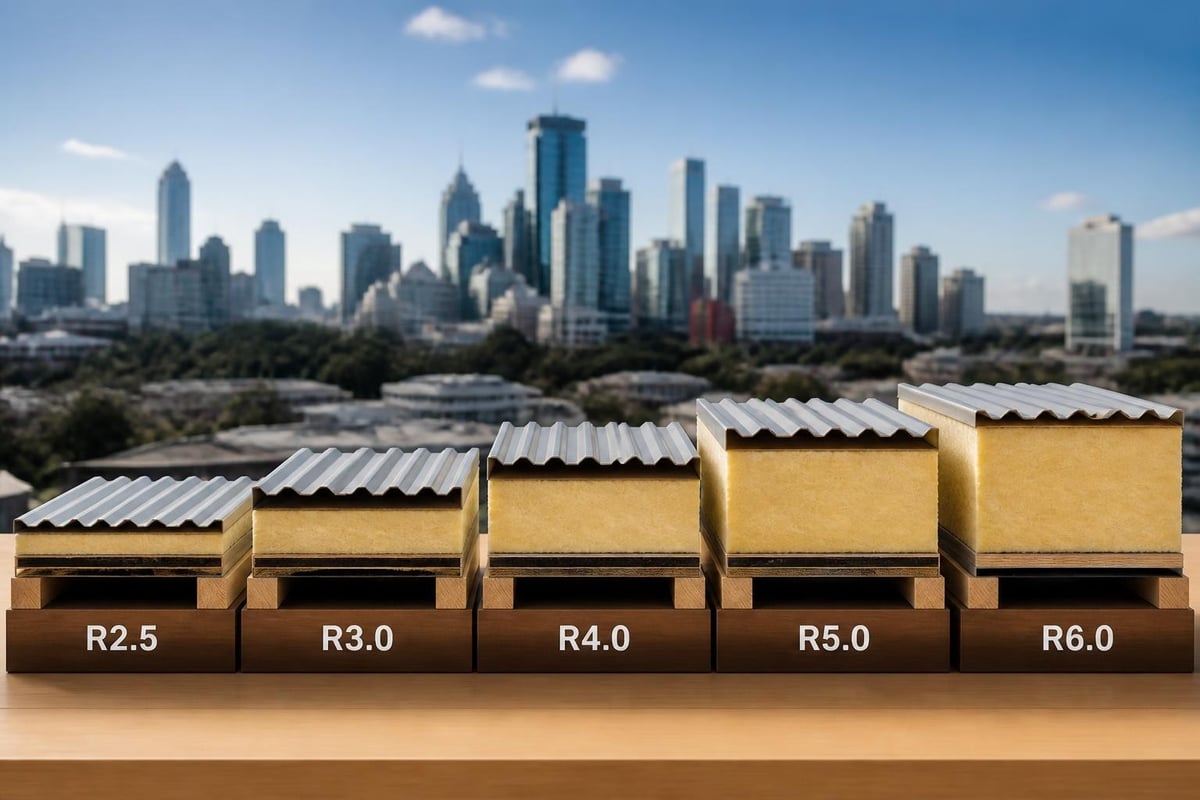
The R-value measures thermal resistance, indicating how effectively insulation resists heat flow. Higher R-values mean better insulation performance.
For Melbourne homes, the best roof insulation typically ranges from R4.0 to R6.0 depending on your specific needs, budget, and roof type. While R4.1 meets minimum building code requirements, upgrading to R5.0 or R6.0 can deliver substantial energy savings over time.
How R-Values Impact Your Home
| R-Value | Performance Level | Best Application | Annual Energy Savings* |
|---|---|---|---|
| R2.5-R3.0 | Basic | Mild climates, garages, sheds | 15-20% |
| R4.0-R4.5 | Standard | Melbourne residential (code minimum) | 25-30% |
| R5.0-R6.0 | High Performance | Maximum comfort and efficiency | 35-45% |
| R6.5+ | Premium | Extreme climates, passive houses | 45-50%+ |
*Compared to uninsulated homes
The relationship between R-value and thickness varies depending on the material. Glasswool and polyester batts achieve higher R-values with increased thickness, while rigid boards and multi-layer reflective systems work differently.
Types of Best Roof Insulation Materials
Choosing the best roof insulation means understanding the different materials available and how they suit your specific roof type and installation method.
Glasswool Batts and Blankets
Glasswool remains Australia's most popular insulation material for good reason. It's affordable, fire-resistant, and delivers excellent thermal and acoustic performance.
Glasswool batts come in pre-cut sections that fit between ceiling joists or roof rafters. They're easy to handle and install, making them ideal for DIY projects. Modern glasswool products like those manufactured with ECOSE® Technology are soft to touch, low in dust, and contain no added formaldehyde.
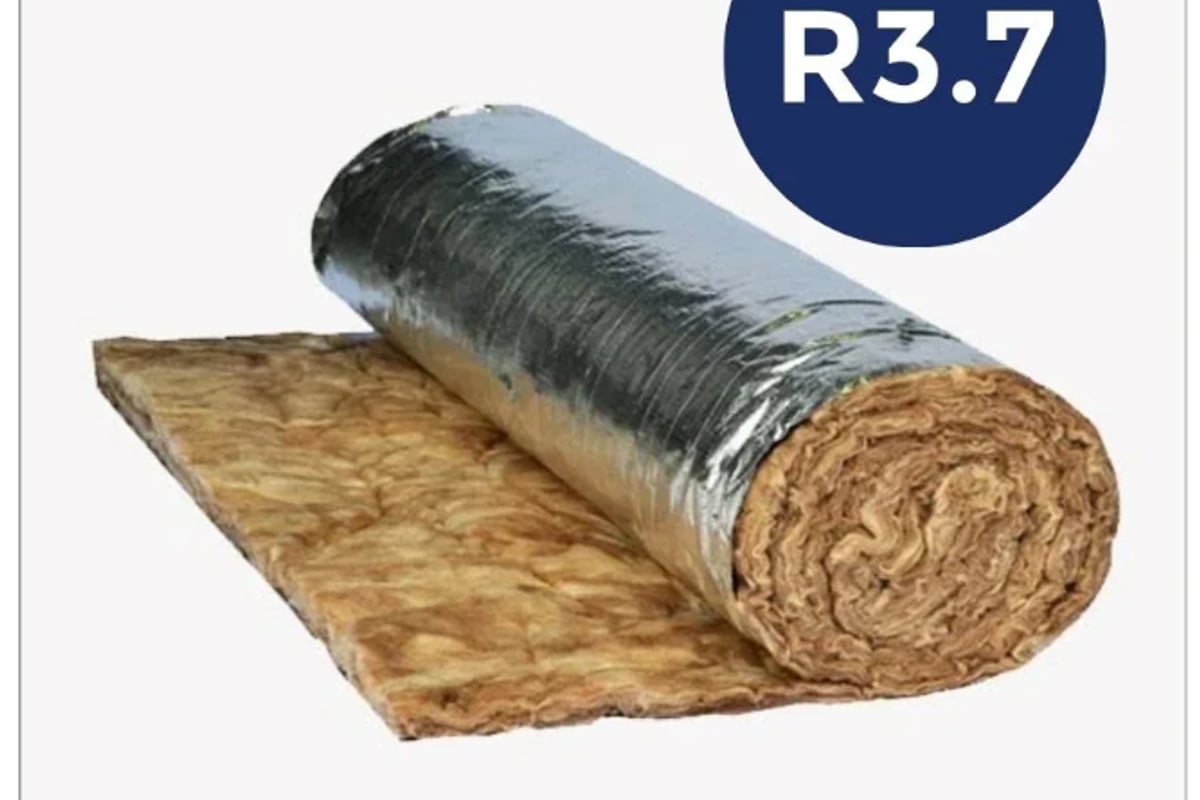
Glasswool blankets come in continuous rolls, perfect for covering large ceiling areas quickly. They're particularly effective for commercial projects or homes with irregular joist spacing. The Thermal Blanket R3.7 Roof Insulation offers superior thermal resistance with higher-density construction (22 kg/m³), delivering enhanced performance in both metal roof systems and standard ceiling applications.
Key advantages:
- Excellent fire resistance (non-combustible)
- Strong acoustic properties reduce noise transmission
- Moisture resistant and won't sag over time
- Cost-effective for most budgets
- Available in a wide range of R-values
Polyester Batts
Polyester insulation is made from recycled plastic bottles, offering an environmentally friendly alternative. It's completely safe to handle without protective equipment and contains no irritants.
This material suits homeowners concerned about indoor air quality or those with sensitivities. While generally more expensive than glasswool, polyester batts are hypoallergenic and resist moisture absorption.
Reflective Foil Insulation
Reflective insulation uses layers of foil and air pockets to reflect radiant heat rather than absorb it. This makes it particularly effective in Australian conditions where radiant heat is a major concern.
Bubble wrap foil insulation combines reflective surfaces with bubble layers for added resistance. These products work best when installed with an air gap on at least one side to maximise their reflective properties.
Best applications for reflective foil:
- Under metal roofing as a radiant barrier
- Combined with bulk insulation for maximum performance
- Renovation projects with limited roof space
- Hot climate applications requiring radiant heat control
Rigid Board Insulation
Rigid boards made from expanded polystyrene (EPS) or extruded polystyrene (XPS) offer high R-values in minimal thickness. They're moisture-resistant and provide excellent compressive strength.
These boards suit specific applications like cathedral ceilings, skillion roofs, or situations where space is limited. They're more expensive per square metre but deliver consistent performance over decades.
Comparing Installation Methods for Different Roof Types
The best roof insulation for your home depends significantly on your roof type and access. Understanding installation methods helps you plan effectively and budget accurately.
Ceiling Insulation Installation
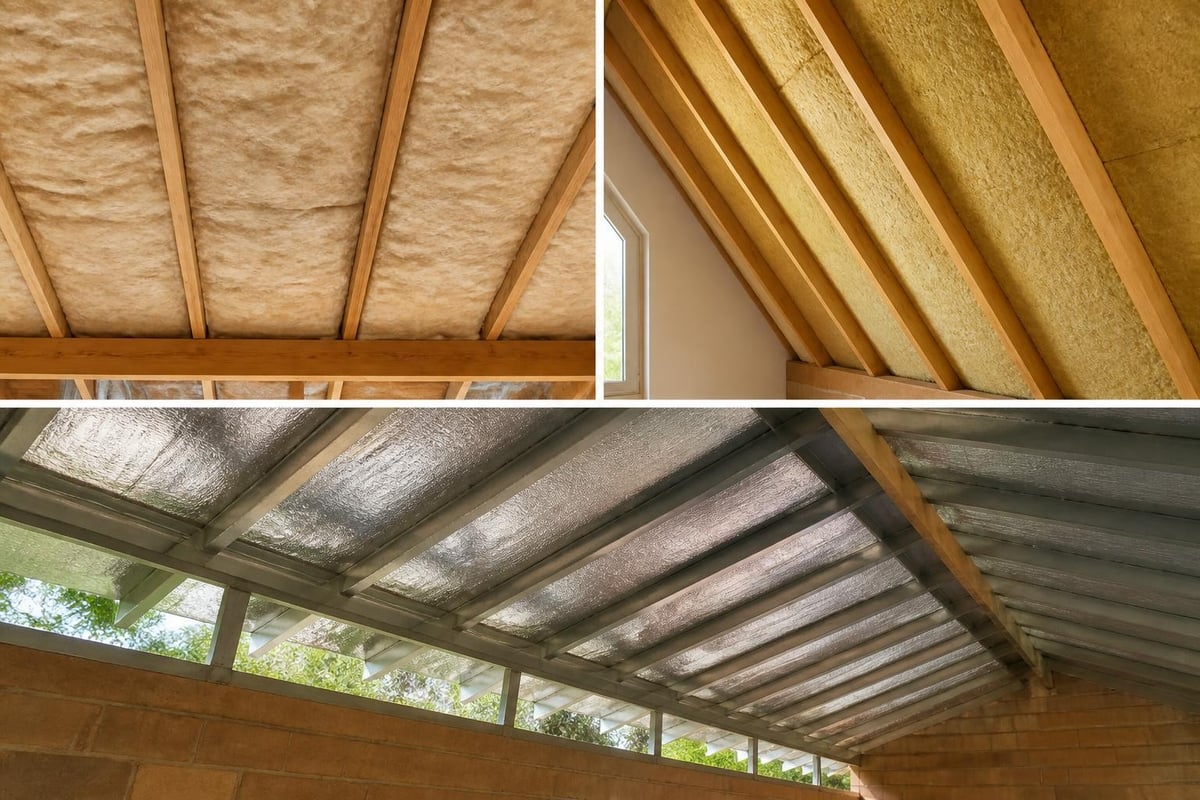
Most Australian homes have accessible ceiling cavities, making this the easiest and most common installation method. Ceiling batts are laid between joists in the roof space, creating a thermal barrier above your living areas.
Installation steps:
- Measure joist spacing (typically 450mm or 600mm centres)
- Select batts matching your joist width
- Lay batts between joists without compressing them
- Ensure proper coverage around downlights and fixtures
- Avoid blocking ventilation pathways
This method is DIY-friendly but requires proper safety equipment including dust masks, gloves, and adequate lighting. Never compress insulation as this reduces its R-value significantly.
Rafter Insulation for Cathedral Ceilings
Homes with cathedral or vaulted ceilings require a different approach. Insulating roof rafters involves placing insulation between the sloping roof timbers themselves.
This method requires careful attention to ventilation. You must maintain an air gap between the insulation and roof cladding to prevent moisture buildup and ensure roof longevity. Rigid boards or specially designed batts work best in these applications.
Under-Metal-Roof Systems
Metal roofs heat up quickly under direct sun, radiating heat into your home. Installing insulation directly under metal roofing provides immediate benefits.
Combine reflective foil with bulk insulation for optimal results. The foil reflects radiant heat while the bulk insulation provides thermal mass. This dual-layer approach is particularly effective in hot climates like northern Australia, though it works well in Melbourne too.
Choosing the Right R-Value for Your Melbourne Home
Selecting the best roof insulation R-value involves balancing building code requirements, climate conditions, budget, and long-term energy goals.
Meeting Building Code Requirements
The National Construction Code sets minimum R-values for different climate zones. Melbourne falls primarily in Climate Zone 6, requiring R4.1 for ceilings in new builds and major renovations.
However, meeting minimum standards doesn't necessarily deliver optimal performance. Many homeowners choose R5.0 or R6.0 to maximise comfort and energy savings, especially with rising electricity costs in 2026.
Calculating Your Optimal R-Value
Consider these factors when deciding:
Your heating and cooling costs: Homes with high energy bills benefit most from premium R-values. The additional upfront cost typically pays for itself within 3-5 years through reduced energy consumption.
Roof colour and material: Dark roofs absorb more heat, requiring better insulation performance. Light-coloured roofing materials reflect more heat, potentially allowing you to use slightly lower R-values.
Existing insulation: If you're topping up old insulation, calculate the combined R-value. Adding R2.5 to existing R2.0 gives you approximately R4.5 total performance.
Home orientation: North-facing roofs receive the most sun exposure in Australia, potentially benefiting from higher R-values than south-facing sections.
Budget vs Performance Trade-offs
| Budget Level | Recommended R-Value | Material Type | Expected Lifespan | ROI Timeline |
|---|---|---|---|---|
| Economy | R3.5-R4.0 | Standard glasswool batts | 50+ years | 5-7 years |
| Standard | R4.5-R5.0 | Premium glasswool or polyester | 50+ years | 4-5 years |
| Premium | R5.5-R6.0 | High-density glasswool or hybrid systems | 50+ years | 3-4 years |
| High-End | R6.5+ | Multi-layer systems with rigid boards | 50+ years | 3-4 years |
The best roof insulation for most Melbourne homeowners sits in the R4.5 to R5.5 range, offering excellent performance without excessive cost. This ceiling insulation range balances comfort, energy efficiency, and affordability.
Special Considerations for Renovation Projects
Renovating or upgrading existing roof insulation requires different planning than new construction. You're working with established structures, potentially limited access, and existing building materials.
Assessing Your Current Insulation
Before buying new insulation, evaluate what you already have. Many older Melbourne homes built before the 1990s have minimal or no ceiling insulation, while some have deteriorated or compressed batts that no longer perform effectively.
Access your ceiling space safely and check:
- Current insulation type and condition
- Whether it's compressed or damaged
- Coverage gaps around fixtures or walls
- Signs of moisture damage or pests
- Existing R-value if known
Even if you have some insulation, adding additional layers can significantly boost performance. Combined R-values add together, so laying R2.5 batts over existing R2.0 materials gives you approximately R4.5 total.
Working with Existing Roof Structures
Older homes often have irregular joist spacing, making standard batt widths challenging to fit. Glasswool blankets offer more flexibility for these situations, as you can cut them to any width needed.
Watch out for these common renovation challenges:
- Recessed lighting that requires special handling
- Electrical wiring running through ceiling spaces
- Limited access hatches making material delivery difficult
- Asbestos cladding requiring professional removal
- Roof ventilation systems that must remain unobstructed
Safety remains paramount during renovation work. If you suspect asbestos or encounter structural issues, consult professionals before proceeding.
Combining Old and New Insulation
Mixing insulation types is generally acceptable and often beneficial. Adding reflective foil over existing bulk insulation creates a multi-layer system that addresses both conductive and radiant heat transfer.
Just ensure the old insulation is dry, uncompressed, and still in reasonable condition. Wet or mouldy insulation should be removed and replaced, not covered over.
Installation Tips and Common Mistakes to Avoid
Even the best roof insulation won't perform properly if installed incorrectly. Understanding proper installation techniques ensures you get full value from your investment.
Essential Installation Guidelines
Never compress insulation. This is the most common mistake. Squashing batts to fit tight spaces reduces the air pockets that provide thermal resistance, dramatically lowering R-value performance.
Cut accurately. Measure twice, cut once. Batts should fit snugly between joists without gaps, but shouldn't be forced or compressed. Use a sharp knife and straight edge for clean cuts.
Mind the gaps. Small gaps around the edges or between batts create thermal bridges where heat escapes. Ensure complete coverage across the entire ceiling area.
Protect yourself. Wear long sleeves, gloves, dust masks, and eye protection when handling any insulation material. Work in well-ventilated areas and take regular breaks.
Working Safely Around Services
Ceiling spaces contain electrical wiring, downlights, exhaust fans, and other services requiring careful handling. Maintain minimum clearances around all electrical fixtures as specified by manufacturers.
Many modern LED downlights require specific insulation-rated covers. Never lay insulation directly over non-IC-rated lights, as this creates a fire hazard. For detailed guidance on installing insulation safely around services, consult a licensed electrician when in doubt.
Maintaining Proper Ventilation
Roof spaces need ventilation to prevent moisture buildup and maintain healthy building conditions. Don't block eave vents, ridge vents, or other ventilation points with insulation.
Leave gaps around these areas while maintaining thermal performance elsewhere. Proper ventilation extends roof life and prevents condensation issues that could damage both your roof structure and insulation materials.
Cost Considerations and Budget Planning
Understanding the true cost of roof insulation helps you budget effectively and make informed decisions. The best roof insulation balances upfront investment with long-term performance and savings.
Material Costs in 2026
Insulation pricing varies based on R-value, material type, and quantity purchased. Here's what Melbourne homeowners can expect:
Glasswool batts (per m²):
- R3.5: $8-12
- R4.0: $10-14
- R5.0: $14-18
- R6.0: $18-24
Polyester batts (per m²):
- R3.5: $12-16
- R4.0: $14-19
- R5.0: $18-24
- R6.0: $24-30
Reflective foil systems (per m²):
- Basic single layer: $6-10
- Multi-layer bubble wrap: $12-18
- Premium multi-foil: $18-25
Prices decrease with larger quantities, making whole-house projects more cost-effective per square metre than small areas. Roof insulation products typically cover between 5-16m² per pack depending on batt size and configuration.
Installation Labour Costs
DIY installation eliminates labour costs entirely, making it attractive for confident homeowners. Professional installation typically costs $15-30 per square metre depending on access, roof complexity, and material choice.
For a typical 150m² Melbourne home:
- DIY materials only: $1,500-3,000
- Professional full installation: $3,500-6,500
Most homeowners with reasonable DIY skills can safely install ceiling batts themselves, saving thousands in labour costs. However, complex roofs, cathedral ceilings, or difficult access may justify professional help.
Calculating Return on Investment
Energy savings compound over years, making insulation one of the best home improvements for ROI. A well-insulated Melbourne home typically saves $300-800 annually on heating and cooling costs compared to an uninsulated equivalent.
Example ROI calculation for a 150m² home:
Initial investment (R5.0 DIY): $2,400
Annual energy savings: $550
Payback period: 4.4 years
25-year total savings: $13,750
Net benefit: $11,350
These figures improve with higher energy prices, longer ownership, and premium R-values. Government rebates and incentives may also reduce upfront costs.
Acoustic Benefits of Roof Insulation
While thermal performance usually drives insulation decisions, acoustic benefits shouldn't be overlooked. The best roof insulation delivers both thermal and sound control.
Glasswool and polyester batts naturally absorb sound waves, reducing noise transmission from outside. This proves particularly valuable for homes near busy roads, flight paths, or entertainment districts.
Acoustic performance varies by material:
- Glasswool batts: Excellent sound absorption across most frequencies
- Polyester batts: Very good acoustic performance, similar to glasswool
- Reflective foil: Minimal acoustic benefit when used alone
- Rigid boards: Limited sound absorption properties
For maximum acoustic control, consider acoustic insulation batts specifically designed for sound dampening. These higher-density products deliver superior noise reduction while maintaining thermal performance.
Combining acoustic ceiling insulation with wall insulation creates a comprehensive sound barrier throughout your home. This matters increasingly in 2026 as more Australians work from home and value quiet indoor environments.
Moisture Management and Condensation Control
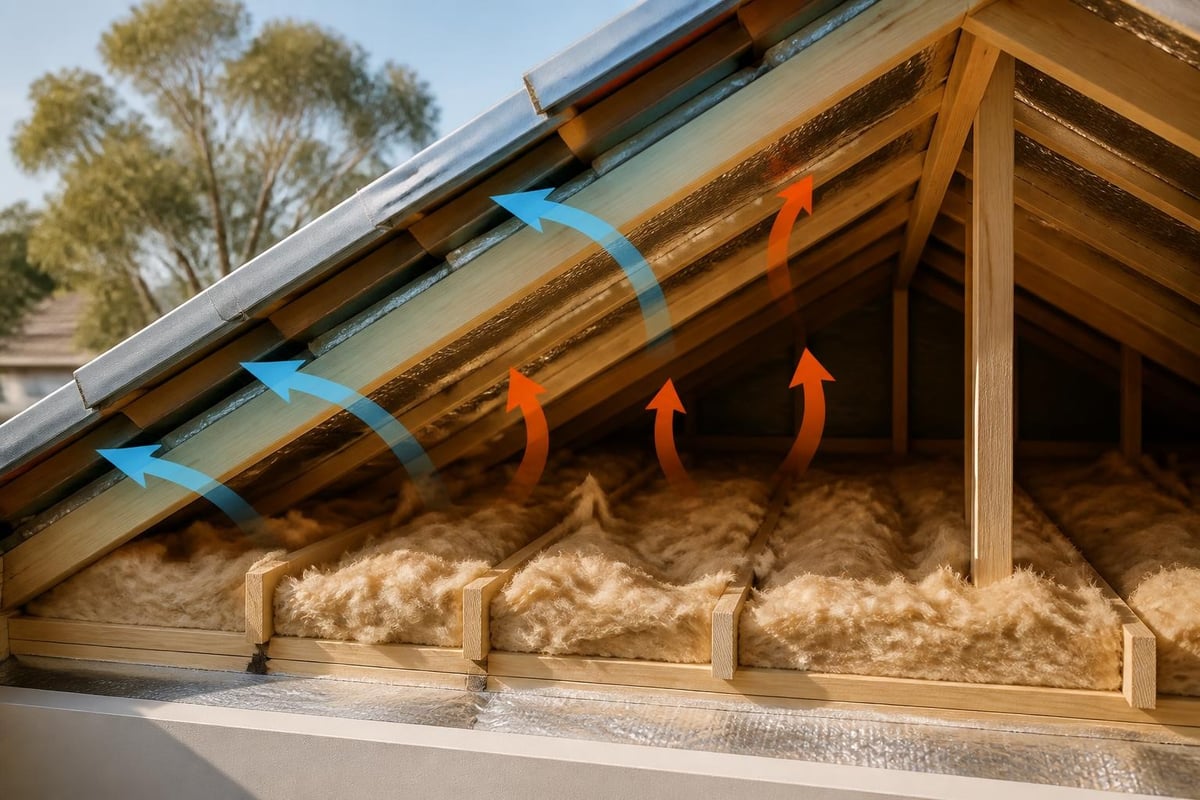
Effective insulation systems must manage moisture to prevent condensation, mould growth, and structural damage. The best roof insulation works as part of a complete building envelope that controls both heat and moisture.
Understanding Condensation Risks
Condensation occurs when warm, moisture-laden air contacts cold surfaces. In winter, heated indoor air rises into ceiling spaces where it can condense on cold roof structures above the insulation layer.
Factors increasing condensation risk:
- High indoor humidity from cooking, bathing, drying clothes
- Poor ventilation in ceiling spaces
- Insufficient insulation allowing cold roof temperatures
- Gaps or compression reducing insulation effectiveness
Proper installation combined with adequate roof ventilation typically prevents condensation issues in Melbourne's climate. Ensure eave vents remain clear and consider adding whirlybird vents if your roof space shows signs of moisture.
Vapour Barriers and Breathable Systems
Some insulation products include vapour barriers or foil facings that resist moisture transmission. These suit specific applications but aren't necessary for most Melbourne ceiling installations.
Breathable insulation systems allow moisture to disperse naturally, preventing buildup while maintaining thermal performance. Modern glasswool and polyester products resist moisture absorption while allowing water vapour to pass through, creating healthy, long-lasting insulation systems.
Environmental Considerations and Sustainability
Choosing the best roof insulation increasingly involves environmental factors. Sustainable products reduce environmental impact while delivering excellent performance.
Recycled Content and Manufacturing
Many modern insulation products incorporate substantial recycled content. Polyester batts typically contain 60-100% recycled plastic bottles, while some glasswool products use recycled glass cullet.
ECOSE® Technology used in premium glasswool manufacturing reduces embodied energy and eliminates added formaldehyde, creating healthier products with lower environmental footprints. These innovations make 2026 insulation products significantly greener than previous generations.
Operational Energy Savings
The environmental benefit of insulation extends far beyond manufacturing. Reducing heating and cooling energy consumption over decades dramatically reduces your home's carbon footprint.
For a typical Melbourne home, proper roof insulation prevents approximately 3-5 tonnes of CO₂ emissions annually compared to an uninsulated house. Over a 50-year lifespan, that's 150-250 tonnes of avoided emissions from a single upgrade.
End-of-Life Considerations
Quality insulation products last 50+ years, but eventually require replacement. Glasswool and polyester batts are recyclable, though collection systems remain limited in Australia.
Most importantly, choosing durable products that perform well for decades reduces waste by avoiding premature replacement. The best roof insulation is the product you never need to replace.
Making Your Final Decision
Selecting the best roof insulation comes down to understanding your specific needs, budget, and home characteristics. No single product suits every situation perfectly.
Quick Decision Guide
Choose glasswool batts (R4.5-R5.0) if:
- You want proven performance at affordable prices
- DIY installation appeals to you
- You need both thermal and acoustic benefits
- Fire resistance is a priority
Choose polyester batts if:
- You prefer handling insulation without irritation
- Environmental credentials matter most
- You have chemical sensitivities or allergies
- Budget allows for premium products
Choose reflective foil systems if:
- You're installing under metal roofing
- Radiant heat control is the main concern
- Ceiling space height is extremely limited
- You're combining with bulk insulation for hybrid performance
Choose rigid boards if:
- You have cathedral ceilings or limited space
- Maximum R-value in minimal thickness is needed
- Moisture resistance is critical
- Your budget supports premium materials
Getting Expert Advice
Every home is different, and personalised advice helps ensure you select the best roof insulation for your specific situation. Consider factors like existing insulation, roof type, climate exposure, budget constraints, and installation timeframe when making final decisions.
Natural insulation options like wool and cellulose are also available for homeowners prioritising sustainable materials, though they typically cost more than standard products.
Understanding climate zones helps you meet building requirements while optimising for Melbourne's specific conditions. Don't just meet minimum standards when better performance is affordable and delivers rapid payback.
Choosing the best roof insulation transforms your home's comfort and efficiency while reducing energy costs for decades to come. Whether you're renovating an older Melbourne home or building new, selecting the right R-value, material type, and installation method ensures optimal performance in our variable climate. Insulation Supplies Australia offers Victoria's widest range of quality roof insulation products with expert advice, competitive pricing, and fast delivery across Melbourne. Browse our complete ceiling insulation range online or contact our team to discuss your specific project requirements and find the perfect solution for your home.