

Bubble wrap for insulation has sparked plenty of debate among DIY renovators and homeowners looking for cost-effective thermal solutions. While ordinary packaging bubble wrap is familiar to everyone, its foil-faced cousin has found a niche in certain building applications across Australia. Understanding where bubble wrap materials perform well and where they fall short helps you make informed decisions about insulating your home properly.
How Bubble Wrap Works as Insulation
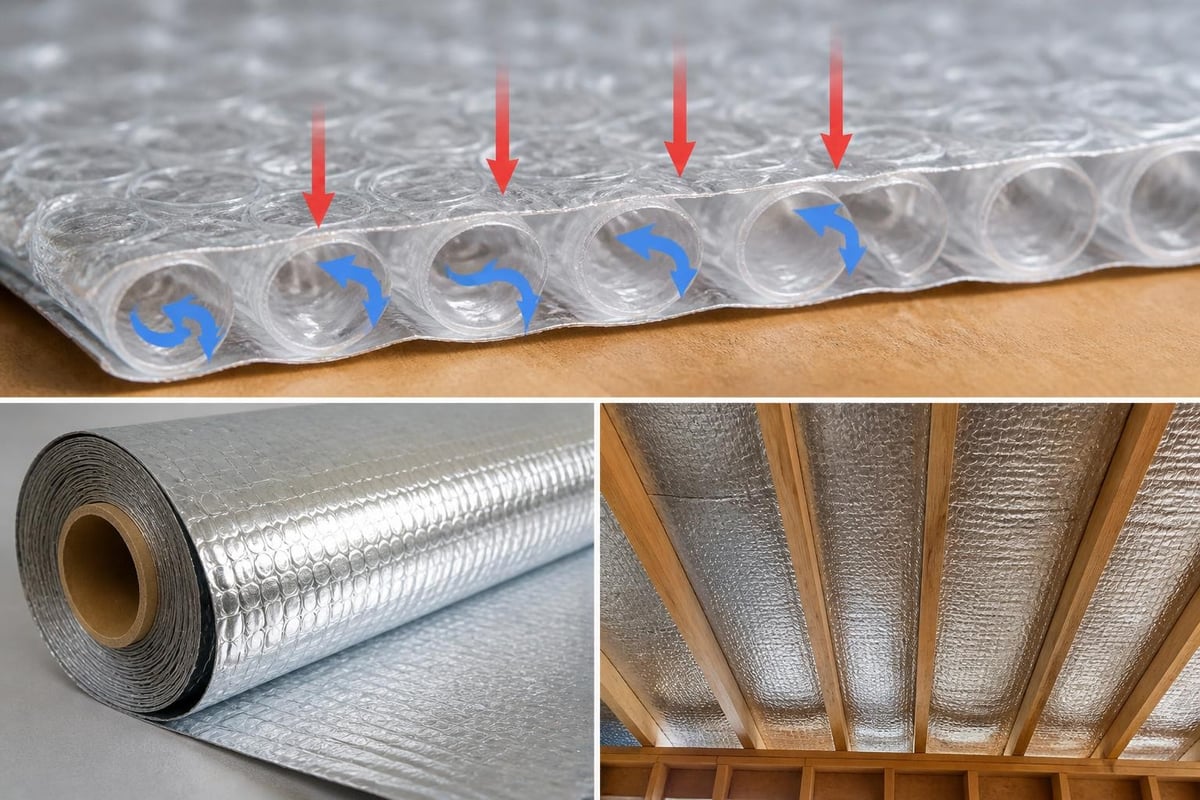
The thermal performance of bubble wrap for insulation relies on two key mechanisms: trapped air and reflective surfaces.
Standard packaging bubble wrap creates tiny air pockets between plastic layers. These pockets resist conductive heat flow, though the effect is modest. The plastic itself offers minimal resistance, and without a reflective layer, radiant heat passes straight through.
Foil-backed bubble wrap changes the equation significantly. These products feature:
- Aluminium foil laminated to one or both sides
- Sealed air bubbles between layers
- Radiant barrier properties that reflect infrared heat
- Flexible installation around irregular shapes
The U.S. Department of Energy Building America guide explains how radiant barriers work best when facing an air gap. Heat moves in three ways: conduction, convection and radiation. Bubble wrap addresses radiation reasonably well when installed with proper air spaces, but struggles with the other two modes.
Thermal Resistance Values
R-values for bubble wrap products vary depending on construction and installation method.
| Product Type | Typical R-Value | Installation Method |
|---|---|---|
| Single foil layer + bubbles | R0.5 – R1.0 | Against solid surface |
| Double foil + bubbles | R1.0 – R2.0 | With one air gap |
| Double foil + bubbles | R2.0 – R3.7 | With two air gaps |
These numbers tell only part of the story. The Building Science Corporation analysis demonstrates that claimed R-values for reflective/bubble products often depend heavily on test conditions that don't match real-world installations.
Common Applications for Bubble Wrap Insulation
Bubble wrap for insulation finds legitimate use in specific situations where its unique properties offer advantages.
Underfloor Applications
Suspended timber floors benefit from foil bubble wrap as a supplementary layer. The material wraps around floor joists easily, creating a reflective barrier against the cold subfloor void.
When installing reflective underfloor wraps, proper technique matters. Homeowners looking for more robust underfloor solutions should consider products specifically engineered for this purpose, such as the Underfloor Wrap Reflective Foil Insulation, which combines radiant barrier properties with moisture resistance designed for Australian conditions.
Shed and Garage Walls
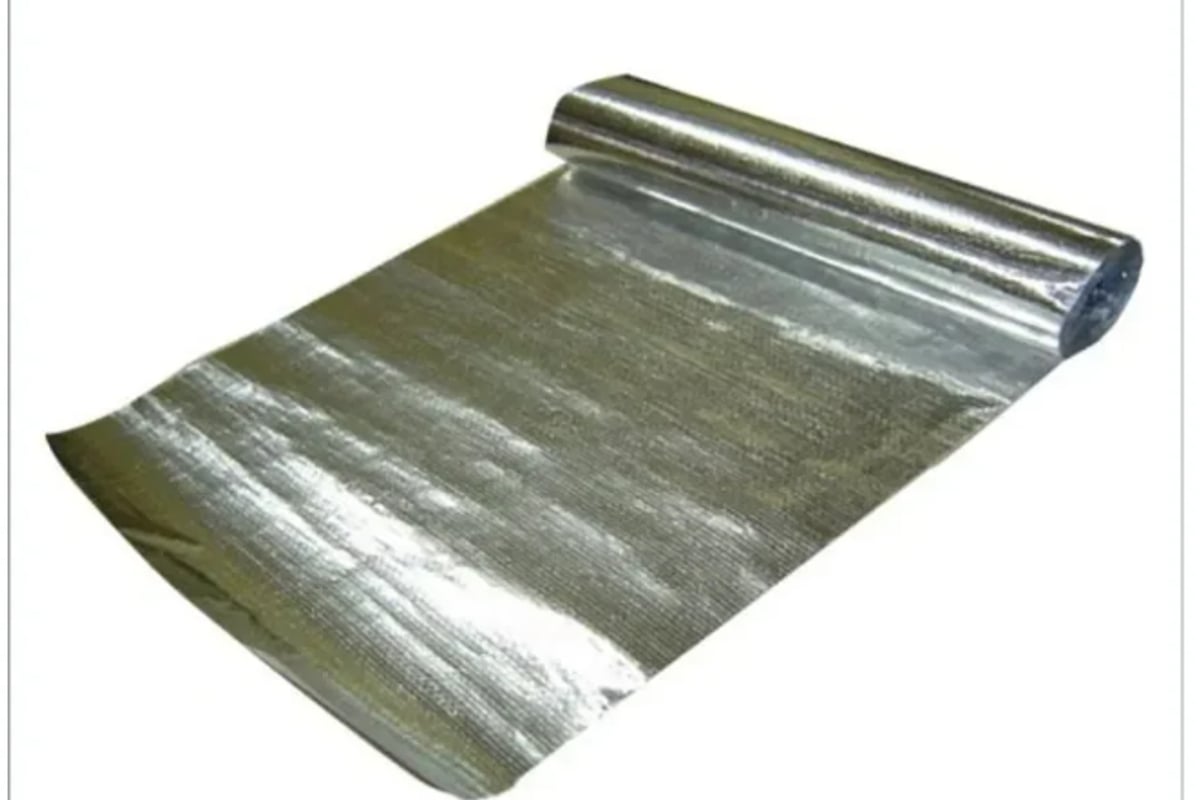
DIY builders often line metal sheds with bubble wrap insulation before adding internal cladding. The reflective surface helps:
- Reduce summer heat gain through metal walls
- Create a vapour barrier in some climates
- Provide temporary weather protection during construction
- Add minimal thermal mass while reflecting radiant heat
Temporary and Emergency Use
Research from SINTEF on bubble wrap for hypothermia prevention shows how the material can trap body heat effectively in emergency situations. This same principle applies to protecting pipes temporarily or creating quick thermal breaks during renovations.
Where Bubble Wrap Insulation Falls Short
Understanding limitations helps avoid disappointment and wasted effort.
Limited Conductive Resistance
The thin plastic and air bubble construction provides minimal resistance to conductive heat flow. In roof spaces reaching 60–70°C on summer days, or underfloor areas near freezing in winter, bubble wrap alone won't deliver the thermal performance required by Australian building codes.
Modern building regulations specify minimum R-values:
- Walls: R1.5 to R2.5 (depending on climate zone)
- Ceilings: R3.5 to R6.0 (depending on climate zone)
- Floors: R1.0 to R2.0 (depending on climate zone)
Climate zones across Australia determine exact requirements. Bubble wrap for insulation rarely achieves these values on its own.
Installation Dependencies
Performance claims assume perfect installation:
- Minimum 25mm air gap facing the reflective surface
- No dust buildup reducing reflectivity
- Proper sealing of overlaps
- Correct orientation toward heat source
Field installations rarely match laboratory conditions. Dust accumulation in Australian conditions reduces reflectivity significantly within months.
Moisture and Condensation Concerns
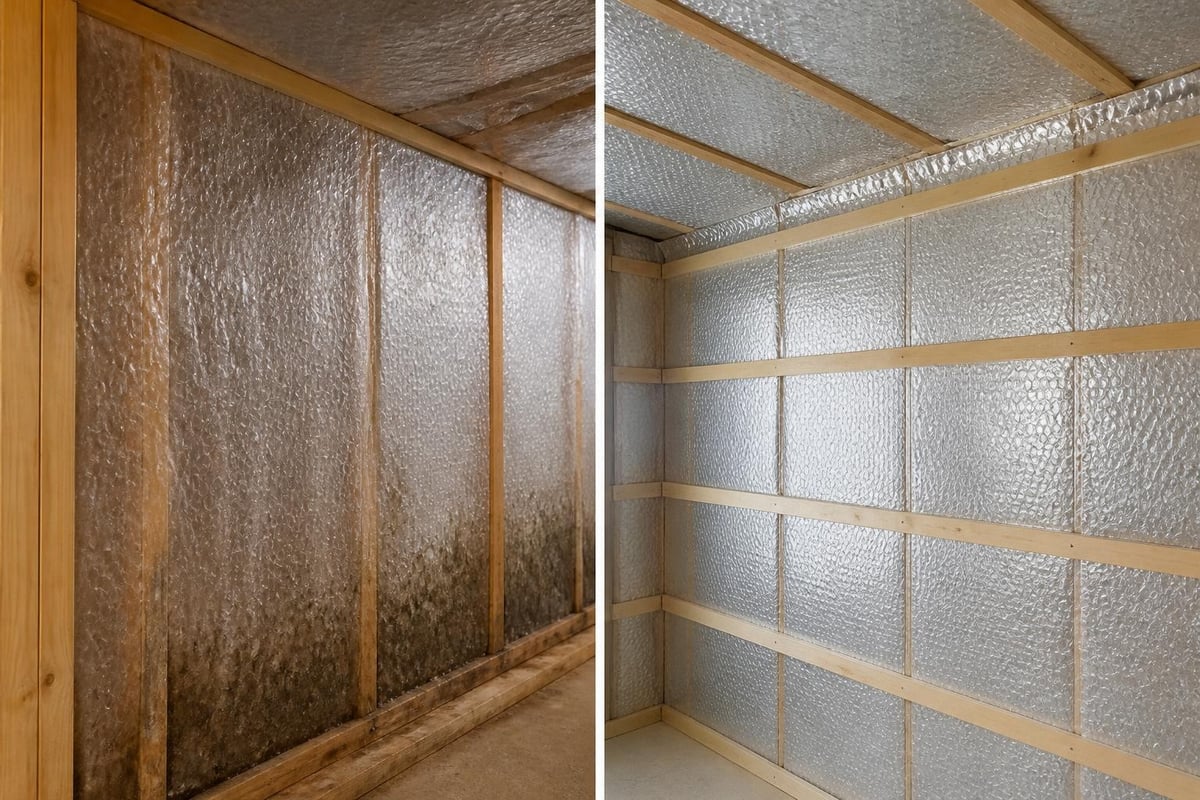
Foil-backed bubble wrap acts as a vapour barrier. Incorrect placement can trap moisture within wall or ceiling cavities, leading to:
- Timber rot in structural members
- Mould growth behind internal linings
- Reduced performance of other insulation materials
- Long-term building fabric damage
The Virginia Cooperative Extension guidance on radiant barriers emphasises the importance of understanding local climate before installing reflective products.
Better Alternatives for Most Applications
Modern insulation technology offers superior performance for Australian homes.
Glasswool and Polyester Batts
Purpose-built insulation batts deliver consistent R-values regardless of installation nuances:
- Ceiling batts achieve R3.5 to R6.0 with proven performance
- Wall batts fit standard timber or steel framing perfectly
- Acoustic benefits reduce noise transmission between rooms
- Non-combustible options improve fire safety
Products manufactured with ECOSE® Technology offer low-dust, soft-handling characteristics that make DIY installation practical. Wall insulation in Melbourne delivers measurable comfort improvements year-round.
Reflective Foil Laminates
Purpose-designed reflective foil insulation combines radiant barriers with proper thermal breaks. These products typically feature:
- Multiple reflective layers
- Engineered air gaps built into the construction
- Higher R-values than bubble wrap products
- Australian certification and compliance
XPS and EPS Rigid Boards
For applications requiring high compressive strength and moisture resistance, rigid foam boards outperform bubble wrap dramatically. Under concrete slabs, around foundations, and in wet areas, closed-cell foam delivers consistent insulation regardless of moisture levels.
Strategic Uses for Bubble Wrap Materials
Despite limitations, bubble wrap for insulation has a place in the builder's toolkit.
Supplementary Layers
Combining bubble wrap with primary insulation can boost overall performance:
| Primary Insulation | Bubble Wrap Addition | Combined Benefit |
|---|---|---|
| Ceiling batts R4.0 | Reflective bubble under roofing | Reduced summer radiant gain |
| Underfloor batts R2.5 | Foil bubble wrap | Improved vapour control |
| Wall batts R2.5 | External reflective wrap | Better air sealing |
Retrofit Situations
Existing buildings with limited ceiling or wall cavity depth sometimes can't accommodate full-thickness batts. Thin bubble wrap products fit where nothing else will, providing some improvement over bare cavities.
The U.S. Department of Energy research on multilayer foil systems shows how multiple thin reflective layers can achieve respectable R-equivalents when installed with proper air gaps in constrained spaces.
Thermal Break Applications
Around windows, doors and structural penetrations, small strips of bubble wrap can interrupt thermal bridges. The material compresses easily around irregular shapes and creates both a thermal and air barrier.
Installation Best Practices
When you choose to use bubble wrap for insulation, proper installation maximises performance.
Creating Effective Air Gaps
Reflective surfaces need air space to work:
- Install battens or spacers to maintain 25–50mm gaps
- Face the reflective side toward the heat source
- Seal edges with foil tape, not regular adhesive tape
- Avoid compressing bubbles during installation
Overlapping and Sealing
Air leakage defeats thermal performance:
- Overlap seams by at least 100mm
- Use aluminium foil tape on all joints
- Seal around penetrations carefully
- Staple edges securely every 150–200mm
Avoiding Common Mistakes
New installers often make these errors:
- Installing without air gaps: Eliminates radiant barrier benefit
- Wrong vapour barrier placement: Creates condensation problems
- Covering with dust-collecting surfaces: Reduces reflectivity rapidly
- Compressing bubbles: Removes insulating air pockets
Recent research from City University of Hong Kong on infrared-transparent bubble structures explores advanced optical designs, though these remain experimental and not yet available for building applications.
Cost Considerations and Value Assessment
Budget-conscious renovators appreciate the affordability of bubble wrap for insulation, but long-term value requires careful analysis.
Upfront Costs
Standard foil bubble wrap costs roughly $3–6 per square metre, significantly less than quality batts at $8–15 per square metre. This price advantage tempts DIY renovators, but performance per dollar tells a different story.
Value comparison:
| Material | Cost/m² | R-Value | Cost per R-Value Unit |
|---|---|---|---|
| Bubble wrap (with air gaps) | $4.50 | R1.5 | $3.00 |
| Polyester batts R2.5 | $10.00 | R2.5 | $4.00 |
| Glasswool batts R4.0 | $12.00 | R4.0 | $3.00 |
Long-Term Performance
Bubble wrap degrades over time:
- UV exposure breaks down plastic within 5–10 years
- Reflectivity decreases with dust accumulation
- Bubbles can puncture during construction
- Adhesive failures allow air gaps to close
Quality batts maintain rated performance for decades. Underfloor insulation batts installed properly in 2000 still deliver full R-value in 2026.
Regulatory and Compliance Issues
Australian building codes establish minimum thermal performance requirements.
Building Code of Australia (BCA)
The National Construction Code specifies total R-value requirements for different climate zones. Bubble wrap for insulation alone rarely meets these minimums for primary building elements.
Builders and owner-builders must demonstrate compliance through:
- Deemed-to-satisfy provisions using rated materials
- Performance solution calculations by qualified professionals
- Verification methods comparing whole-building energy use
Product Certification
Look for products certified to Australian/New Zealand standards:
- AS/NZS 4859.1: Materials used in thermal insulation systems
- AS 4200.2: Pliable building membranes and underlays
- Independent testing by BRANZ or similar bodies
Uncertified bubble wrap products may void building warranties and create compliance headaches during property sales.
Hybrid Systems and Modern Applications
Innovation continues in reflective insulation technology.
Multi-Layer Reflective Products
Modern engineered products go beyond simple bubble wrap:
- Three or four reflective layers with sealed air gaps
- Reinforced plastic backing for durability
- Pre-installed spacing battens
- Integrated vapour control layers
Research on heat transfer components examines how closed air-space materials affect conductive and convective pathways in building assemblies, informing better product design.
Integration with Primary Insulation
The most effective approach combines technologies:
Roof assembly example:
- Metal roofing
- 25mm air gap
- Reflective bubble layer
- Ceiling batts R4.0 or higher
- Plasterboard ceiling
This hybrid approach uses each material where it performs best: bubble wrap reflects summer radiant heat, while batts provide conductive resistance year-round.
Selecting the Right Insulation Strategy
Choosing insulation requires matching products to specific performance needs.
Assessment Factors
Consider these questions:
- What climate zone determines minimum R-value requirements?
- Is this new construction or retrofit?
- What cavity depths are available?
- Are moisture and condensation risks present?
- What's the budget for materials and labour?
For comprehensive guidance, explore resources on ceiling insulation in Melbourne that compare different material options.
Decision Matrix
| Situation | Best Choice | Bubble Wrap Role |
|---|---|---|
| New roof construction | High-R batts | Optional radiant barrier |
| Suspended timber floor | Underfloor batts + wrap | Moisture/vapour control |
| Metal shed walls | Bubble wrap | Primary insulation acceptable |
| Ceiling retrofit | Blown or batt insulation | Not recommended |
Professional Advice
Complex projects benefit from expert input:
- Energy assessors can model whole-building performance
- Insulation specialists understand local climate challenges
- Building certifiers ensure code compliance
- Experienced installers avoid moisture trap scenarios
Environmental and Health Considerations
Sustainability-minded renovators weigh environmental impacts alongside performance.
Manufacturing and Materials
Bubble wrap for insulation typically uses:
- Polyethylene plastic (recyclable but rarely recycled)
- Aluminium foil (energy-intensive to produce)
- Adhesives with varying VOC levels
Glasswool and polyester batts manufactured with ECOSE® Technology use plant-based binders with minimal formaldehyde, offering health advantages during installation and occupancy.
Disposal and Recycling
End-of-life disposal challenges include:
- Mixed materials (foil + plastic) difficult to separate
- Most councils don't accept in kerbside recycling
- Landfill remains the usual destination
Purpose-built insulation batts from major manufacturers often include recycled content and clear disposal pathways.
Indoor Air Quality
Bubble wrap itself releases minimal emissions once installed, but improper installation creating moisture problems leads to mould growth and poor indoor air quality over time.
Practical Installation Scenarios
Real-world examples show where bubble wrap works and where better alternatives exist.
Garden Studio Project
A homeowner building a backyard studio in Melbourne considered bubble wrap for insulation to save money. After consulting building regulations, they discovered:
- Walls needed R2.5 minimum
- Ceiling required R4.0
- Bubble wrap alone achieved neither target
Solution adopted: Wall and ceiling batts for code compliance, with bubble wrap added in the floor assembly as a supplementary vapour barrier beneath conventional underfloor insulation.
Garage Conversion
Converting an existing garage to habitable space presented challenges:
- Limited ceiling height couldn't accommodate thick batts
- Budget constraints ruled out spray foam
- Heritage overlay restricted external cladding changes
Hybrid approach: Reflective bubble wrap with carefully engineered air gaps in the ceiling, supplemented by rigid foam boards in walls where space allowed, plus high-quality internal lining for additional thermal mass.
Machinery Shed
A rural property needed economical insulation for a large machinery shed:
- No heating or cooling planned
- Primary goal: reduce condensation
- Budget: minimal
Appropriate use: Bubble wrap for insulation lined the metal walls and roof, providing adequate radiant barrier protection and vapour control for this low-performance-requirement application.
Future Developments and Research
Materials science continues advancing thermal control technologies.
Researchers are exploring:
- Aerogel-enhanced bubble structures for higher R-values per millimetre
- Smart reflective coatings that change properties with temperature
- Biodegradable alternatives to polyethylene films
- Phase-change materials embedded in bubble chambers
These innovations may eventually deliver the performance bubble wrap enthusiasts hoped for, but remain years from commercial availability at affordable prices.
Bubble wrap for insulation offers niche benefits in specific applications, but rarely serves as a complete thermal solution for Australian homes. Purpose-built insulation products deliver superior R-values, long-term durability and straightforward code compliance. When you're ready to insulate your home properly with products engineered for Australian conditions, Insulation Supplies Australia stocks a comprehensive range of ceiling, wall, underfloor and specialty insulation with delivery across Victoria and expert guidance to help you choose the right solution for your project.