
Choosing the right roof insulation can transform your home's comfort and slash energy bills year-round. With Australia's extreme climate swings, from scorching summers to chilly winters, understanding the different types of roof insulation available helps you make an informed decision that suits your budget, building type, and performance goals. Whether you're renovating an older home, building new, or simply looking to improve thermal efficiency, this guide breaks down the most common insulation materials, their benefits, and where each type works best.
Understanding Roof Insulation Basics
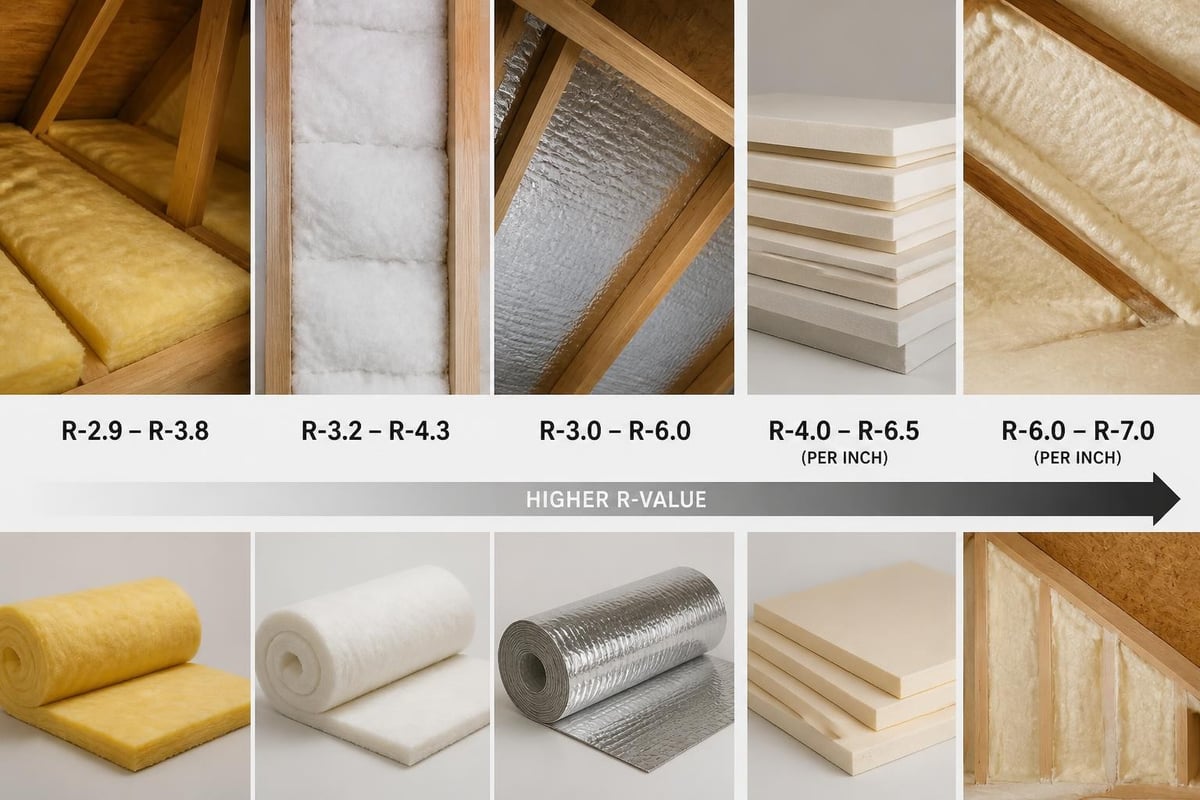
Roof insulation sits between your living space and the harsh outdoor environment, acting as a thermal barrier that keeps heat out in summer and warmth in during winter. The performance of any insulation material is measured by its R-value, which indicates thermal resistance. Higher R-values mean better insulating performance.
In Victoria and across Australia, building regulations require minimum R-values depending on your climate zone. Melbourne falls into Climate Zone 6, typically requiring R4.0 to R6.0 ceiling insulation for new builds. Understanding these requirements helps narrow down which types of roof insulation will meet code and deliver long-term comfort.
How Roof Insulation Works
Most types of roof insulation work by trapping air within their structure, slowing heat transfer through conduction, convection, and radiation. Some materials excel at blocking radiant heat, while others focus on bulk thermal resistance. The right choice depends on your roof design, whether you have a ceiling cavity, and your specific climate challenges.
Glasswool Blanket and Batt Insulation
Glasswool remains one of the most popular types of roof insulation across Australia, valued for its proven performance, affordability, and ease of installation. Made from recycled glass and sand spun into fine fibres, glasswool traps air pockets to deliver excellent thermal resistance.
Advantages of Glasswool
- High thermal performance: Available in R-values from R1.5 to R7.0, suitable for all Australian climate zones
- Fire resistance: Non-combustible material that won't contribute to fire spread
- Acoustic benefits: Reduces noise transmission from rain, aircraft, and external sources
- Cost-effective: Competitive pricing compared to other insulation types
- Easy installation: Friction-fit batts and blankets suit DIY projects
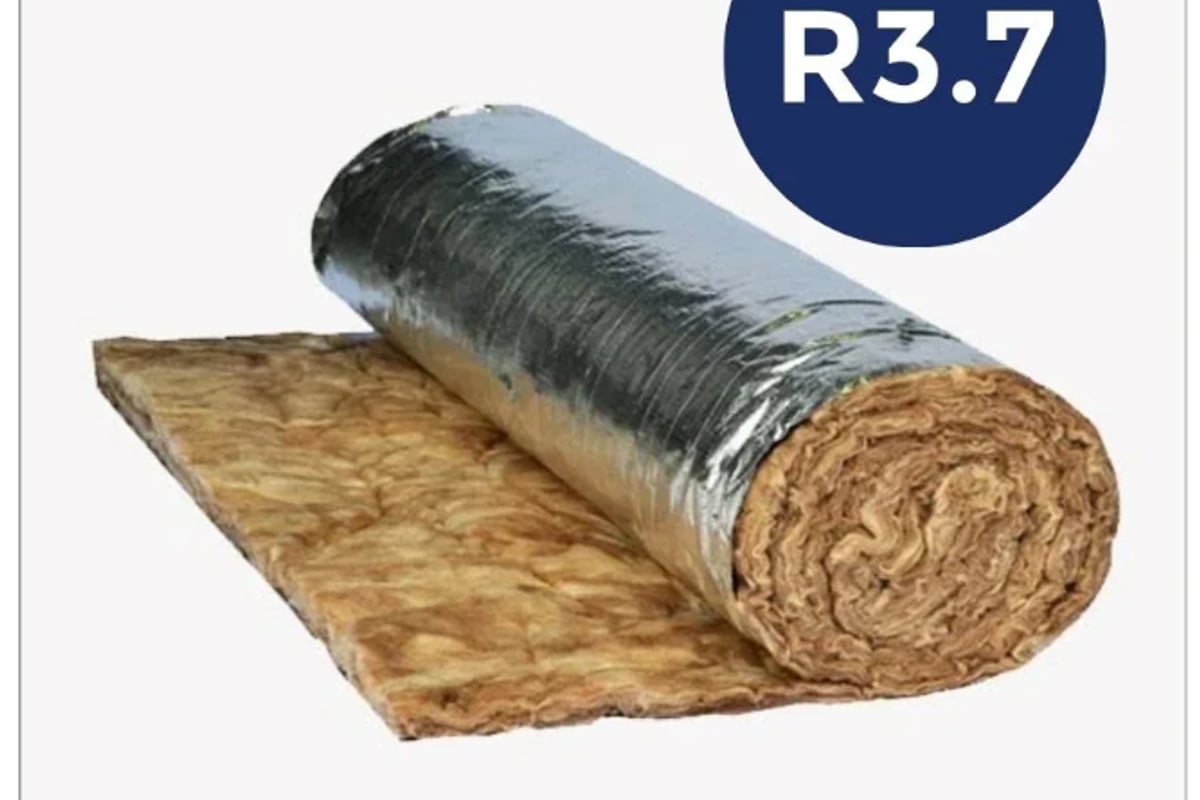
Modern glasswool products manufactured with ECOSE Technology are softer to handle, generate less dust, and contain no added formaldehyde. This makes installation more comfortable and safer for DIY renovators. For roofing applications, the Thermal Blanket R3.7 22kg/m³ 130mm x 1.2m Roof Insulation Blanket provides a premium high-performance solution with higher density construction that delivers improved insulation performance in both hot and cold conditions.
Installation Considerations
Glasswool blankets typically come in 1200mm widths, perfect for standard rafter spacing. Batts are pre-cut to fit between common stud or joist spacings. When installing glasswool in ceiling cavities, ensure adequate ventilation remains above the insulation to prevent moisture buildup. The U.S. Department of Energy's guide to home insulation provides comprehensive information on proper installation techniques and R-value selection.
| Glasswool Feature | Benefit | Consideration |
|---|---|---|
| High R-values | Superior thermal performance | Requires adequate thickness |
| Non-combustible | Excellent fire safety | Must stay dry for best performance |
| Acoustic control | Reduces noise transfer | Density affects sound absorption |
| Soft handling | Comfortable installation | Still requires protective gear |
Polyester Insulation
Polyester insulation offers a lightweight, non-itch alternative to glasswool. Made from recycled plastic bottles, polyester batts and blankets provide good thermal performance with added benefits for DIY installers and those sensitive to fibrous materials.
Why Choose Polyester
Polyester types of roof insulation are completely non-allergenic and require no protective clothing during installation. They won't absorb moisture, maintaining their R-value even in humid conditions. This makes polyester particularly suitable for coastal areas or homes prone to condensation issues.
- Safe to handle without gloves or masks
- Hydrophobic properties resist moisture absorption
- Recyclable and environmentally friendly
- Maintains loft and performance over time
- Odourless and low VOC emissions
Performance Comparison
While polyester generally costs more than glasswool, many homeowners find the installation comfort worth the premium. Polyester insulation typically achieves R-values from R1.5 to R6.0, covering most Australian requirements. The material's resilience means it bounces back after compression, making it ideal for tight access areas.
Reflective Foil and Bulk Insulation Systems
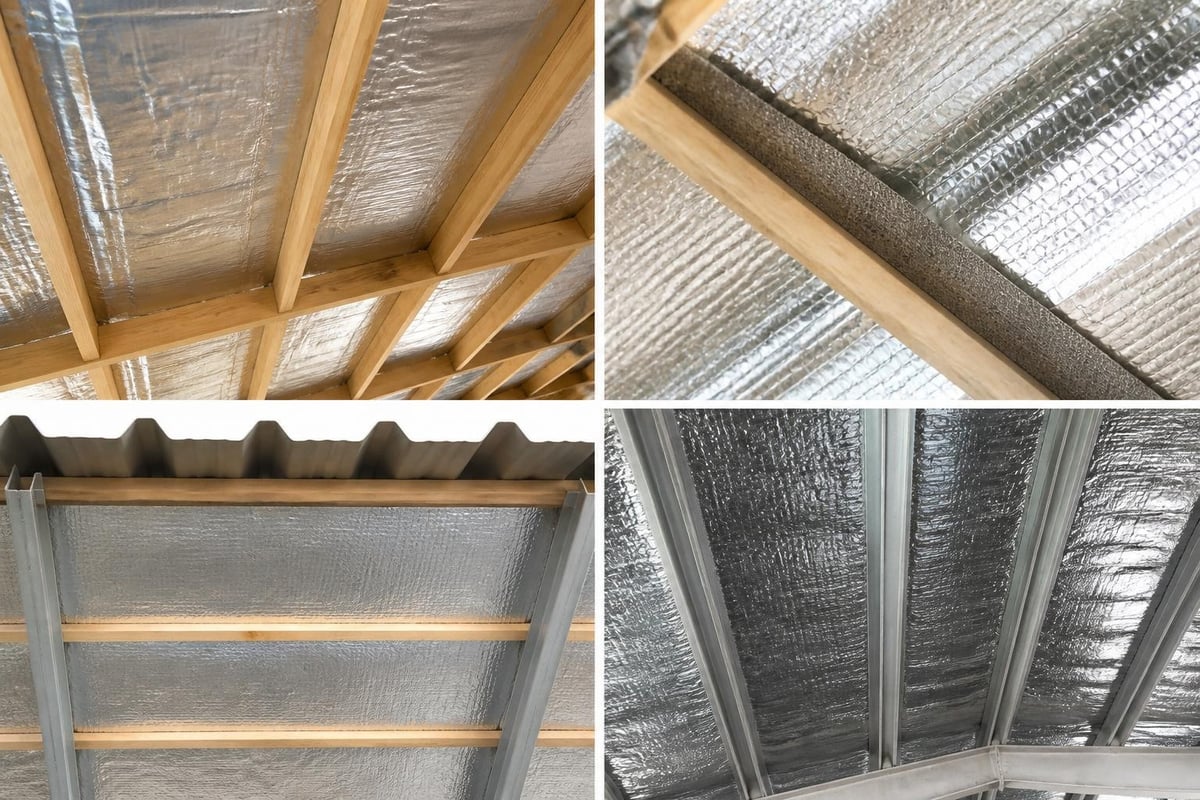
Reflective foil insulation works differently from bulk insulation materials. Rather than trapping air, foil layers reflect radiant heat away from living spaces. These types of roof insulation are particularly effective in Australian conditions where radiant heat from metal roofing can account for significant summer heat gain.
Single Foil vs Multi-Cell Systems
Basic reflective foil consists of aluminium layers laminated to support materials. Multi-cell systems combine reflective layers with air gaps or foam cores to provide both radiant and bulk thermal resistance. The performance depends heavily on installation, particularly maintaining the required air gap adjacent to reflective surfaces.
To work effectively, foil insulation needs at least a 25mm air space facing the reflective surface. Without this gap, the material cannot reflect radiant heat properly. This makes foil insulation more suitable for new construction or specific retrofit situations where air gaps can be maintained.
Combined Systems
Many Australian homes benefit from combining bulk insulation (like glasswool) with reflective foil. The bulk material provides high R-value thermal resistance while the foil layer blocks radiant heat. According to Building Science Corporation's analysis of unvented roof assemblies, careful sequencing of different insulation layers improves overall performance and manages moisture risk.
Rigid Board Insulation
Rigid foam boards offer another category among types of roof insulation. These dense panels come in various materials including extruded polystyrene (XPS), expanded polystyrene (EPS), and polyisocyanurate (polyiso). Each has distinct characteristics suited to different applications.
XPS and EPS Boards
Extruded polystyrene (XPS) provides high compressive strength and excellent moisture resistance, making it ideal for demanding applications. XPS typically achieves R-values around R1.0 per 25mm thickness and maintains performance in wet conditions.
Expanded polystyrene (EPS) offers a more economical option with good thermal performance but lower moisture resistance. EPS boards work well in protected environments like ceiling cavities where moisture exposure is minimal.
Polyiso and Roofing Applications
Polyisocyanurate boards deliver the highest R-value per inch of any rigid insulation, commonly used in commercial roofing systems. The National Roofing Contractors Association guidance on polyiso details proper specification and installation requirements for low-slope roofs.
| Board Type | R-value/25mm | Moisture Resistance | Best Application |
|---|---|---|---|
| XPS | ~1.0 | Excellent | Exposed locations |
| EPS | ~0.95 | Fair | Protected cavities |
| Polyiso | ~1.4 | Good | Commercial roofs |
Rigid boards require careful cutting and fitting but create continuous insulation layers that minimize thermal bridging through framing members. This makes them particularly valuable when combined with bulk insulation in hybrid assemblies.
Spray Foam Insulation
Spray polyurethane foam (SPF) represents a premium option among types of roof insulation. Applied as a liquid that expands and hardens, spray foam creates a seamless insulating layer that fills gaps and adheres to roof decking, rafters, and sheathing.
Open-Cell vs Closed-Cell Foam
Open-cell SPF is lighter, less expensive, and provides good thermal performance with some air permeability. It typically achieves R3.5 to R3.9 per 100mm and allows some moisture vapour transmission.
Closed-cell SPF offers higher R-values (R5.0 to R7.0 per 100mm), superior moisture resistance, and adds structural strength to roof assemblies. The Building Science Corporation's hybrid assemblies paper explains how closed-cell foam creates an effective air and vapour barrier when applied to roof decking.
Professional Installation Requirements
Unlike batts or blankets, spray foam requires professional installation with specialized equipment. Proper mixing, temperature control, and application technique are critical for achieving rated performance. When correctly installed, spray foam creates an air-tight thermal envelope that dramatically reduces energy consumption.
Spray foam works exceptionally well in cathedral ceilings and unvented roof assemblies where creating a conditioned space at the roof deck improves HVAC efficiency. However, the higher material and installation costs mean spray foam suits specific applications where its unique benefits justify the investment.
Insulated Panels and Structural Systems
Structural insulated panels (SIPs) and similar systems integrate insulation into the building structure itself. While less common in retrofits, these types of roof insulation offer compelling benefits for new construction and major renovations.
SIP Construction
SIPs consist of rigid foam insulation sandwiched between structural facing panels, typically oriented strand board (OSB). The panels arrive pre-cut to specifications and install quickly, creating both structure and insulation in one step. SIP roofs can achieve R-values from R4.0 to R7.0 depending on thickness.
Metal Roof Panels with Integrated Insulation
Insulated metal roof panels combine exterior metal cladding, insulation core, and interior lining in a single component. Popular in commercial and agricultural buildings, these panels streamline installation and deliver predictable performance. The continuous insulation layer eliminates thermal bridging common in traditional framed construction.
Choosing the Right Type for Your Project
Selecting among the various types of roof insulation depends on multiple factors beyond just R-value. Consider your budget, DIY capability, roof design, moisture risk, and long-term performance goals.
Climate Zone Requirements
Melbourne's Climate Zone 6 demands good winter performance and strong summer heat rejection. Higher R-values (R4.0 to R6.0) work best in ceiling applications. Homes in bushfire-prone areas need non-combustible materials, making glasswool an excellent choice over combustible foams in certain locations.
The Whole Building Design Guide's moisture management resource helps assess vapour control needs based on your climate and building assembly. Understanding moisture flow prevents condensation issues that can degrade insulation performance over time.
Installation Method and Access
Retrofit projects in existing homes typically suit batts or blankets that fit between ceiling joists. Tight roof spaces may require blown-in insulation, while cathedral ceilings often benefit from spray foam. New construction offers more flexibility to combine multiple insulation types for optimal performance.
The DOE's air sealing guide emphasizes sealing penetrations and gaps before adding insulation. Air leakage defeats even the best insulation materials, so proper air sealing maximizes your investment.
Budget Considerations
| Insulation Type | Relative Cost | DIY Friendly | Lifespan |
|---|---|---|---|
| Glasswool batts | Low | Yes | 50+ years |
| Polyester batts | Medium | Yes | 50+ years |
| Reflective foil | Low-Medium | Moderate | 50+ years |
| Rigid boards | Medium-High | Moderate | 50+ years |
| Spray foam | High | No | 50+ years |
Glasswool and polyester batts offer the most cost-effective solutions for most homes, especially when homeowners handle installation themselves. Spray foam costs more upfront but may deliver better long-term value in applications where air sealing and high R-value are critical.
Health, Safety and Environmental Factors
Modern types of roof insulation increasingly focus on occupant health and environmental responsibility. Understanding these factors helps you choose products that protect both your family and the planet.
Indoor Air Quality
Low-VOC and formaldehyde-free insulation products improve indoor air quality, particularly important in tightly sealed energy-efficient homes. The EPA's Indoor airPLUS specification sets standards for material emissions and ventilation requirements that ensure healthy indoor environments.
Glasswool manufactured with ECOSE Technology and polyester insulation both rate well for indoor air quality. Spray foams should be allowed to fully cure and off-gas before occupancy, typically 24 to 48 hours after installation.
Recycled Content and Sustainability
Many insulation types now incorporate significant recycled content. Glasswool contains up to 80% recycled glass, while polyester insulation is made from recycled plastic bottles. Choosing products with recycled content reduces environmental impact without sacrificing performance.
Australian manufacturers increasingly adopt sustainable production methods that reduce energy consumption and greenhouse gas emissions. Insulation Supplies Australia stocks products from manufacturers committed to environmental responsibility and sustainable practices.
Fire Safety Standards
Non-combustible insulation materials provide critical fire resistance in roof assemblies. Glasswool and mineral wool achieve the highest fire ratings, while some foam products require additional protection or fire-rated coverings. Understanding your local building code requirements ensures compliance and safety.
Performance Testing and Real-World Results
Laboratory R-values provide standardized comparisons, but real-world performance depends on proper installation and whole-building interactions. The Oak Ridge National Laboratory's field study evaluated retrofit roof technologies under actual conditions, revealing how installation quality impacts results.
Common Installation Mistakes
Even the best types of roof insulation underperform when poorly installed. Common issues include:
- Compression: Squashing batts reduces thickness and R-value
- Gaps: Leaving spaces between batts creates thermal bridges
- Insufficient coverage: Failing to insulate fully over walls
- Blocked ventilation: Restricting airflow causes moisture problems
- Missing vapour barriers: Allowing moisture into assemblies where it shouldn't be
Following manufacturer installation guidelines and building code requirements ensures your insulation delivers rated performance. For professional guidance, Insulation Supplies Australia's installation resources provide detailed best practices.
Monitoring and Maintenance
Quality insulation requires little maintenance, but periodic inspections ensure performance remains optimal. Check for moisture stains, compression from storage items, and pest damage. Address any issues promptly to maintain thermal performance and prevent larger problems.
Code Compliance and Standards
Australian building regulations establish minimum requirements for different types of roof insulation based on climate zone. The National Construction Code (NCC) sets these standards, updated regularly to improve energy efficiency.
ASHRAE and Continuous Insulation
The ASHRAE standards provide additional guidance on thermal-bridging reduction and continuous insulation approaches. While primarily US-focused, these standards inform Australian best practices, particularly for commercial projects and high-performance homes.
Local Building Permits
Most insulation upgrades in existing homes don't require permits, but new construction and major renovations do. Check with your local council about requirements. Professional installers typically handle permit coordination, while DIY renovators should verify requirements before starting work.
Understanding the different types of roof insulation empowers you to make informed decisions that improve home comfort, reduce energy costs, and meet building regulations. Whether you choose glasswool for its proven performance, polyester for installation comfort, or another material suited to your specific needs, proper selection and installation deliver decades of reliable service. Insulation Supplies Australia offers expert advice, quality products, and fast delivery across Victoria to help homeowners, renovators, and builders find the right insulation solution. Browse our range online or contact our team for personalized guidance on your next project.