
Choosing the right roof insulation type can feel overwhelming when you're standing in your roof space trying to figure out what will actually keep your home comfortable year-round. With Melbourne's hot summers and cold winters, your roof bears the brunt of temperature extremes, and the insulation you choose makes a massive difference to your energy bills, comfort, and even the lifespan of your heating and cooling systems. Understanding the main categories of roof insulation and how each performs helps you make a confident decision that suits your climate, budget, and building design.
Understanding the Main Roof Insulation Type Categories
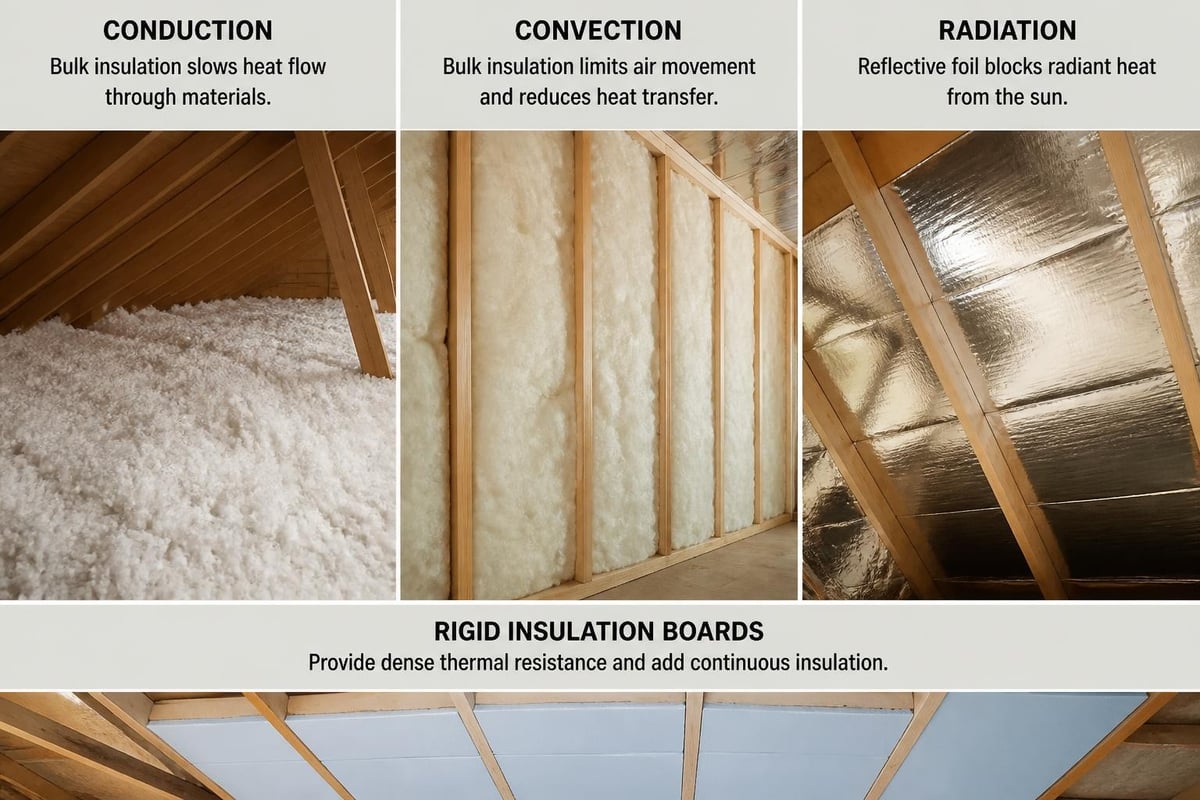
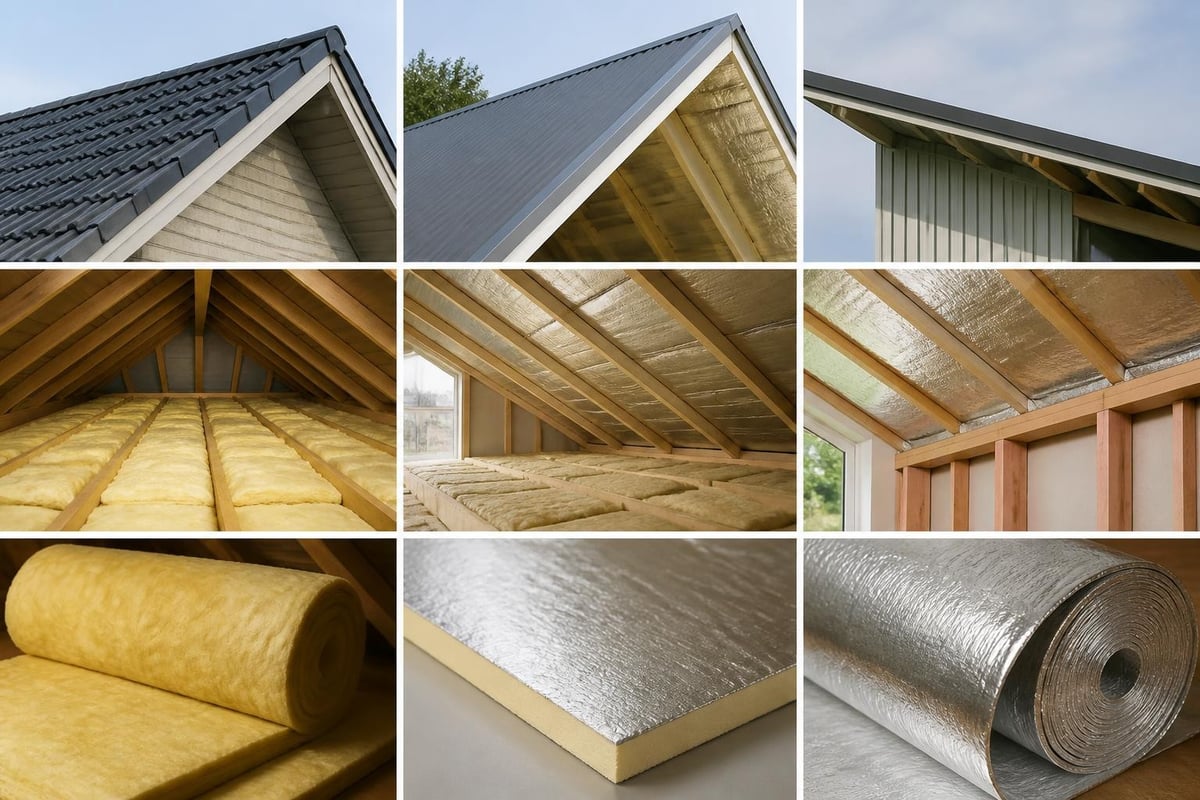
When it comes to insulating your roof, three primary categories dominate the Australian market: bulk insulation, reflective insulation, and rigid board insulation. Each roof insulation type works differently to control heat transfer, and understanding these fundamental differences helps you match the right product to your specific needs.
Bulk insulation works by trapping millions of tiny air pockets within its structure. These pockets resist the flow of conducted and convected heat. Common bulk materials include glasswool, polyester, and natural fibre products. They're rated by their R-value, which measures thermal resistance-the higher the number, the better the insulation performs.
Reflective insulation operates on a completely different principle. Rather than absorbing or slowing heat, it reflects radiant heat away from living spaces. These products typically consist of aluminium foil laminated to other materials. They're particularly effective in Australian conditions where radiant heat from the sun can account for up to 93% of summer heat gain through roofs.
Rigid board insulation includes products like extruded polystyrene (XPS) and polyisocyanate (PIR). These dense, solid panels deliver high R-values in relatively thin profiles and offer excellent moisture resistance. They're often used in commercial construction but increasingly appear in residential applications where space is limited or higher performance is required.
Bulk Glasswool and Polyester Batts
Bulk insulation batts represent the most common roof insulation type across Victoria. Glasswool and polyester batts come in pre-cut widths designed to fit between roof rafters or ceiling joists, making installation straightforward for DIY renovators and professional builders alike.
Glasswool batts are manufactured from recycled glass and sand, melted and spun into fine fibres. Modern products use advanced binder technology that reduces dust and improves handling. They're non-combustible, resist moisture, and don't settle or degrade over time. Glasswool performs consistently across a wide temperature range, making it ideal for Melbourne's variable climate.
Polyester batts are made from recycled plastic bottles and offer several unique advantages:
- Hypoallergenic – ideal for people with sensitivities
- Non-irritating – comfortable to handle without protective gear
- Moisture-resistant – won't sag or lose performance if damp
- Acoustic performance – excellent sound absorption properties
Both materials are available in multiple R-values, from R1.5 to R7.0, allowing you to match thermal performance to your climate zone requirements. The National Construction Code mandates minimum R-values for different Australian regions, with Melbourne typically requiring R4.0 to R6.0 for ceiling insulation in new construction.
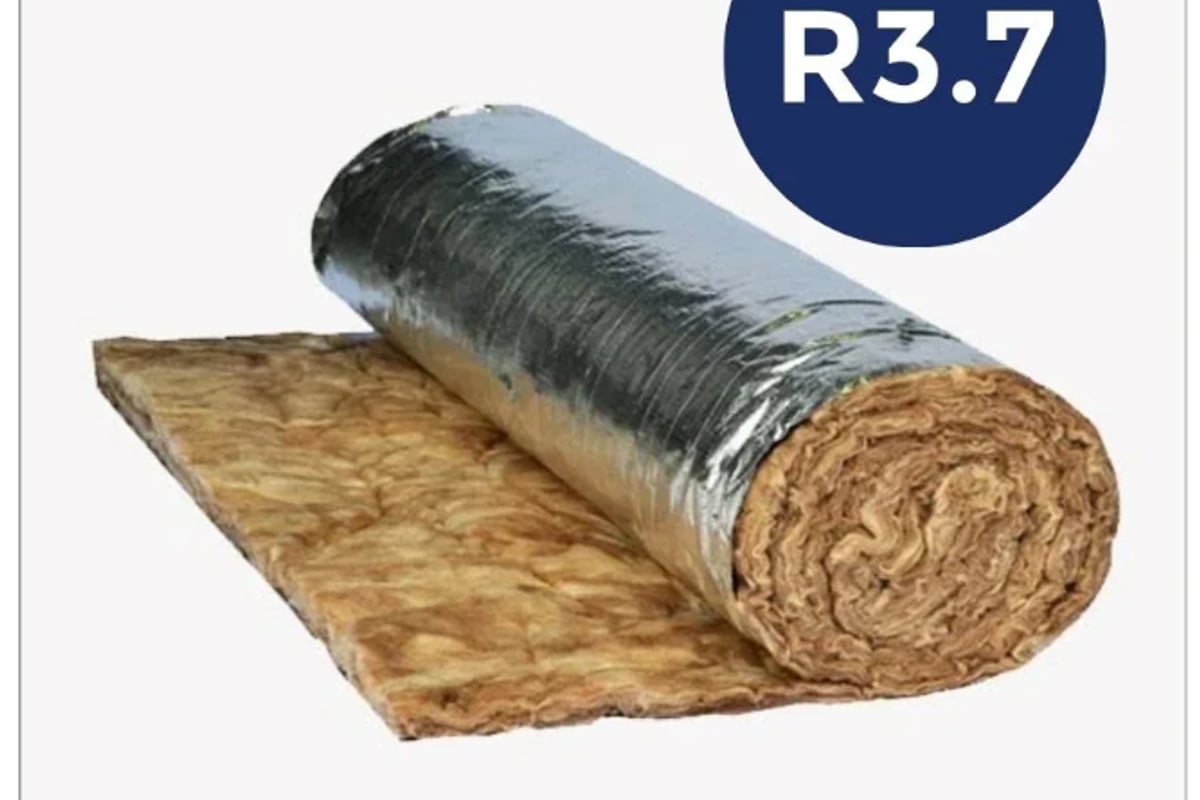
The Thermal Blanket R3.7 Roof Insulation Blanket combines higher density (22 kg/m³) construction with glasswool technology to deliver exceptional thermal resistance. This roof insulation type suits metal roof applications particularly well, where its thermal mass helps reduce temperature fluctuation and condensation risk.
Reflective Foil Systems
Reflective insulation takes a fundamentally different approach to thermal control. Rather than resisting heat flow through thickness and density, this roof insulation type reflects up to 97% of radiant heat back toward its source. In summer, that means reflecting solar radiation back out through the roof before it can warm your ceiling cavity. In winter, it reflects heat rising from your living spaces back down, reducing heat loss.
Single-layer systems consist of aluminium foil laminated to a kraft paper or bubble wrap substrate. They're lightweight, easy to install, and cost-effective. However, their performance depends entirely on having an air gap adjacent to the reflective surface-without that gap, they lose most of their reflective benefit.
Multi-layer systems combine several reflective surfaces with enclosed air spaces. These create multiple thermal breaks and can achieve R-values comparable to thinner bulk insulation products. They're particularly effective in retrofit situations where roof space is limited.
According to research from ASHRAE Journal on insulation and condensation, proper installation of reflective systems requires attention to moisture management. The air gaps that make these products effective can also become pathways for humid air, potentially leading to condensation on cold surfaces during winter.
Installation requirements for reflective insulation include:
- Minimum 25mm air gap facing the reflective surface
- Secure fastening to prevent sagging
- Sealed overlaps to maintain vapour barrier integrity
- Adequate roof ventilation to manage moisture
- Compliance with AS/NZS 4200.2 for pliable building membranes
Rigid Insulation Boards
Rigid board insulation represents the highest-performance roof insulation type available for residential construction. These solid panels deliver exceptional R-values per millimetre of thickness, making them ideal where ceiling height is precious or where extreme thermal performance is required.
Extruded polystyrene (XPS) boards feature closed-cell foam structure that provides both thermal resistance and moisture protection. They're dimensionally stable, won't compress under load, and maintain performance even in damp conditions. XPS typically delivers R-values between R0.6 to R0.7 per 25mm of thickness.
Polyisocyanurate (PIR) boards offer even higher performance, achieving R-values of approximately R1.0 per 25mm. These boards incorporate foil facings that enhance reflectivity and provide a built-in vapour barrier. PIR is frequently specified for commercial roofing but works brilliantly in residential applications where space is limited.
| Board Type | R-Value per 25mm | Moisture Resistance | Compressive Strength | Typical Application |
|---|---|---|---|---|
| XPS | R0.6-R0.7 | Excellent | 200-500 kPa | Under-roof, sarking replacement |
| PIR | R0.9-R1.0 | Very Good | 100-150 kPa | Cathedral ceilings, skillion roofs |
| EPS | R0.5-R0.6 | Good | 70-200 kPa | Flat decks, budget applications |
Installation of rigid boards requires careful cutting and fitting to prevent thermal bridges. Joints should be staggered and taped to maintain continuity. Many installers combine rigid boards with bulk insulation to achieve both high R-values and comprehensive coverage.
Climate Considerations for Roof Insulation Type Selection
Melbourne's climate demands a roof insulation type that handles both heating and cooling loads effectively. Unlike tropical regions where cooling dominates or alpine areas where heating is paramount, Victorian homes need balanced performance year-round.
Summer performance depends on the insulation's ability to resist radiant heat gain from the sun. A metal roof can reach 70°C on a summer day, creating intense radiant heat that drives up ceiling temperatures and forces your air conditioner to work overtime. Bulk insulation with high R-values resists this conducted heat, while reflective foil systems bounce radiant energy back before it can penetrate the building envelope.
Winter performance focuses on retaining heat generated by your heating system. Rising warm air accumulates at ceiling level, and without adequate insulation, that warmth conducts straight through the ceiling into the roof space and escapes to the atmosphere. The National Roofing Contractors Association guidance on roof insulation emphasises that thermal performance works bidirectionally-the same insulation that keeps heat out in summer keeps it in during winter.
Combining Insulation Types
Many experienced builders and renovators achieve optimal performance by combining different roof insulation type products in layered systems. This approach leverages the strengths of each material while compensating for individual limitations.
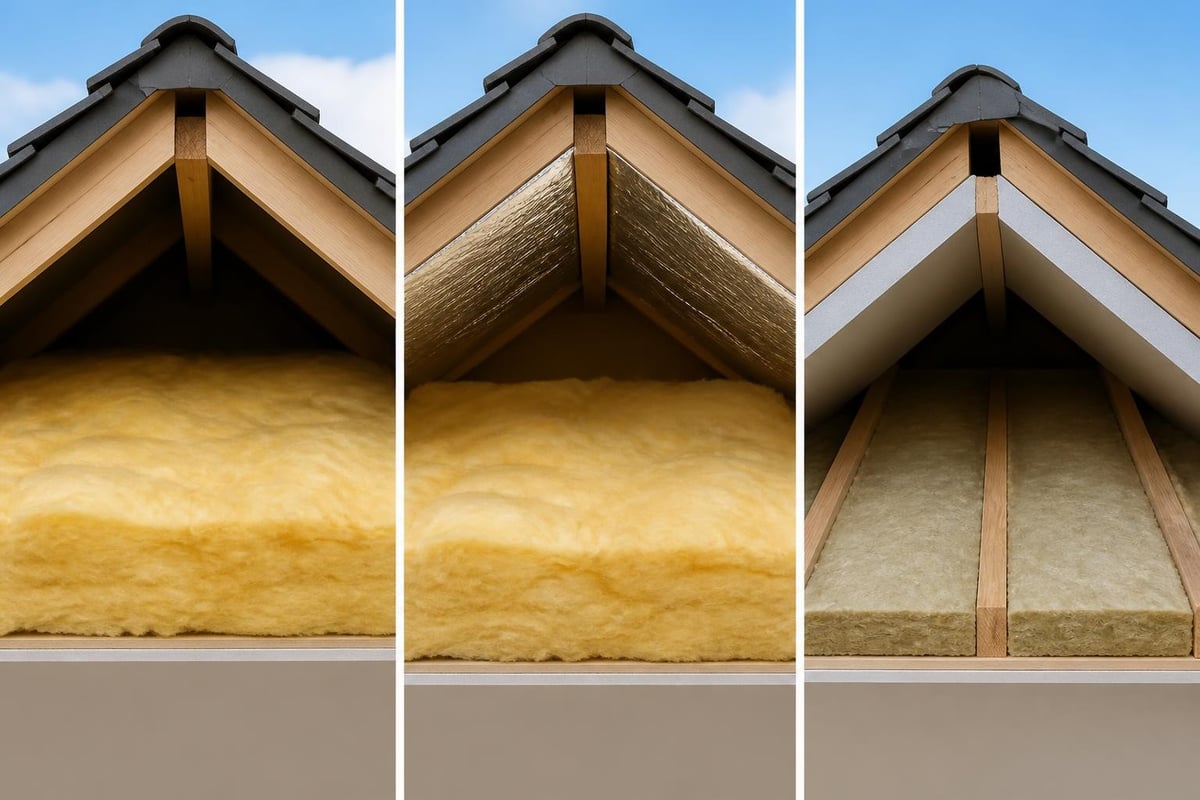
Bulk plus reflective combinations are particularly popular. Installing reflective foil sarking under the roof cladding blocks radiant heat gain, while bulk batts between ceiling joists provide high R-value thermal mass. This dual-layer approach can reduce summer ceiling temperatures by up to 15°C compared to bulk insulation alone.
Another effective combination pairs rigid board insulation over rafters with bulk insulation between them. The continuous rigid layer eliminates thermal bridging through timber framing members, while the bulk insulation fills the cavity space. This creates a virtually continuous thermal envelope that dramatically outperforms single-material systems.
R-Value Requirements and Performance Standards
Understanding R-value requirements helps you select the appropriate roof insulation type for your specific project. The National Construction Code (NCC) sets minimum thermal performance standards based on climate zones, with Melbourne falling into Zone 6. For ceiling insulation in new construction, the NCC typically requires R4.0 to R6.0 depending on the heating and cooling approach used in the overall building design.
Renovation projects don't always trigger full compliance with current standards, but upgrading to modern R-values makes economic sense. The energy savings from improving from old R1.5 or R2.0 insulation to R5.0 or R6.0 typically pay back the investment within 3-5 years through reduced heating and cooling costs.
R-value isn't the only performance metric worth considering. Thermal mass, air tightness, and condensation management all influence real-world performance. A roof insulation type with excellent laboratory R-value can underperform dramatically if poorly installed, compressed, or exposed to moisture.
Installation Quality and Performance
The performance gap between laboratory-tested R-values and real-world results often comes down to installation quality. Even the best roof insulation type loses effectiveness when poorly fitted.
Common installation mistakes include:
- Compression – Squashing batts into tight spaces reduces their R-value proportionally
- Gaps – Leaving spaces between batts creates thermal bridges
- Incomplete coverage – Missing areas around pipes, wires, and fixtures
- Damaged vapour barriers – Tears in reflective foil products
- Inadequate ventilation – Trapped moisture degrading bulk insulation
Professional installation ensures proper coverage, correct R-value for the climate zone, and compliance with building standards. For DIY enthusiasts, careful attention to manufacturer installation guides and building code requirements helps achieve professional results.
The NFPA 5000 Building Construction and Safety Code provides detailed guidance on fire safety requirements for roof insulation materials. This matters particularly with foam plastic products, which may require thermal barriers or specific covering materials to meet fire resistance standards.
Cost Comparison Across Roof Insulation Type Options
Budget considerations inevitably influence which roof insulation type you choose, but understanding lifecycle costs rather than just upfront expenses leads to better decisions.
| Insulation Type | Material Cost per m² | Installation Difficulty | Expected Lifespan | Energy Savings (Annual) |
|---|---|---|---|---|
| Glasswool R4.0 | $8-15 | Easy | 50+ years | $200-300 |
| Polyester R4.0 | $12-20 | Easy | 50+ years | $200-300 |
| Reflective Foil | $6-12 | Moderate | 50+ years | $150-250 |
| Rigid PIR R4.0 | $25-40 | Moderate | 50+ years | $250-350 |
| Combined System | $18-35 | Moderate-Hard | 50+ years | $300-450 |
Bulk glasswool and polyester offer the best balance of performance and affordability for most homeowners. Material costs remain reasonable, installation is straightforward enough for DIY projects, and performance is proven over decades of Australian use.
Reflective systems cost less upfront but require careful installation to achieve rated performance. They work brilliantly in specific applications but may not deliver the same year-round comfort as high R-value bulk products in Melbourne's climate.
Rigid boards carry higher material costs but deliver superior performance in thin profiles. They're worth the investment in cathedral ceilings, room-in-roof designs, or anywhere ceiling height is limited.
Combined systems represent the highest upfront investment but deliver the best overall performance and energy savings. For new construction or major renovations, the incremental cost is modest compared to total project budgets, and the comfort and efficiency benefits last the life of the building.
Retrofitting Existing Roofs
Adding or upgrading insulation in existing homes presents unique challenges. The roof insulation type you choose for retrofit work must account for access limitations, existing construction, and potential moisture issues.
Ceiling cavity access determines your options. Homes with accessible roof spaces allow installation of bulk batts between joists or blown-in loose-fill insulation. Limited access situations may require reflective foil products stapled to the underside of rafters or professional blown-in application.
Older homes often have ventilation patterns that modern insulation can disrupt. Adding bulk insulation without addressing ventilation may trap moisture, leading to timber decay and mould growth. The solution involves maintaining clear ventilation paths at eaves and ridge while ensuring insulation doesn't block airflow.
Asbestos considerations affect many pre-1990s homes. If your existing ceiling contains asbestos sheeting, disturbing it during insulation installation requires specialist removal. Professional asbestos assessors can determine whether it's safe to work above asbestos ceilings or whether removal is necessary before insulation upgrades proceed.
Steps for successful retrofit insulation:
- Assess existing insulation and identify gaps or damage
- Check for moisture problems, leaks, or ventilation issues
- Verify electrical wiring is safe and compliant
- Select appropriate roof insulation type for access and performance
- Install with attention to continuous coverage and proper ventilation
- Document work for building records and future reference
Moisture Management and Condensation Control
Every roof insulation type interacts differently with moisture, and understanding these relationships prevents long-term problems. In Melbourne's climate, moisture can enter roof spaces through air leakage, direct precipitation, or condensation when warm humid air contacts cold surfaces.
Bulk insulation materials like glasswool resist moisture naturally. Even if temporarily wetted, they dry quickly without losing thermal performance or promoting mould growth. Polyester batts are even more moisture-tolerant, maintaining their loft and R-value when damp.
Reflective foil systems can act as vapour barriers, preventing moisture movement in either direction. This creates both opportunities and risks. In summer, foil prevents humid outdoor air from reaching cooler ceiling surfaces. In winter, it can trap moisture-laden indoor air in the roof space, potentially leading to condensation on the cold side of the foil.
The Cool Roof Rating Council guidance on roof surface properties explains how roof colour and reflectivity interact with insulation to manage both heat gain and condensation risk. Light-coloured, reflective roof surfaces reduce solar gain, keeping the roof deck cooler and reducing both cooling loads and condensation potential.
Ventilation Requirements
Proper roof ventilation works hand-in-hand with insulation to manage moisture and temperature. The general rule calls for 1 square metre of free ventilation for every 150 square metres of ceiling area, split between low-level (eave) and high-level (ridge) openings.
Adequate ventilation provides multiple benefits:
- Removes moisture before condensation occurs
- Reduces summer roof space temperatures
- Extends roof cladding lifespan
- Prevents ice damming in alpine areas
- Maintains insulation effectiveness
When selecting a roof insulation type, consider how it affects ventilation patterns. Bulk batts should never block eave vents. Reflective systems need air gaps to function, which naturally provides ventilation pathways. Rigid boards installed as sarking replacement must incorporate ventilation provisions per manufacturer requirements.
Special Applications and Roof Types
Different roof designs demand specific roof insulation type solutions. What works brilliantly in a conventional ceiling space may be completely unsuitable for a cathedral ceiling or skillion roof.
Cathedral ceilings eliminate the roof space, placing insulation directly between rafters with exposed ceilings below. This application demands careful product selection. Rigid boards combined with bulk insulation between rafters achieve high R-values in limited depth. Proper ventilation becomes critical, typically requiring clear airspace above the insulation and continuous soffit-to-ridge airflow paths.
Skillion roofs present similar challenges but with added complexity from the single-slope design. Insulation must maintain consistent thickness across the slope while allowing ventilation from the low side to the high side. Many builders use a combination of rigid board over rafters for continuous thermal resistance plus bulk insulation between rafters to achieve high R-values.
Flat or low-pitch roofs require insulation above the roof deck rather than below it. Rigid board products excel in this application, providing both thermal resistance and a level surface for membrane roofing. Proper falls for drainage and vapour control layers become critical design considerations.
Metal roof systems benefit from specialised roof insulation type products designed to control condensation and thermal bridging. Anti-condensation fleece laminates to the underside of metal sheeting, absorbing minor condensation and releasing it when conditions allow. Combined with bulk insulation below, this creates an effective thermal and moisture control system.
Fire Safety and Regulatory Compliance
Fire safety requirements influence which roof insulation type suits your project. Australian Building Codes classify insulation materials by their combustibility and fire hazard properties, with specific requirements depending on building class and bushfire attack level (BAL).
Non-combustible materials like glasswool offer inherent fire resistance. They won't ignite, spread flame, or produce toxic smoke. This makes them particularly suitable for attached garages, bushfire-prone areas, and commercial applications where fire resistance is paramount.
Combustible materials including polyester batts and foam plastics must meet specific fire performance standards. Modern polyester products incorporate fire retardant treatments that achieve low flame spread and low smoke development indices. However, building codes may require additional fire barriers or coverings in certain applications.
Energy Star guidance on cool roofs notes that roof surface properties work together with insulation to manage fire risk and energy performance. Reflective roof coatings can reduce roof temperatures by up to 30°C, lowering both cooling loads and fire ignition risk from ember attack during bushfires.
Bushfire attack levels (BAL) from BAL-12.5 to BAL-FZ impose increasingly strict material requirements. At BAL-29 and above, roof insulation type selection must consider ember attack, radiant heat, and flame contact. Non-combustible insulation plus metal roof cladding provides the highest protection level.
Environmental Impact and Sustainability
Sustainability concerns increasingly influence roof insulation type selection. Environmental impacts span manufacturing energy, recycled content, emissions during use, and end-of-life disposal or recycling potential.
Glasswool insulation typically contains 60-80% recycled glass content, diverting waste from landfills. Manufacturing energy has decreased dramatically over recent decades through improved processes. Modern glasswool uses bio-based binders rather than formaldehyde resins, reducing volatile organic compound (VOC) emissions and improving indoor air quality.
Polyester insulation comes from recycled PET bottles, turning plastic waste into valuable building products. Some manufacturers report up to 100% recycled content. The production process requires less energy than glasswool manufacturing and produces no airborne fibres during installation.
Reflective foil products use minimal material but require aluminium, which carries high embodied energy. However, the thin profiles mean total environmental impact per square metre remains relatively low. Durability and longevity further improve the environmental proposition-products lasting 50+ years avoid repeated manufacturing and disposal cycles.
Rigid foam boards vary widely in environmental impact. XPS manufacturing historically used blowing agents with high global warming potential (GWP), though newer formulations use lower-GWP alternatives. PIR products typically show better environmental profiles, with some manufacturers offering boards made partly from recycled content.
The operational energy savings from proper insulation far outweigh embodied manufacturing energy within the first few years of use. A well-insulated roof reducing heating and cooling energy by 30-40% provides enormous environmental benefit over the building's lifespan.
Selecting the right roof insulation type involves balancing thermal performance, moisture management, installation requirements, and budget to achieve year-round comfort and energy efficiency. Whether you choose bulk glasswool, reflective foil, rigid boards, or a combined system, proper product selection and quality installation deliver decades of reliable performance. Insulation Supplies Australia offers expert guidance, competitive pricing, and fast delivery across Victoria to help you find the perfect insulation solution for your project. Browse our comprehensive range of roof insulation products online or contact our team for personalised advice on your specific requirements.