
Choosing the right roof insulation type can make a massive difference to your home's comfort and energy bills. With hot summers and cold winters across Victoria, your roof is the most important area to insulate properly. But with so many products available, from glasswool batts to reflective foil and bulk insulation blankets, it's easy to feel overwhelmed. This guide breaks down the main roof insulation types, how they work, and which one suits your project best. Whether you're renovating an older home in Melbourne or building new, understanding the differences will help you make a confident, informed decision.
Understanding the Main Roof Insulation Types
Not all roof insulation types are created equal. The right choice depends on your roof design, climate zone, budget, and performance goals.
Bulk Insulation (Batts and Blankets)
Bulk insulation works by trapping air within its fibres to slow heat transfer. This is the most common roof insulation type in Australian homes.
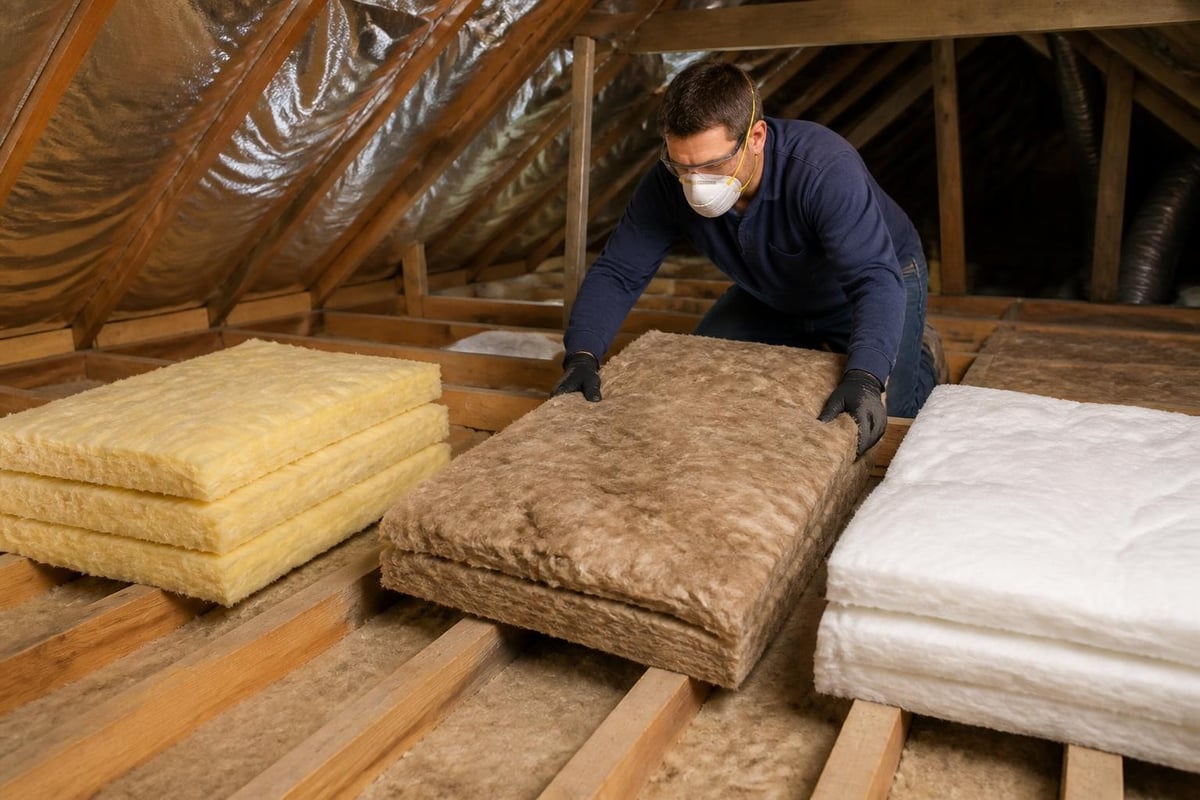
Glasswool batts are pre-cut sections designed to fit between ceiling joists. They're easy to handle, affordable, and available in a wide range of R-values. Glasswool is non-combustible, doesn't absorb moisture when treated, and provides excellent thermal resistance.
Glasswool blankets come in long rolls and are particularly useful for ceiling spaces with irregular joist spacing or continuous roofing applications. They offer flexibility during installation and can be cut to size on-site.
Polyester batts are another bulk insulation option. Made from recycled plastic bottles, they're hypoallergenic, safe to handle without protective gear, and resistant to moisture and mould. Polyester batts are a popular choice for DIY renovators and families concerned about indoor air quality.
| Bulk Insulation Type | Best For | Key Benefits |
|---|---|---|
| Glasswool Batts | Standard ceiling joist spacing | Cost-effective, high R-value range, fire-resistant |
| Glasswool Blankets | Irregular spacing, metal roofs | Flexible installation, continuous coverage |
| Polyester Batts | DIY projects, sensitive occupants | Non-itch, hypoallergenic, moisture-resistant |
Reflective Foil Insulation
Reflective insulation works differently to bulk insulation. Instead of trapping air, it reflects radiant heat away from your home.
Foil insulation is particularly effective in Australian climates where radiant heat from the sun can account for a significant portion of heat gain through the roof. It's installed with an air gap on at least one side to allow the reflective surface to work properly.
Single-sided foil is often combined with bulk insulation for enhanced performance. The foil faces the air gap while the bulk material provides resistance to conductive and convective heat transfer.
Double-sided foil reflects heat from both directions, making it useful in climates with extreme temperature swings. It's commonly used under metal roofing where summer heat gain is a major concern.
One important consideration: reflective foil on its own provides minimal insulation when it's in direct contact with other materials. The air gap is essential for performance.
Combination Systems
Many modern roof insulation systems combine bulk and reflective materials to maximise thermal efficiency. These hybrid roof insulation types deliver the best overall performance.
- Bulk insulation provides resistance to conductive heat flow
- Reflective foil reduces radiant heat gain in summer
- Combined R-value ratings account for both materials working together
This approach is particularly effective for homes in Melbourne and regional Victoria, where you need protection from both scorching summer sun and winter cold snaps.
Choosing the Right Roof Insulation Type for Your Climate
Victoria's diverse climate zones require different insulation strategies. Understanding your local requirements helps you select the most effective roof insulation type.
Climate Zone Considerations
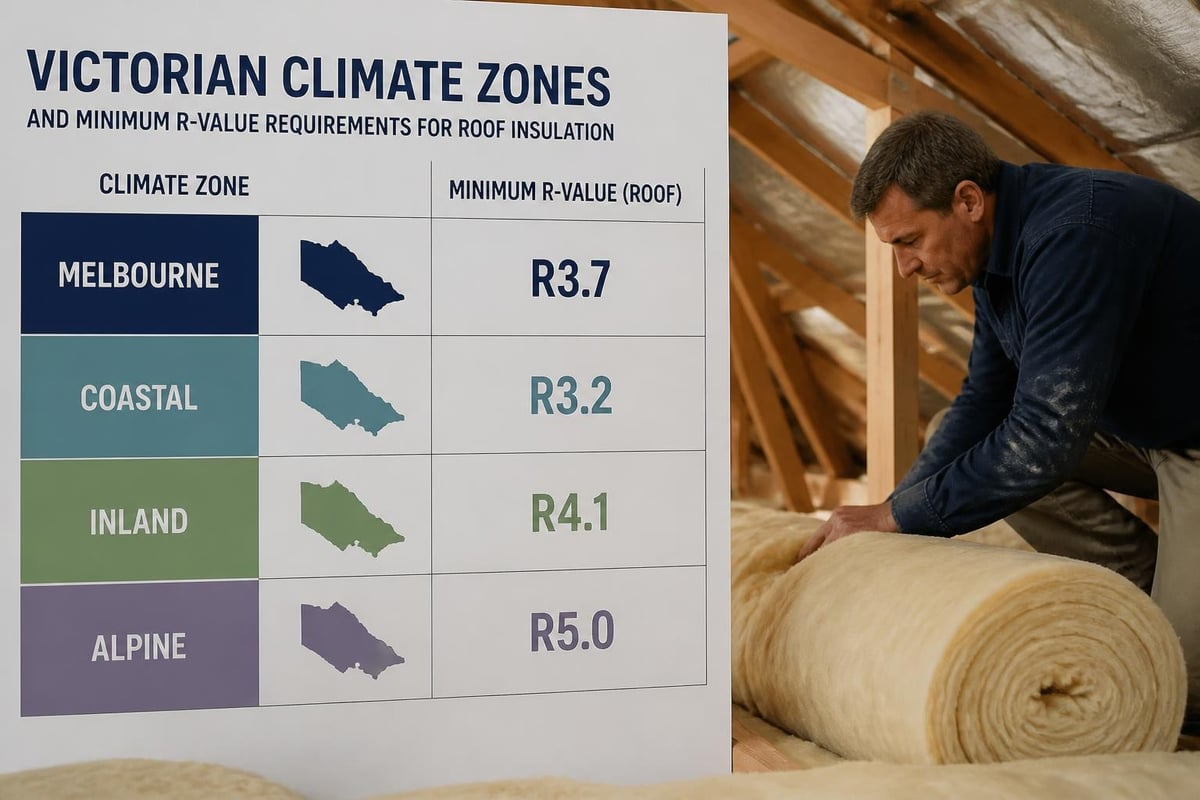
Melbourne and most of Victoria fall within climate zones that require minimum R-values between R3.7 and R6.0 for ceiling insulation, depending on your exact location and building type.
Coastal areas experience milder temperature swings but higher humidity. Moisture-resistant bulk insulation performs well here.
Inland and alpine regions face extreme temperature variations. Higher R-value bulk insulation combined with reflective barriers offers the best protection.
Urban Melbourne benefits from balanced systems that address both summer cooling loads and winter heating demands.
The National Construction Code (NCC) sets minimum requirements, but exceeding these standards often delivers better long-term value through reduced energy costs and improved comfort.
R-Values and Thermal Performance
The R-value measures thermal resistance. Higher numbers mean better insulation performance. Selecting the appropriate R-value is critical when comparing roof insulation types.
Common Roof R-Values
| R-Value | Typical Thickness | Best Application | Climate Suitability |
|---|---|---|---|
| R3.5-R3.7 | 130-140mm | Mild coastal areas | Minimum compliance |
| R4.0-R5.0 | 145-200mm | Melbourne metro | Good year-round performance |
| R6.0-R7.0 | 215-275mm | Alpine, extreme climates | Maximum efficiency |
Many Victorian homeowners find R3.7 ceiling insulation strikes the right balance between cost and performance for metropolitan areas. For alpine regions or energy-conscious renovators, R6.0 products provide superior thermal protection.
Thickness and Space Requirements
Bulk insulation thickness directly affects R-value. Before choosing a roof insulation type, measure the available ceiling cavity depth. Standard ceiling joists in older homes may be 90-100mm deep, limiting your options without modifications.
Reflective foil takes up minimal space but requires air gaps. Combined systems need adequate depth for both bulk material and air spaces.
If ceiling space is limited, consider higher-density bulk insulation that achieves better R-values with less thickness, or explore options like double-layer installation.
Material Types and Their Properties
Different roof insulation materials bring distinct advantages depending on your priorities and project requirements.
Glasswool Technology
Modern glasswool insulation uses advanced binder technology that reduces dust and makes handling more comfortable than older products. ECOSE® Technology, used in premium glasswool products, contains no added formaldehyde and is made with bio-based binders.
Key glasswool benefits:
- Non-combustible and fire-resistant
- Excellent acoustic properties
- Wide R-value range from R1.5 to R7.0
- Cost-effective for large projects
- Long service life with minimal degradation
Glasswool performs consistently across temperature ranges and maintains its R-value over time when installed correctly with proper ventilation.
Polyester and Natural Fibre Options
Polyester insulation appeals to environmentally conscious homeowners and those with sensitivity to traditional materials.
Polyester advantages:
- Made from recycled PET plastic bottles
- Naturally resistant to moisture, mould, and mildew
- Safe to handle without gloves or protective clothing
- Maintains loft and R-value even when compressed
- Does not require chemical treatments
Natural fibre options like wool and hemp are emerging alternatives, though they typically cost more and have limited availability compared to mainstream roof insulation types.
Reflective and Multi-Foil Products
Reflective foil products range from simple single-layer foil to sophisticated multi-layer systems incorporating foam cores, bubble wrap, or air pockets.
Single foil sarking is economical and provides excellent radiant heat reflection when properly installed with air gaps. Multi-foil systems claim higher equivalent R-values but remain controversial. Australian standards require any R-value claims to be tested and certified.
Important: Always verify that reflective products carry proper certification and comply with Australian standards. Installation quality dramatically affects performance with these roof insulation types.
Installation Methods and Compatibility
Your chosen roof insulation type must suit your roof structure and installation approach.
Ceiling Installation vs. Roof Installation
Ceiling-level insulation sits on top of ceiling joists below the roof space. This is the most common residential approach and suits all bulk insulation types.
Advantages include easier access, ability to lay batts or blankets horizontally, and straightforward DIY installation for confident homeowners.
Roof-level insulation fits between or under roof rafters, common with cathedral ceilings or metal roof systems.
This approach requires careful moisture management and ventilation. Blanket insulation or rigid board products work better than batts for pitched roof applications.
Metal Roof Considerations
Metal roofs present unique challenges and opportunities for roof insulation selection.
Condensation risk increases with metal roofing due to temperature differences between inside and outside surfaces. Using bulk insulation with vapour-permeable properties helps manage moisture.
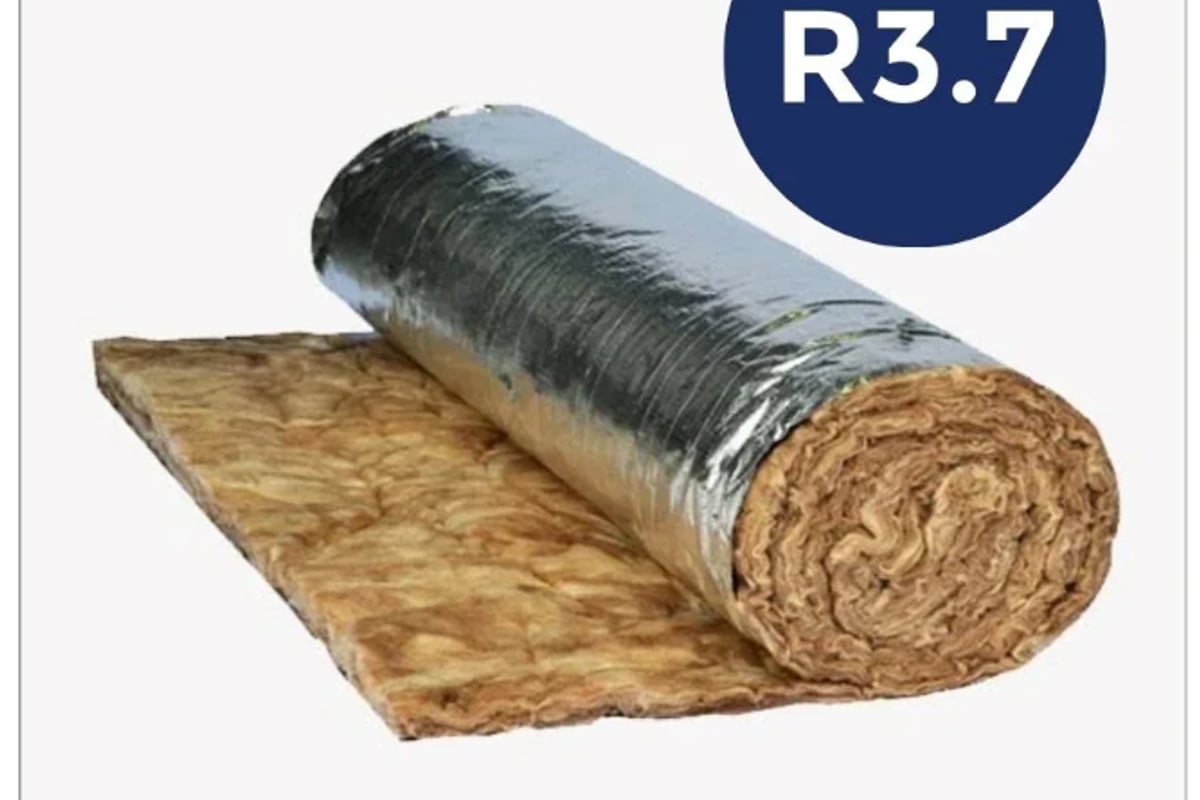
The Thermal Blanket R3.7 Roof Insulation is specifically designed for under-metal-roof applications, offering high-density glasswool construction that delivers exceptional thermal resistance while supporting proper roof ventilation. Its 130mm thickness fits standard roof cavities and provides reliable performance across Victoria's varied climate conditions.
Reflective foil or sarking installed under metal roofing reduces radiant heat transfer and provides a secondary weather barrier. Ensure proper overlaps and secure fastening to manufacturer specifications.
DIY vs. Professional Installation
Some roof insulation types suit DIY installation better than others.
DIY-friendly options:
- Pre-cut batts for standard joist spacing
- Polyester batts that don't require protective equipment
- Straightforward ceiling-level installations
- Single-storey homes with easy roof access
Professional installation recommended for:
- Cathedral ceilings or complex roof designs
- Combination systems requiring precise air gap spacing
- Two-storey homes or steep-pitched roofs
- Projects requiring electrical work or roof modifications
Even if you're confident with DIY projects, understanding proper installation techniques ensures your chosen roof insulation type performs as rated.
Cost Factors and Budget Planning
Roof insulation represents a significant investment that pays back through energy savings and comfort improvements. Understanding cost drivers helps you maximise value.
Material Costs by Type
| Insulation Type | Approximate Cost (per m²) | Lifespan | Value Rating |
|---|---|---|---|
| Glasswool Batts (R3.5-R4.0) | $8-$15 | 50+ years | Excellent |
| Polyester Batts (R3.5-R4.0) | $12-$20 | 50+ years | Very Good |
| Glasswool Blanket | $10-$18 | 50+ years | Excellent |
| Reflective Foil (alone) | $6-$12 | 30+ years | Good (climate-dependent) |
| Combined Systems | $15-$30 | 50+ years | Excellent |
Prices vary based on R-value, density, brand, and quantity. Bulk purchases typically offer better per-square-metre pricing.
Whole-Project Budgeting
Material costs represent only part of your total investment. Consider these additional factors:
For DIY projects:
- Safety equipment (dust masks, gloves, coveralls)
- Cutting tools and measuring equipment
- Access equipment (ladders, planks, lighting)
- Waste disposal
For professional installation:
- Labour costs (typically $15-$35 per m²)
- Site preparation and cleanup
- Compliance inspections and documentation
- Warranty coverage
Higher-performance roof insulation types cost more upfront but deliver superior energy savings. In Melbourne's climate, upgrading from R3.5 to R6.0 might add $500-$1000 to a typical home project but could save $200-$400 annually on heating and cooling.
Energy Efficiency and Environmental Impact
Choosing the right roof insulation type delivers environmental benefits beyond your immediate energy bills.
Reducing Carbon Footprint
Residential heating and cooling account for roughly 40% of household energy consumption in Victoria. Proper roof insulation significantly reduces this demand.
Higher R-value installations cut greenhouse gas emissions by reducing reliance on heating and cooling systems. A well-insulated Melbourne home typically prevents 2-4 tonnes of CO2 emissions annually compared to an uninsulated equivalent.
Sustainable Material Choices
Many modern insulation products incorporate recycled content or renewable resources:
- Glasswool contains up to 80% recycled glass
- Polyester batts use recycled PET plastic bottles
- Bio-based binders replace formaldehyde in premium products
- Long service life means materials stay out of landfill for decades
When comparing roof insulation types, consider whole-of-life environmental impact, not just initial embodied energy.
Energy Star Ratings and Building Performance
Proper roof insulation contributes to improved NatHERS ratings for new builds and renovations. Higher ratings increase property value and appeal to environmentally conscious buyers.
For homeowners planning to sell within 5-10 years, investing in premium insulation delivers measurable returns through improved building certification and lower energy bills that attract buyers.
Health, Safety, and Comfort Considerations
Beyond thermal performance, your roof insulation type affects indoor air quality, acoustic comfort, and occupant wellbeing.
Indoor Air Quality
Insulation materials influence the air you breathe, particularly in newer, tighter homes with reduced natural ventilation.
Modern glasswool products with ECOSE® Technology contain no added formaldehyde and emit minimal volatile organic compounds (VOCs). Polyester batts are naturally low in VOCs and don't require chemical fire retardants or pest treatments.
Avoid older insulation types that may contain hazardous materials. If renovating a pre-1990 home, check for asbestos-containing insulation before disturbing existing materials.
Acoustic Performance
Most bulk roof insulation types provide excellent sound absorption, reducing external noise transmission from rain, hail, aircraft, and traffic.
Higher-density glasswool offers superior acoustic control. If noise reduction is a priority, consider products specifically rated for acoustic performance, particularly in acoustic insulation ranges.
Moisture and Mould Prevention
Poor insulation choices or installation can create condensation problems that lead to mould growth and structural damage.
Moisture management strategies:
- Choose insulation with appropriate vapour permeability
- Ensure adequate roof cavity ventilation
- Install sarking or vapour barriers correctly
- Address air leakage points before insulating
- Consider climate and condensation risk in material selection
Polyester and treated glasswool products resist moisture absorption better than traditional materials, making them safer choices for humid coastal areas or bathrooms and kitchens.

Compliance and Building Standards
Australian building regulations set minimum requirements for roof insulation, but understanding standards helps you make better choices beyond basic compliance.
National Construction Code Requirements
The NCC Volume Two governs residential building insulation requirements. Minimum ceiling R-values vary by climate zone, with most Victorian locations requiring R3.5 to R6.0 depending on heating and cooling loads.
New builds must comply with energy efficiency provisions. Renovations affecting more than 50% of a roof area may trigger compliance requirements. Check with your local building surveyor before proceeding.
Australian Standards for Installation
AS/NZS 4859 sets standards for materials and installation practices for thermal insulation. This covers bulk insulation, reflective products, and combined systems.
Key installation requirements include:
- Maintaining product loft and thickness
- Avoiding compression around services
- Proper air gap spacing for reflective materials
- Clearances around heat-producing fixtures
- Ventilation requirements for roof spaces
Following these standards ensures your chosen roof insulation type delivers rated performance and complies with warranty conditions.
Fire Safety Ratings
All insulation products must meet Australian fire safety standards. Check that materials carry appropriate classification:
- Non-combustible materials (glasswool, rockwool) offer the highest safety
- Combustible materials with fire-retardant treatments must meet specific performance criteria
- Reflective foil products require careful installation to avoid creating fire spread pathways
Never compromise on fire safety when selecting between roof insulation types, particularly for older homes with aging electrical systems.
Making Your Final Selection
With so many roof insulation types available, narrowing your choice requires balancing performance, budget, and project-specific factors.
Decision Framework
Start by answering these key questions:
- What R-value do I need? Check NCC requirements for your climate zone, then consider exceeding minimums for better performance.
- What's my budget? Balance upfront cost against long-term energy savings and comfort improvements.
- What's my roof structure? Measure ceiling cavity depth and joist spacing to identify compatible products.
- Am I installing myself? Choose DIY-friendly products if tackling installation personally.
- What are my priorities? Rank factors like sustainability, acoustic control, moisture resistance, and fire safety.
Comparing Product Specifications
When evaluating specific products, compare these specifications:
- R-value per unit thickness (higher density = better performance in limited space)
- Coverage per pack or roll (affects total material costs)
- Weight and handling characteristics (important for DIY installation)
- Warranty terms (longer warranties indicate manufacturer confidence)
- Certification and compliance (Australian standards, CodeMark, environmental certifications)
Explore roof insulation options to compare specifications across different product ranges and brands.
Getting Expert Advice
While this guide provides comprehensive information, every home presents unique challenges. Consider consulting with insulation specialists who can:
- Assess your specific roof structure and condition
- Calculate precise material requirements
- Recommend optimal roof insulation types for your situation
- Provide detailed installation guidance
- Ensure compliance with local building requirements
Long-Term Performance and Maintenance
Quality roof insulation lasts for decades when properly selected and installed. Understanding long-term performance helps you maximise your investment.
Expected Lifespan by Material
Different roof insulation types age differently:
Glasswool and rockwool maintain performance for 50+ years when kept dry and properly ventilated. They don't settle significantly and resist degradation from temperature cycling.
Polyester batts similarly last 50+ years and won't break down, compress permanently, or lose R-value over time.
Reflective foil lasts 30-50 years depending on quality and installation. Dust accumulation on reflective surfaces can reduce effectiveness over time.
Maintenance Requirements
Properly installed insulation requires minimal maintenance. However, periodic checks ensure continued performance:
- Inspect for water damage after significant storms
- Check for compression from stored items in roof spaces
- Verify ventilation systems remain unobstructed
- Look for pest activity or nesting materials
- Ensure insulation hasn't shifted away from critical areas
Never walk directly on insulation or ceiling structures. Use proper access boards or planking when inspecting roof spaces.
When to Upgrade or Replace
Consider upgrading your roof insulation type when:
- Existing insulation is more than 40 years old
- You're undertaking major renovations
- Energy bills remain high despite efficient appliances
- Home comfort problems persist (too hot in summer, too cold in winter)
- Moisture damage or pest infestation has affected existing materials
Upgrading from minimal or no insulation to modern ceiling insulation standards delivers the most dramatic improvements in comfort and energy efficiency.
Selecting the right roof insulation type doesn't have to be complicated when you understand the key differences between bulk insulation, reflective barriers, and combination systems, along with how R-values and material properties affect performance in Victoria's climate. Whether you're building new, renovating, or upgrading an older home, Insulation Supplies Australia offers expert guidance, quality products from trusted brands, and competitive pricing to make your insulation project straightforward and successful. Browse our extensive range online, compare products easily, and get your materials delivered fast across Melbourne and Victoria.