
A roof blanket is one of the most effective ways to insulate metal roofs, steel buildings, and industrial sheds across Australia. Unlike traditional batt insulation that fits between framing, a roof blanket is a continuous roll of flexible insulation material that's draped or laid directly under or over the roof structure. This continuous coverage reduces thermal bridging, blocks radiant heat, and creates a more comfortable indoor environment in both residential and commercial buildings. Whether you're building a new steel shed, retrofitting an older metal roof, or planning a home extension, understanding how roof blanket insulation works will help you make smarter, more cost-effective decisions for your project.
What Is a Roof Blanket and How Does It Work?
A roof blanket is a flexible insulation product designed specifically for metal roof systems and steel-framed buildings. It's typically made from glasswool, polyester, or reflective foil materials and comes in wide rolls that can be easily draped across roof purlins or rafters.
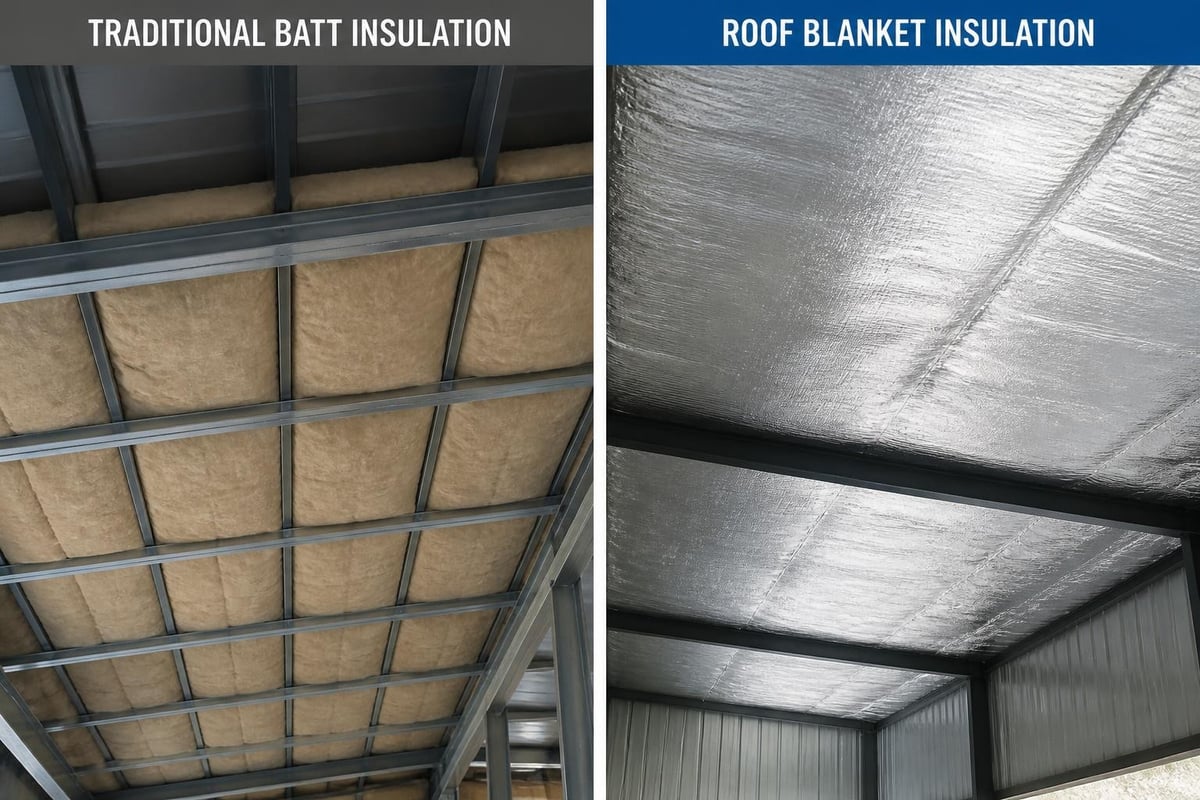
The key difference between a roof blanket and standard insulation batts is coverage. Batts are cut to fit snugly between timber or steel studs, leaving small gaps at the framing. A roof blanket, however, provides continuous insulation coverage across the entire roof plane, reducing thermal bridging where heat can escape through the structural elements.
How roof blanket insulation controls heat:
- Reflects radiant heat away from the building interior
- Traps air within the fibrous material to slow conductive heat transfer
- Creates a barrier that reduces temperature fluctuations inside the building
- Minimises condensation risk by controlling the temperature differential across the roof assembly
Most roof blanket products are either unfaced (exposed glasswool or polyester) or faced with a reflective foil layer. The foil facing adds a radiant barrier that reflects up to 97% of radiant heat, making it especially effective in Australia's hot climate.
Common Applications for Roof Blanket Products
Roof blanket insulation is most commonly used in metal building construction, but it's also suitable for a range of residential and commercial projects.
Typical roof blanket applications include:
- Steel-framed sheds and garages
- Commercial warehouses and industrial buildings
- Agricultural buildings and farm sheds
- Residential metal roofs (Colorbond and corrugated iron)
- Retrofit insulation for older uninsulated roofs
- Homes with cathedral or skillion roofs
In residential settings, a roof blanket is often installed under the metal roof sheeting and over the battens or purlins. For commercial and industrial buildings, it can be installed above or below the roof framing, depending on the design and whether the roof space is conditioned or unconditioned.
Choosing the Right Roof Blanket for Your Project
Selecting the right roof blanket depends on your building type, climate zone, and the R-value required to meet the National Construction Code (NCC) in Victoria. Different products offer different thermal ratings, densities, and installation methods, so it's important to match the product to your specific application.
R-Value and Thermal Performance
The R-value measures how well insulation resists heat flow. Higher R-values provide greater thermal resistance, which means better energy efficiency and indoor comfort. In Victoria, the NCC typically requires a minimum roof R-value of R4.0 to R6.0 for new homes, depending on the climate zone.
For existing homes and sheds, upgrading to at least R3.0 will deliver noticeable improvements in comfort and energy savings. If you're insulating a metal roof in Melbourne or regional Victoria, choosing a roof blanket with an R-value between R3.5 and R4.0 is a practical starting point.
| R-Value | Typical Thickness | Best Use |
|---|---|---|
| R2.5 – R3.0 | 75mm – 100mm | Light commercial sheds, garages, retrofits |
| R3.5 – R4.0 | 130mm – 145mm | Residential metal roofs, workshops, main living areas |
| R4.5 – R6.0 | 160mm – 200mm | High-performance homes, passive solar designs, extreme climates |
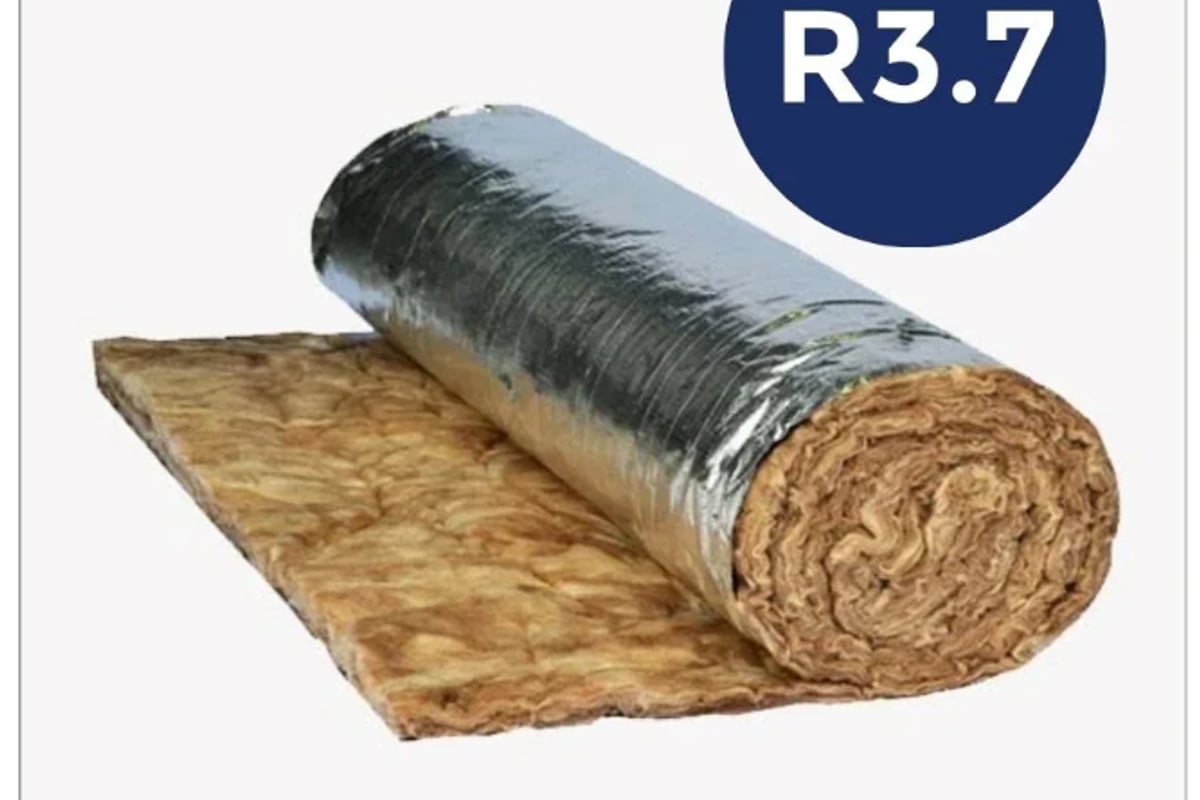
The Thermal Blanket R3.7 22kg/m³ 130mm x 1.2m Roof Insulation Blanket is an excellent example of a high-performance glasswool roof blanket designed for Australian metal roof systems. With a density of 22 kg/m³, it provides improved thermal efficiency and works well in both hot and cold climates, making it a popular choice for Victorian homeowners and builders.
Material Types and Facing Options
Roof blanket insulation is available in several material types, each with different characteristics and performance benefits.
Glasswool blankets are the most common choice for metal roofs. They're affordable, fire-resistant, and offer excellent thermal and acoustic performance. Modern glasswool products made with ECOSE® Technology are soft to touch, low in dust, and easy to handle during installation.
Polyester blankets are a non-itch alternative to glasswool. They're lightweight, moisture-resistant, and suitable for DIY installers who prefer a more comfortable product. Polyester is also a good choice for agricultural buildings where dust and fibres are a concern.
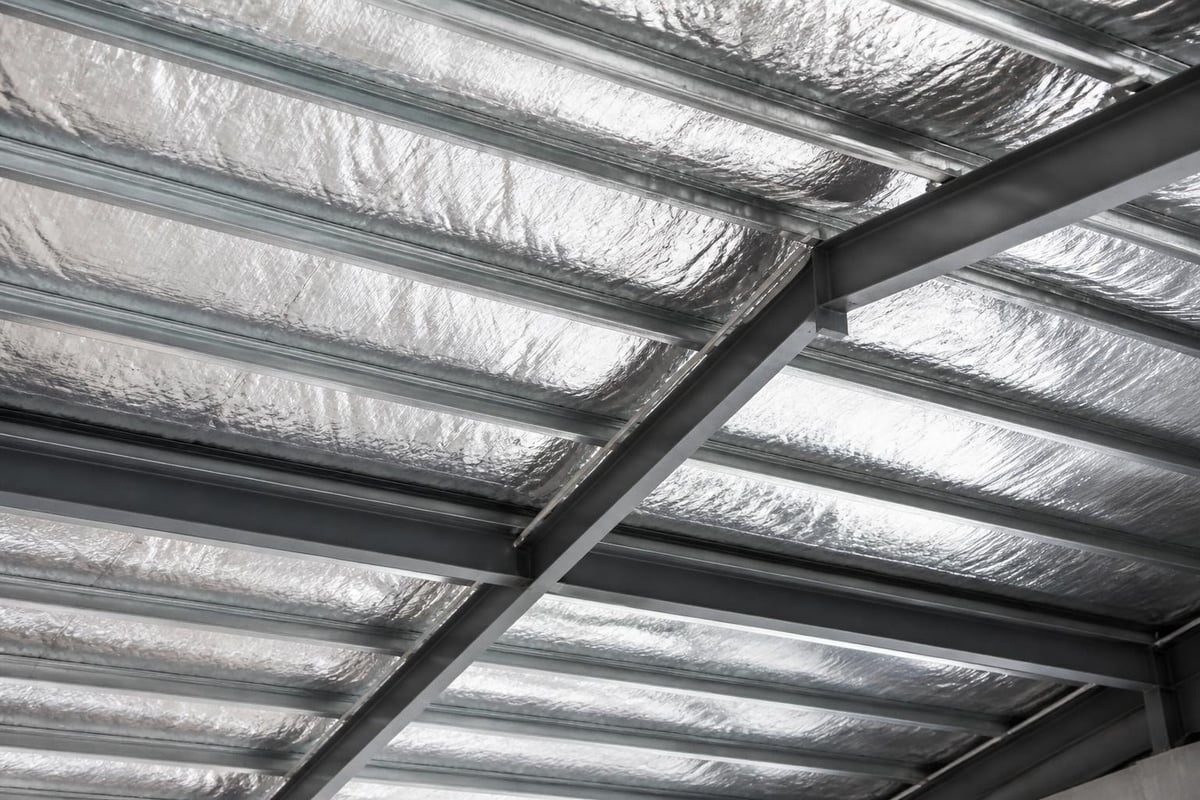
Reflective foil blankets combine a layer of glasswool or polyester with a reflective foil facing. The foil acts as a radiant barrier, bouncing heat back towards the roof and preventing it from entering the building. This makes foil-faced blankets highly effective in Australia's summer heat.
Some roof blanket products also include a vapour barrier or permeable membrane to manage moisture and condensation. In Victoria's variable climate, condensation control is essential, especially in unventilated roof spaces and steel buildings. The Metal Building Contractors & Erectors Association explains how blanket systems relate to energy-code compliance and moisture management in metal structures.
Installation Methods and Best Practices
Installing a roof blanket correctly is critical to achieving the rated R-value and avoiding problems like sagging, compression, and moisture buildup. While professional installation is recommended for large or complex projects, many DIY renovators and owner-builders successfully install roof blanket insulation in sheds and smaller structures.
Step-by-Step Installation for Metal Roofs
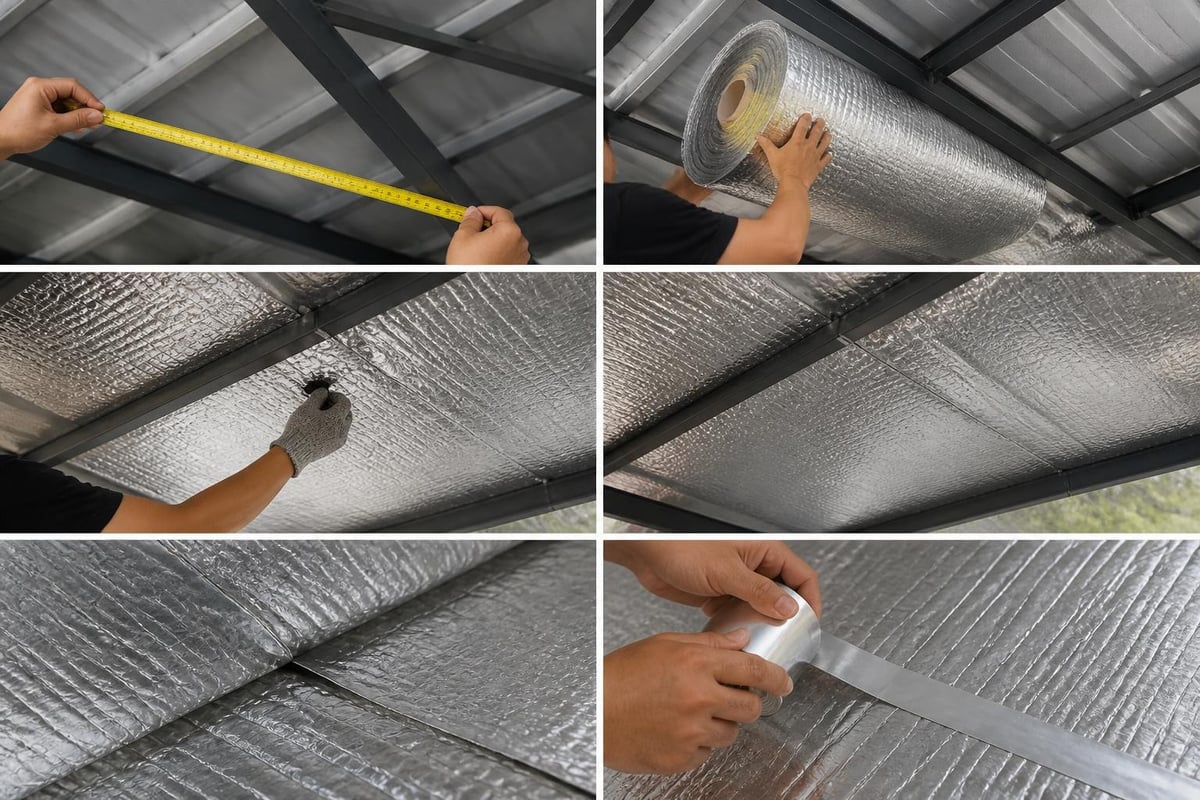
1. Measure and plan your layout
Measure the roof area carefully and calculate how many rolls of roof blanket you'll need. Most products come in 1.2m widths, so plan your layout to minimise waste and ensure full coverage across purlins.
2. Unroll the blanket across the roof frame
Starting at one end of the roof, unroll the blanket across the purlins or rafters. The blanket should drape smoothly without excessive tension or sagging. If the product has a foil facing, the foil should face downward (towards the interior) to reflect radiant heat back out through the roof.
3. Secure the blanket in place
Use metal or plastic fixing clips, adhesive tape, or wire to secure the blanket to the roof structure. Avoid compressing the insulation, as this reduces its R-value. The blanket should sit snugly but not be stretched tight.
4. Overlap seams and seal gaps
Overlap adjacent rolls by at least 50mm to avoid thermal gaps. Use foil tape to seal seams and ensure continuous coverage. Pay special attention to edges, penetrations, and roof-to-wall junctions where air leaks can occur.
5. Install roof sheeting
Once the roof blanket is secured, install the metal roof sheeting over the top. Ensure adequate ventilation at the ridge and eaves to allow moisture to escape and prevent condensation buildup.
Common Installation Mistakes to Avoid
Even experienced builders can make mistakes when installing roof blanket insulation. Here are the most common issues and how to avoid them:
- Compressing the insulation: Over-compressing the blanket reduces its thickness and R-value. Leave the insulation lofted and avoid pulling it too tight.
- Inadequate overlap: Gaps between rolls create thermal bridges. Always overlap seams by at least 50mm and tape them securely.
- Ignoring moisture and ventilation: Unventilated roof spaces can trap moisture and lead to condensation. Ensure your roof has adequate eave and ridge ventilation.
- Using the wrong fixings: Avoid using fixings that pierce the foil facing excessively. Use clips or tapes designed for insulation installation.
- Skipping edge sealing: Gaps at the roof edge allow heat and air to bypass the insulation. Seal all edges and penetrations carefully.
The National Roofing Contractors Association provides authoritative roofing industry guidance on insulation selection, moisture control, and installation issues that are relevant to roof blanket assemblies.
Energy Efficiency and Cost Savings
One of the biggest benefits of installing a roof blanket is the energy savings and improved indoor comfort it delivers. In Victoria, where temperatures can swing from freezing winters to scorching summers, a well-insulated roof makes a noticeable difference to heating and cooling costs.
How Much Can You Save?
The amount you'll save depends on your existing insulation level, the size of your building, and your energy usage patterns. However, upgrading from no insulation to R3.5 or higher can reduce heating and cooling costs by 20% to 40% in a typical Melbourne home.
For a 150m² home with a metal roof, installing a roof blanket with an R-value of R3.7 can save approximately $300 to $500 per year on energy bills. Over the life of the insulation (20+ years), that's a total saving of $6,000 to $10,000.
Additional benefits of roof blanket insulation:
- Reduced reliance on air conditioning and heating
- More stable indoor temperatures year-round
- Improved acoustic comfort (reduced rain and wind noise)
- Lower carbon footprint and environmental impact
- Increased property value and resale appeal
The EPA's Building Upgrade Manual provides practical retrofit guidance and case studies that illustrate the energy impacts of roof insulation upgrades.
Payback Period and Return on Investment
Most roof blanket installations pay for themselves within 3 to 7 years through energy savings alone. The payback period is shorter for buildings with higher energy use, such as homes with ducted heating and cooling or commercial buildings that operate year-round.
For a typical residential metal roof project, the installed cost of roof blanket insulation ranges from $15 to $30 per square metre, depending on the product, R-value, and labour costs. A 100m² roof would cost approximately $1,500 to $3,000 to insulate, delivering annual savings of $200 to $400 and a payback period of 4 to 7 years.
| Building Type | Typical Roof Area | Installation Cost | Annual Savings | Payback Period |
|---|---|---|---|---|
| Residential home | 100 – 150m² | $1,500 – $4,500 | $250 – $500 | 3 – 7 years |
| Steel shed/garage | 50 – 80m² | $750 – $2,400 | $100 – $200 | 4 – 8 years |
| Commercial warehouse | 300 – 500m² | $4,500 – $15,000 | $800 – $2,000 | 5 – 10 years |
For the best return on investment, choose a roof blanket with an R-value that meets or exceeds NCC requirements and consider the long-term performance and durability of the product.
Compliance, Building Codes, and Safety
In Victoria, all new buildings and major renovations must comply with the National Construction Code (NCC), which sets minimum insulation requirements based on climate zone and building type. Understanding these requirements will help you choose the right roof blanket and avoid compliance issues during inspection.
NCC Requirements for Roof Insulation in Victoria
Victoria is split into multiple climate zones, with Melbourne falling into climate zone 6. The NCC requires a minimum total R-value for the roof system, which includes the insulation and any air gaps or reflective layers.
For climate zone 6 (Melbourne and surrounding areas), the minimum total R-value for roofs is typically R4.0 to R6.0, depending on the building type and whether the roof space is conditioned or unconditioned. For sheds and outbuildings not used as living spaces, lower R-values may be acceptable, but higher values will improve comfort and energy efficiency.
When selecting a roof blanket, check the product's rated R-value and ensure it meets or exceeds the NCC requirement for your project. The Natural Resources Canada guidance on roof and attic insulation covers best-practice insulation strategies and code-aware advice that's relevant to Australian conditions.
Fire Safety and Product Standards
All insulation products sold in Australia must comply with Australian Standards for fire performance and safety. Glasswool and polyester roof blanket products are typically non-combustible or have low flammability ratings, making them safe for use in metal roof systems.
When buying roof blanket insulation, check that the product carries the appropriate CodeMark certification or complies with AS/NZS 4859.1 (thermal insulation materials). This ensures the product has been tested and meets Australian building standards for thermal performance, fire safety, and durability.
Comparing Roof Blanket to Other Insulation Types
While roof blanket insulation is ideal for metal roofs and steel buildings, it's not the only option. Understanding how it compares to batts, boards, and spray foam will help you choose the best solution for your project.
Roof Blanket vs Batts
Roof blanket insulation provides continuous coverage and reduces thermal bridging, making it more effective in metal roof systems. It's easier to install over large areas and works well where framing is irregular or widely spaced.
Batts are pre-cut insulation segments designed to fit between standard framing spacings (typically 400mm or 600mm). They're ideal for timber-framed roofs and ceilings, but less suited to metal buildings where purlins may be spaced irregularly.
For metal roofs, a roof blanket is usually the better choice. For traditional timber roofs with standard framing, batts may be more cost-effective and easier to install. You can explore a wide range of ceiling insulation and roof insulation options to compare products and R-values.
Roof Blanket vs Rigid Boards
Rigid board insulation (such as XPS or polyisocyanurate) offers high R-values per millimetre of thickness and excellent compressive strength. It's commonly used in flat or low-slope roofs and under concrete slabs, but less common in residential metal roofs.
Rigid boards are more expensive than roof blanket products and require careful cutting and fitting. They're best suited to specific applications where high compressive strength or moisture resistance is essential.
Roof Blanket vs Spray Foam
Spray foam insulation expands to fill gaps and cavities, creating an airtight seal. It offers excellent thermal performance and moisture resistance, but it's significantly more expensive than roof blanket insulation and requires professional installation.
For most residential and light commercial metal roofs, a roof blanket provides the best balance of performance, cost, and ease of installation. Spray foam may be worth considering for complex retrofit projects or where air sealing is a critical concern.
Moisture Control and Condensation Management
Managing moisture and condensation is one of the most important considerations when installing a roof blanket in a metal building. Metal roofs are prone to condensation because the metal surface cools rapidly, especially on clear nights, causing moisture in the air to condense on the underside of the roof.
Why Condensation Happens
Condensation occurs when warm, moist air comes into contact with a cold surface. In metal buildings, this often happens when warm indoor air escapes into the roof space and meets the cold underside of the metal sheeting.
Over time, condensation can damage insulation, corrode metal framing, and promote mould growth. In steel sheds and agricultural buildings, condensation can drip onto equipment, stock, and finishes, causing significant problems.
Factors that increase condensation risk:
- High indoor humidity levels (from cooking, showering, or livestock)
- Poor ventilation in the roof space
- Large temperature differences between inside and outside
- Uninsulated or poorly insulated roofs
- Lack of a vapour barrier or air barrier
How Roof Blanket Insulation Helps
A roof blanket with a reflective foil facing or vapour barrier can significantly reduce condensation risk by controlling the movement of moisture and heat. The foil layer acts as a radiant barrier and a vapour barrier, preventing warm, moist air from reaching the cold metal roof surface.
Best practices for condensation control:
- Install the foil-faced side of the blanket facing the interior (downward)
- Seal all seams and joints with foil tape to create a continuous vapour barrier
- Ensure adequate eave and ridge ventilation to allow moisture to escape
- Avoid compressing the insulation, which reduces its effectiveness
- Consider a separate vapour barrier or permeable membrane if condensation is a persistent issue
The Building Science Corporation case study on roof assemblies discusses moisture risk and assembly design in detail, offering valuable insights for Australian builders and renovators.
Upgrading and Retrofitting Existing Roofs
If you have an older metal roof with little or no insulation, retrofitting a roof blanket is one of the most cost-effective ways to improve comfort and energy efficiency. Retrofit projects can be more challenging than new construction, but with careful planning and the right product, most roofs can be successfully upgraded.
Assessing Your Existing Roof
Before starting a retrofit project, inspect the roof structure and assess its condition. Check for:
- Roof leaks or damage: Repair any leaks before installing insulation to avoid trapping moisture.
- Structural integrity: Ensure the roof framing can support the weight of the insulation and any new roofing materials.
- Ventilation: Check that the roof has adequate eave and ridge ventilation. If not, plan to add vents during the retrofit.
- Access: Consider how you'll access the roof space to install the blanket. Some roofs may require scaffolding or temporary roof removal.
Retrofit Installation Options
There are two main approaches to retrofitting a roof blanket:
Over-purlin installation (top-side): The roof sheeting is temporarily removed, the blanket is laid over the purlins, and the sheeting is reinstalled over the top. This method provides the best thermal performance and is suitable for roofs that need re-sheeting anyway.
Under-purlin installation (underside): The blanket is installed from inside the building, draped under the purlins and secured with clips or wire. This method is less disruptive and more cost-effective, but may provide slightly lower thermal performance due to thermal bridging at the purlins.
For most homeowners and DIY renovators, under-purlin installation is the practical choice. It avoids the cost and complexity of removing the roof sheeting and can be completed in a weekend with basic tools and materials.
If you're planning a retrofit project, exploring a range of roof insulation products with different R-values and facing options will help you find the best solution for your building.
Acoustic Benefits of Roof Blanket Insulation
While thermal performance is the primary reason for installing a roof blanket, acoustic comfort is an important secondary benefit. Metal roofs are notoriously noisy during rain, hail, and high winds, and adding insulation can significantly reduce this noise.
How Roof Blanket Reduces Noise
Sound travels through the air and solid materials, and metal roofs are excellent conductors of sound. A roof blanket absorbs sound energy, reducing the transmission of noise from outside to inside.
Glasswool and polyester blankets are particularly effective at absorbing mid- to high-frequency sounds, such as rain noise and wind turbulence. The thicker and denser the blanket, the better its acoustic performance.
Typical noise reduction with roof blanket insulation:
- Light rain noise: Reduced by 30% to 50%
- Heavy rain and hail: Reduced by 20% to 40%
- Wind noise: Reduced by 25% to 45%
For homeowners who struggle with sleep disturbance or find metal roof noise annoying, upgrading to a roof blanket with an R-value of R3.5 or higher can make a dramatic difference. If acoustic performance is a priority, consider a higher-density product or one specifically designed for acoustic applications. You can explore acoustic insulation options for additional soundproofing solutions.
Choosing the right roof blanket insulation and installing it correctly will deliver long-term benefits in energy efficiency, comfort, and cost savings for your Victorian home or building. Whether you're insulating a new steel shed, retrofitting an older metal roof, or upgrading a residential home, understanding the options and best practices will help you make a confident decision. Insulation Supplies Australia offers a wide range of high-quality roof insulation products, expert advice, and fast delivery across Victoria, making it easy to find the right solution for your project. Browse our roof and ceiling collections online, compare R-values and products, and order with confidence today.