

Reflective foil insulation represents a different approach to thermal control in Australian homes. Unlike traditional bulk insulation products that resist conductive heat flow, reflective foil works by blocking radiant heat transfer across air gaps. This fundamental difference makes it particularly effective in certain applications, especially in Australian climates where summer heat gain through roofs can be intense. Understanding when and how to use reflective foil insulation helps homeowners, renovators and builders make informed decisions about thermal performance and energy efficiency.
How Reflective Foil Insulation Works
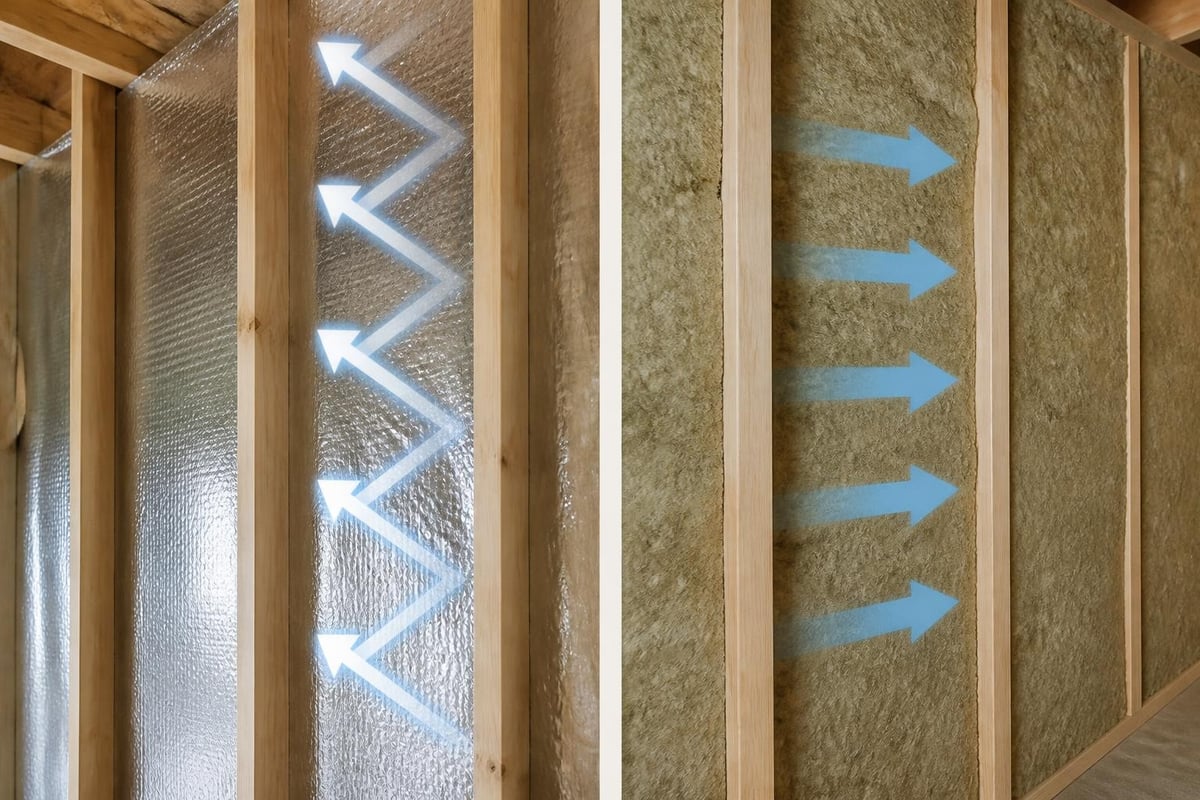
Radiant heat transfer accounts for a significant portion of heat movement in buildings, particularly through roof spaces during summer. Reflective foil insulation uses highly reflective aluminium surfaces to redirect radiant heat rather than absorbing it.
When installed correctly with an air gap on at least one side, reflective foil can reflect up to 97% of radiant heat. This makes it especially effective at keeping summer heat out of living spaces.
Key performance factors include:
- Emissivity: The rate at which a surface emits radiant heat (low emissivity means less heat transfer)
- Reflectivity: The percentage of radiant heat bounced back (high-quality foil reflects 95-97%)
- Air gap requirements: Minimum 25mm air space needed for effective radiant barrier performance
- Orientation: Vertical, horizontal or sloped installation affects heat flow direction
The Building America Solution Center provides extensive research on how radiant barriers perform in different climates and applications. Testing shows that effectiveness varies significantly based on installation quality and air gap maintenance.
Radiant Barriers vs Bulk Insulation
Many people confuse reflective foil with traditional insulation, but they work through completely different mechanisms.
| Feature | Reflective Foil | Bulk Insulation |
|---|---|---|
| Primary mechanism | Reflects radiant heat | Resists conductive heat flow |
| Air gap requirement | Essential (minimum 25mm) | Not required |
| R-value rating | Generally low standalone | R1.5 to R7.0+ |
| Best application | Hot climates, summer heat | Year-round thermal resistance |
| Installation complexity | Requires careful air gap maintenance | Simpler cavity fill |
Reflective foil insulation performs best when combined with bulk insulation products. The Department of Energy Building America guide explains that combining both types addresses different heat transfer pathways for optimal year-round performance.
Common Applications in Australian Homes
Roof and Ceiling Systems
Roof spaces experience the most intense radiant heat gain in Australian homes. Installing reflective foil insulation under the roof line creates a radiant barrier that intercepts heat before it reaches ceiling insulation.
Sarking applications:
- Installed directly under roof battens
- Creates drainage plane for moisture
- Reflects radiant heat downward back out through roof
- Requires top-side air gap for effectiveness
Under-roof blankets:
- Combined foil and bulk insulation
- Addresses both radiant and conductive heat transfer
- Popular for metal roof installations
- Often used in combination with ceiling insulation for maximum performance
Research from Oak Ridge National Laboratory demonstrates that attic radiant barriers can reduce ceiling heat flow by 16-45% depending on climate zone and installation method.
Wall Cavity Applications
Wall installations of reflective foil insulation require careful attention to air gap maintenance. The foil must have space on at least one side to function as a radiant barrier.
In timber-framed walls, foil can be installed:
- Behind wall cladding (external face)
- Between studs and plasterboard (internal face)
- As part of composite batts with integral air gaps
- In combination with bulk wall insulation for dual-mode performance
The ASHRAE Handbook provides technical specifications for how reflective surfaces should be modelled in thermal calculations, noting that performance depends heavily on maintaining the required air cavity.
Underfloor Systems
Suspended timber floors benefit from reflective foil insulation installed across floor joists. This application blocks cold air infiltration and reflects heat back into living spaces during winter.
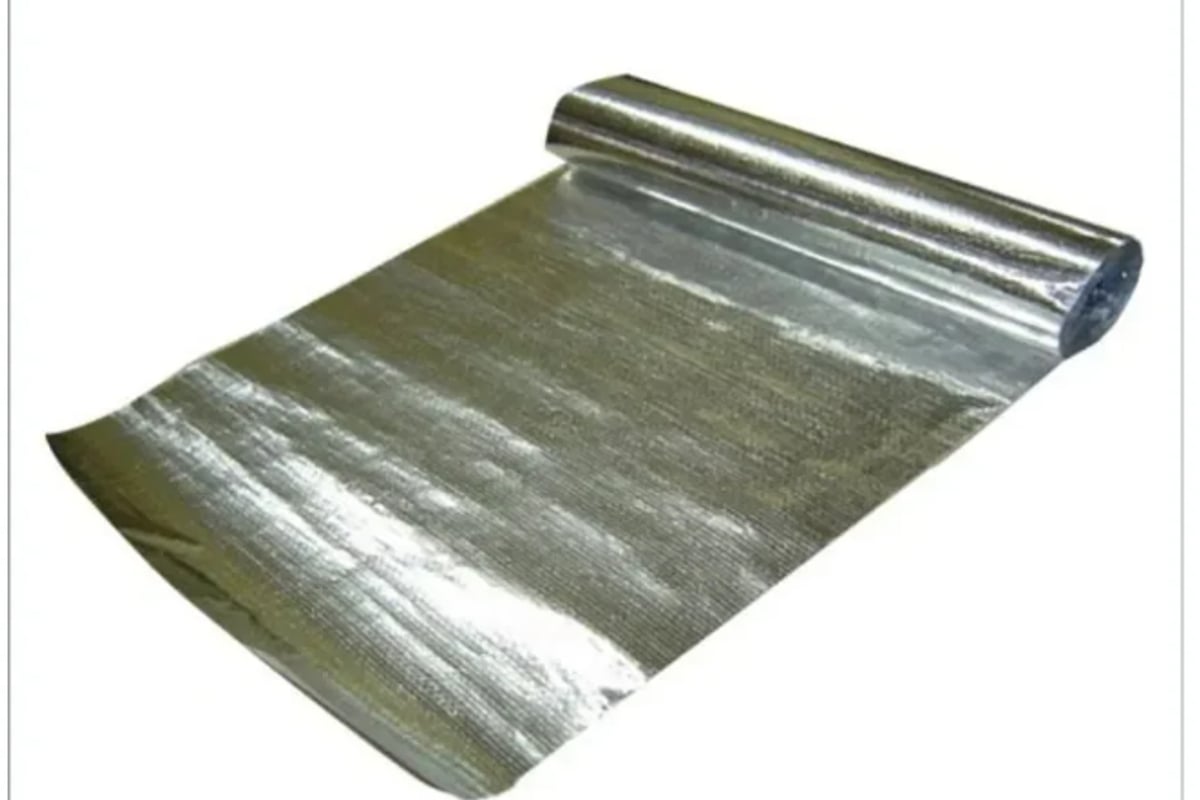
The Underfloor Wrap Reflective Foil Insulation is designed specifically for this application, providing both a radiant barrier and moisture-resistant membrane. It installs quickly across joists and helps improve thermal comfort in rooms above suspended floors.
For maximum underfloor thermal performance, many builders combine reflective wrap with dedicated underfloor insulation batts that fill the joist cavity.
Installation Requirements and Best Practices
Air Gap Specifications
The effectiveness of reflective foil insulation depends entirely on proper air gap installation. Without sufficient air space, the foil functions merely as a conductor with negligible thermal benefit.
Minimum air gap requirements:
- 25mm for standard applications
- 35-50mm for premium performance
- Maintained across entire installation (no compression or contact)
- Required on at least one foil surface (both sides ideal)
When foil contacts another surface, heat transfers through conduction rather than radiation, eliminating the reflective benefit. Virginia Tech Cooperative Extension highlights this as the most common installation mistake that undermines expected energy savings.
Single-Sided vs Double-Sided Foil
Reflective foil insulation comes in several configurations:
- Single-sided foil: One reflective surface, one kraft paper or scrim backing
- Double-sided foil: Reflective surfaces on both faces
- Bubble wrap core: Foil laminated to polyethylene bubble for added thickness
- Laminated products: Foil combined with glasswool or polyester blanket
Double-sided products provide radiant barrier performance in both directions when installed with air gaps on both surfaces. This proves valuable in roof applications where heat flow reverses seasonally (outward in winter, inward in summer).
Sealing and Overlap Details
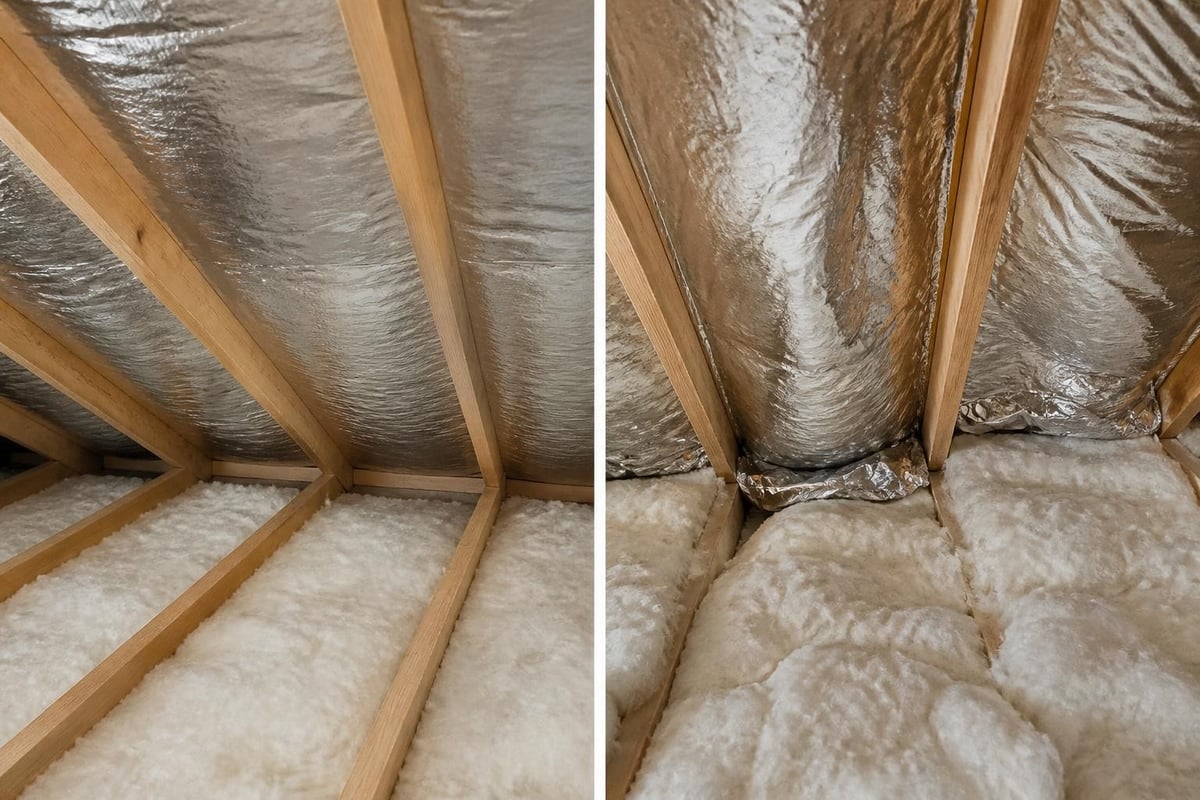
Professional installation requires attention to seams, penetrations and overlaps.
Critical installation steps:
- Overlap joins by minimum 100mm
- Seal all seams with reflective foil tape (not standard duct tape)
- Maintain air gap at overlaps (avoid compression)
- Work around penetrations carefully
- Ensure continuous coverage without gaps
The Whole Building Design Guide emphasizes that thermal envelope continuity matters as much as individual material performance. Gaps and compression points create thermal bridges that undermine overall effectiveness.
Climate Considerations for Australian Homes
Hot Climate Performance
Reflective foil insulation delivers strongest benefits in hot climates where summer heat gain dominates. In northern Australia and across much of the continent during summer months, radiant heat from the sun superheats roof spaces to 60-70°C.
By reflecting this radiant heat before it reaches bulk insulation or the ceiling plane, foil dramatically reduces cooling loads. Testing shows that well-installed roof radiant barriers can reduce air conditioning costs by 5-15% in predominantly cooling climates.
Best applications for hot climates:
- Roof sarking under metal roofing
- Attic radiant barriers
- Western wall sun shields
- Garage ceiling barriers
Temperate and Cool Climate Applications
In cooler climates, reflective foil still provides value but requires different installation strategies. Winter performance comes from reflecting radiant heat back into living spaces rather than blocking incoming solar gain.
| Season | Heat Flow Direction | Foil Function | Installation Priority |
|---|---|---|---|
| Summer | Into building | Reflect heat outward | Roof, western walls |
| Winter | Out of building | Reflect heat inward | Ceiling, underfloor |
| Year-round | Both directions | Dual barrier | Double-sided foil with air gaps both sides |
Combining reflective foil with appropriate R-value bulk insulation provides year-round thermal control. For example, pairing roof sarking with R3.7 ceiling insulation addresses both radiant and conductive heat transfer pathways.
Combining Reflective Foil with Bulk Insulation
Complementary Performance Benefits
The most effective thermal envelopes use both reflective and bulk insulation systems. Each addresses different heat transfer mechanisms:
Reflective foil handles:
- Radiant heat transfer across air spaces
- Summer heat gain through roofs
- Moisture barrier functions
- Draught reduction
Bulk insulation manages:
- Conductive heat flow through materials
- Year-round thermal resistance
- Temperature stability
- Acoustic control
When properly combined, these systems deliver superior performance compared to either product alone. The total R-value of an assembly includes both the bulk insulation rating and the additional thermal resistance provided by reflective surfaces with air gaps.
Installation Sequences
For roof systems:
- Install roof battens and reflective sarking
- Maintain air gap between sarking and roof cladding
- Install ceiling frame with adequate clearance
- Add bulk ceiling insulation between joists
- Ensure air gap maintained above insulation if using ceiling-level foil
For wall assemblies:
- Frame wall cavity to required stud depth
- Install external wall wrap if specified
- Add bulk insulation between studs (glasswool, polyester, etc.)
- Install reflective foil with air gap before lining
- Fix internal wall lining maintaining foil air space
Performance Limitations and Realistic Expectations
When Reflective Foil Is Not Enough
Reflective foil insulation alone rarely meets Building Code of Australia thermal performance requirements for habitable spaces. The BCA sets minimum total R-value targets that typically require substantial bulk insulation.
Standalone foil limitations:
- Low standalone R-value (typically R0.5 to R1.0 with air gap)
- No performance benefit without proper air gaps
- Susceptible to dust accumulation reducing reflectivity
- Requires professional installation for best results
Some suppliers make exaggerated claims about reflective foil replacing high R-value bulk insulation. These claims ignore fundamental building physics and can lead to underperforming thermal envelopes.
Dust and Long-Term Performance
Dust accumulation on reflective surfaces reduces their ability to reflect radiant heat. In roof spaces, dust settles on horizontal and near-horizontal surfaces over time.
- Initial reflectivity: 95-97% for new clean foil
- After 5 years: 80-85% typical in average conditions
- Heavily dusty environments: 70-75% reflectivity possible
Regular maintenance isn't practical in most roof spaces, so design assuming moderate dust accumulation over the building's lifetime. This makes combining foil with bulk insulation even more important for long-term thermal performance.
Cost-Effectiveness and Return on Investment
Material and Installation Costs
Reflective foil insulation generally costs less per square metre than high R-value bulk insulation, but installation labour can be comparable or higher due to air gap requirements.
Typical cost factors:
- Material: $2-$8 per square metre depending on product type
- Installation: $5-$15 per square metre for professional installation
- Additional framing: Sometimes required to maintain air gaps
- Tape and accessories: Factor 10-15% extra for proper sealing
For DIY installations, reflective foil products can be easier to handle than bulky glasswool or polyester batts, but maintaining consistent air gaps requires careful attention to detail.
Energy Savings Analysis
Energy savings from reflective foil vary significantly based on climate, building design, and whether foil is used alone or with bulk insulation.
Research indicates that roof radiant barriers in hot climates can reduce ceiling heat gain by 20-40% during peak summer conditions. However, this doesn't translate directly to whole-house energy savings because:
- Ceiling insulation already blocks much heat transfer
- Other envelope components still conduct heat
- Internal heat gains remain unchanged
- Natural ventilation patterns affect outcomes
Realistic whole-house energy savings typically range from 3-12% in predominantly cooling climates, with higher percentages in poorly insulated existing buildings and lower percentages in well-insulated new construction.
Moisture Management Considerations
Vapour Permeability and Condensation Risk
Reflective foil insulation with impermeable backing (plastic films, bubble wrap) acts as a vapour barrier. This affects moisture movement through building assemblies.
Key moisture considerations:
- Foil placement in wall assemblies affects vapour drive direction
- Cold-side vapour barriers can trap moisture in some climates
- Perforated foil products allow some vapour transmission
- Roof applications generally safe as vapour drives outward in hot weather
- Wall applications require careful design in mixed climates
The Australian Building Codes Board provides guidance on vapour barrier placement based on climate zones. In most Australian climates, vapour barriers on the warm-in-winter side (internal in southern Australia, external in tropical north) help prevent condensation issues.
Sarking and Drainage Functions
Many reflective foil products serve double duty as roof sarking, providing both radiant barrier and weather protection functions.
Sarking requirements include:
- Laps and drainage to exterior
- Adequate support to prevent sagging
- Compatibility with roof cladding type
- UV resistance for exposed periods during construction
Quality sarking installation protects the roof cavity from wind-driven rain and provides a secondary moisture barrier if roof cladding fails. The reflective surface adds thermal benefit without compromising weather protection.
Product Selection Criteria
Matching Products to Applications
Different reflective foil products suit different applications based on their construction, backing materials, and performance characteristics.
| Application | Product Type | Key Features Required |
|---|---|---|
| Roof sarking | Reinforced foil | Strength, weather resistance, UV stability |
| Underfloor wrap | Multi-layer foil | Moisture resistance, durability, ease of installation |
| Wall cavity | Bubble wrap foil | Thickness for air gap, flexibility, vapour control |
| Ceiling radiant barrier | Single or double foil | High reflectivity, fire rating, low emissivity |
Always verify that products meet relevant Australian Standards and carry appropriate certifications for their intended use. Building surveyors may require documentation of product compliance during inspections.
Fire Safety Ratings
Reflective foil insulation must meet fire safety requirements for its installation location. Products installed in habitable roof spaces or wall cavities need appropriate fire hazard properties ratings.
Look for products tested to AS/NZS 1530.3 for early fire hazard properties:
- Ignitability Index: Lower is better (maximum 20 for habitable spaces)
- Spread of Flame Index: Lower is better (maximum varies by application)
- Heat Evolved Index: Lower is better (maximum varies by application)
- Smoke Developed Index: Lower is better (maximum varies by application)
Fire ratings affect both legal compliance and actual fire safety outcomes. Don't compromise on this aspect of product selection.
Installation Safety and Compliance
Working at Heights
Installing reflective foil insulation often involves working in roof spaces, on ladders, or at elevated heights. Safety must be the priority.
Essential safety measures:
- Use appropriate fall protection equipment
- Ensure adequate lighting in roof spaces
- Wear dust masks even though foil produces no fibres
- Avoid working in extreme heat (roof spaces can exceed 60°C in summer)
- Have a spotter for ladder work
- Use proper scaffolding for external installations
Professional installers carry appropriate insurance and training for working at heights. Owner-builders should honestly assess their capability and consider engaging professionals for difficult installations.
Electrical Safety
Reflective foil conducts electricity. Take extreme precautions around electrical wiring, light fittings, and services.
- Turn off power to the work area
- Maintain clearances from all electrical components
- Seal around penetrations without contact to wiring
- Use qualified electricians for any electrical modifications
- Inspect completed work before re-energising circuits
Contact between reflective foil and live electrical components can cause short circuits, fires, or electrocution. If you're uncertain about electrical safety, engage a licensed electrician to assess the installation area.
Reflective foil insulation provides effective radiant heat control when installed correctly with proper air gaps and combined with appropriate bulk insulation. Understanding how it works differently to traditional insulation helps homeowners and builders make informed decisions about thermal performance in Australian climates. Whether you're tackling a roof upgrade, wall renovation, or underfloor improvement, Insulation Supplies Australia stocks quality reflective foil products alongside bulk insulation options to help you achieve optimal year-round comfort and energy efficiency.