

When it comes to choosing insulation for your home, quality and performance matter just as much as price. Knauf insulation insulation has earned a strong reputation across Australia for delivering reliable thermal performance, innovative manufacturing, and genuine sustainability credentials. Whether you're insulating a new build, upgrading an existing home, or tackling a renovation project, understanding what makes Knauf products stand out can help you make the right choice for your property. This guide explores the key features, technologies, and applications of knauf insulation insulation to help you confidently select products that deliver lasting comfort and energy savings.
What Makes Knauf Insulation Different
Knauf insulation insulation products are manufactured using advanced glasswool technology combined with a unique binding system called ECOSE Technology. Unlike traditional glasswool products that rely on formaldehyde-based binders, ECOSE uses a bio-based alternative that significantly reduces embodied carbon and improves indoor air quality.
ECOSE Technology Explained
The binding material in glasswool insulation holds the fibres together and gives the product its shape and structure. Traditional binders often contain phenol-formaldehyde, which can release volatile organic compounds (VOCs) during manufacturing and installation. ECOSE Technology replaces these chemicals with a plant-based polymer that creates a stronger, more durable bond while being gentler on installers and homeowners.
Key benefits of ECOSE Technology include:
- No added formaldehyde or artificial colours
- Lower dust levels during handling and installation
- Softer touch and easier handling
- Reduced environmental impact during production
- Better indoor air quality post-installation
This innovation aligns with Knauf Insulation's broader sustainability strategy, which focuses on reducing carbon emissions across the product lifecycle and promoting healthier building practices.

Understanding Knauf Product Ranges
Knauf insulation insulation encompasses several distinct product families, each designed for specific applications and performance requirements. Knowing which range suits your project helps ensure you get the right thermal performance, acoustic control, and installation characteristics.
Earthwool Range
The Earthwool line represents Knauf's premium residential insulation products. These glasswool batts and blankets are manufactured with ECOSE Technology and cover a wide spectrum of R-values suitable for walls, ceilings, and floors.
| Product Type | Typical R-Values | Best Applications | Key Features |
|---|---|---|---|
| Ceiling Batts | R2.5 - R7.0 | Residential ceilings | High thermal efficiency, low dust |
| Wall Batts | R1.5 - R2.7 | Interior and exterior walls | Friction-fit installation, easy cutting |
| Sound Shield | R2.5 - R4.0 | Acoustic walls and floors | Enhanced density for noise reduction |
| Blanket Roll | R2.0 - R3.7 | Roofs and large ceiling areas | Continuous coverage, minimal joins |
The Earthwool Sound Shield variant deserves special mention for its dual-purpose design. With higher density construction, it delivers superior acoustic performance alongside excellent thermal resistance, making it ideal for party walls, home theatres, and bedrooms where noise control matters.
DriTherm Cavity Solutions
When working with masonry cavity walls, moisture management becomes crucial. The DriTherm range by Knauf addresses this with water-repellent glasswool designed specifically for cavity wall applications.
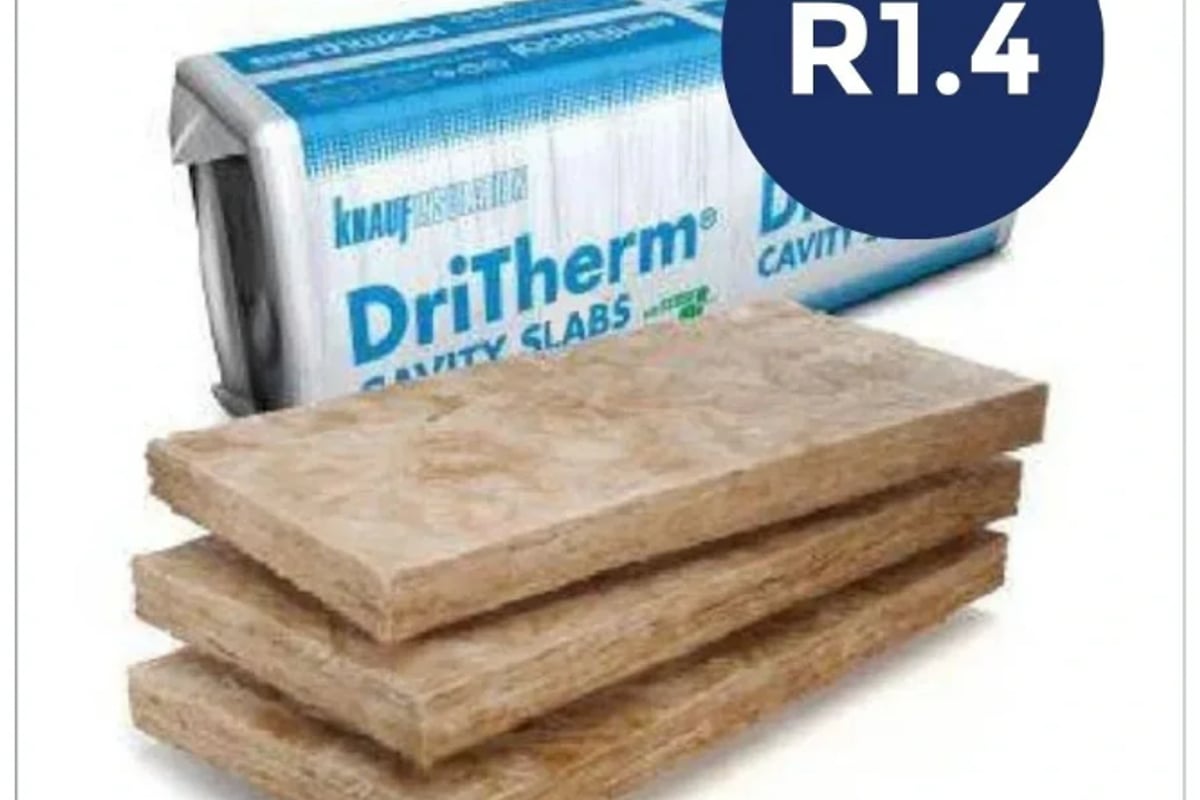
The Knauf DriTherm Cavity Slab R1.4 provides a practical solution for double-brick construction, combining thermal efficiency with moisture resistance. These cavity slabs prevent water migration while maintaining breathability, ensuring your wall system stays dry and thermally effective over the long term.
Floorshield Underfloor Products
Suspended timber floors can be a major source of heat loss in cooler months. Knauf's Floorshield range tackles this with glasswool batts specifically dimensioned for underfloor applications.
Installation advantages of Floorshield products:
- Pre-cut widths match standard joist spacing
- Friction-fit design stays in place without fasteners
- ECOSE Technology reduces irritation during overhead work
- Maintains loft even in humid underfloor environments
The range typically offers R2.0 to R2.5 thermal ratings, providing meaningful energy savings without excessive thickness that might interfere with ground clearance requirements.
Selecting the Right R-Value
Thermal resistance, measured in R-values, determines how effectively insulation resists heat flow. Higher numbers indicate better insulating performance. For knauf insulation insulation products, choosing the appropriate R-value depends on your climate zone, application area, and building code requirements.
Climate Zone Considerations
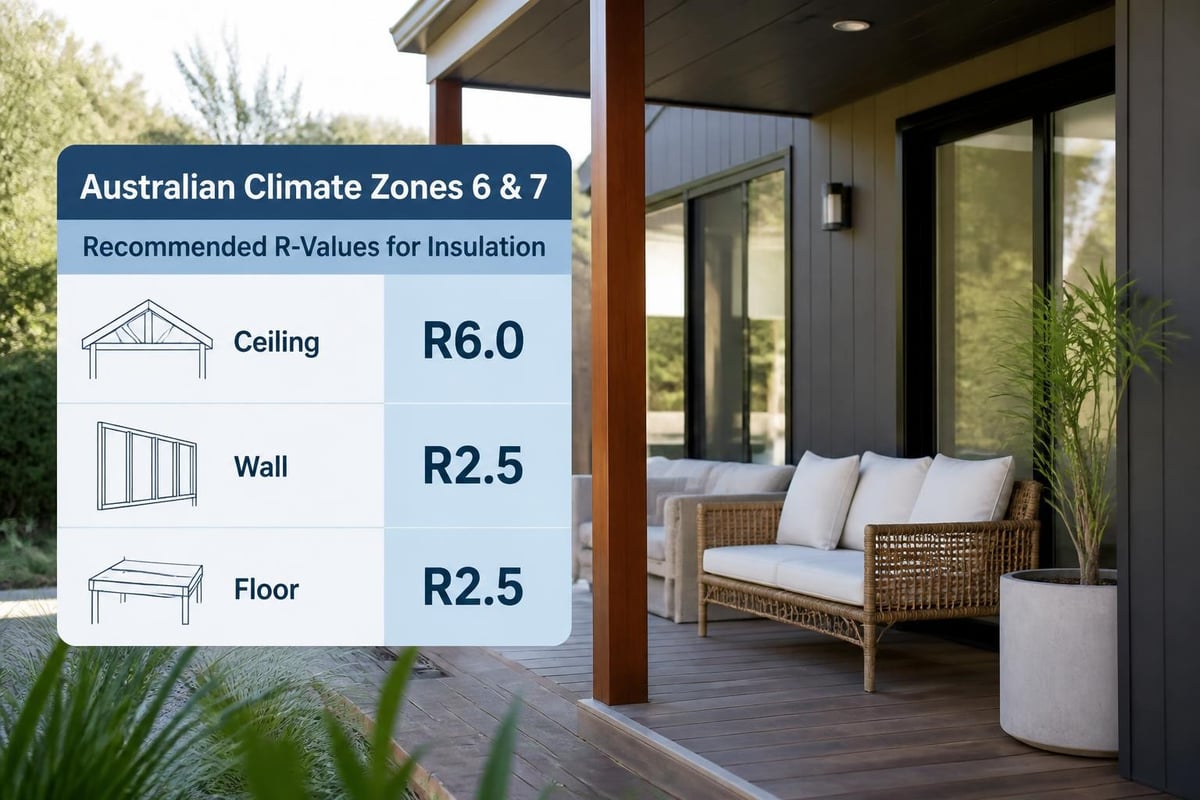
Australia is divided into eight climate zones under the National Construction Code (NCC). Victoria predominantly falls into climate zones 6 and 7, which experience cool to cold winters and require higher thermal resistance to maintain comfort and meet energy efficiency standards.
Recommended minimum R-values for Victoria:
- Ceilings: R5.0 to R7.0 (higher for zones with cold winters)
- Walls: R2.5 to R2.7 for cavity masonry or timber framing
- Underfloor: R2.0 to R2.5 for suspended floors
These recommendations balance thermal performance with practical installation requirements and budget considerations. You can explore specific R-value options through collections like R2.5 insulation or R6.0 products at Insulation Supplies Australia.
Installation Characteristics and Handling
One of the practical advantages of knauf insulation insulation is how the products handle during installation. The combination of ECOSE Technology and refined manufacturing processes creates batts and blankets that are noticeably softer, less dusty, and easier to work with compared to older glasswool products.
Cutting and Fitting
Glasswool batts compress easily, allowing them to fit snugly between studs and joists. For best results:
- Use a sharp insulation knife or serrated blade
- Compress the batt slightly and cut in one smooth motion
- Friction-fit ensures batts stay in place without stapling in most applications
- Trim carefully around electrical boxes and pipes for complete coverage
The lower dust formulation of Knauf products makes measuring, cutting, and fitting less irritating, though standard safety equipment (gloves, long sleeves, dust mask) remains advisable for comfortable installation.
Working with Blanket Products
Continuous blanket insulation offers advantages for larger ceiling or roof areas. Knauf's Earthwool Blanket range comes in rolls up to 13.5 metres long, allowing you to cover significant areas without joins.
Blanket installation tips:
- Work from the perimeter toward the centre
- Overlap sarking or roof membrane by at least 50mm
- Avoid compressing the material, which reduces R-value
- Secure with appropriate fixings for roof applications
Many homeowners and DIY renovators find blanket products particularly suitable for straightforward ceiling projects where continuous coverage minimises thermal bridging and installation time.
Acoustic Performance Beyond Thermal
While thermal insulation remains the primary consideration for most projects, noise control increasingly matters in modern Australian homes. Open-plan living, home offices, and multi-storey construction all create scenarios where managing sound transmission improves livability.
Knauf insulation insulation products, particularly the Sound Shield range, deliver measurable acoustic benefits alongside thermal performance. Glasswool's fibrous structure naturally absorbs sound energy, reducing both airborne noise (conversations, television) and impact noise (footsteps, dropped objects).
Understanding Sound Ratings
Two key metrics describe acoustic performance:
| Rating | What It Measures | Typical Applications |
|---|---|---|
| Rw (weighted sound reduction) | Airborne sound insulation | Party walls, bedroom walls, home theatres |
| NRC (noise reduction coefficient) | Sound absorption within a space | Open-plan areas, offices, studios |
Higher-density glasswool products like Earthwool Sound Shield achieve better acoustic ratings by providing more mass and fibre density to absorb and dampen sound waves. When combined with proper wall or floor construction (including resilient channels and acoustic sealants), these products can significantly improve acoustic comfort.
Sustainability and Environmental Impact
Choosing knauf insulation insulation means supporting products with genuine environmental credentials. Knauf's commitment to sustainability extends beyond marketing claims to verified, measurable improvements in manufacturing and product performance.
Environmental Product Declarations
Knauf publishes Environmental Product Declarations (EPDs) for their glasswool products, providing transparent data on carbon emissions, energy use, and environmental impact across the entire product lifecycle. These third-party verified documents allow architects, builders, and homeowners to make informed decisions based on objective environmental data.
Key sustainability metrics for Knauf products:
- Up to 80% recycled glass content in production
- Reduced embodied carbon through ECOSE Technology
- Lower energy consumption during manufacturing
- Products contribute to building energy efficiency ratings
- 100% recyclable at end of life
The circular economy approach means that knauf insulation insulation not only reduces operational energy use in buildings but also minimises waste and resource consumption throughout its lifecycle.
Contribution to Energy Efficiency
Installing quality insulation represents one of the most cost-effective improvements you can make to reduce energy consumption and lower utility bills. Properly insulated homes require less heating in winter and less cooling in summer, directly translating to reduced greenhouse gas emissions and energy costs.
According to Knauf's sustainability vision, buildings account for roughly 40% of global energy consumption and one-third of greenhouse gas emissions. Effective thermal insulation plays a crucial role in reducing this impact, making product choices genuinely consequential for environmental outcomes.
Practical Application Scenarios
Understanding how knauf insulation insulation performs in real-world scenarios helps you plan your project effectively and set realistic expectations for performance and installation requirements.
New Home Construction
Building a new home provides the ideal opportunity to maximise insulation performance. You can select optimal R-values for each application area without the constraints of retrofit installations.
Recommended approach for new builds:
- Consult NCC requirements for your climate zone
- Consider exceeding minimum standards in ceiling areas for enhanced comfort
- Use appropriate products for each application (batts for framing, cavity slabs for masonry)
- Coordinate with builders to ensure proper installation before lining
The comprehensive Knauf range at Insulation Supplies Australia provides everything needed for complete thermal and acoustic insulation throughout a new home.
Renovation and Retrofit Projects
Upgrading insulation in existing homes presents different challenges. You're often working within existing wall and ceiling cavities with limited access and specific dimensional constraints.
For ceiling upgrades, removing old insulation and installing new Earthwool ceiling batts can dramatically improve thermal performance, particularly in homes built before stringent energy efficiency standards were introduced. The work can typically be completed over a weekend for a modest-sized home.
Wall insulation retrofits require more planning. For timber-framed homes, blown-in insulation or careful insertion of batts from the interior may be possible. For masonry cavity walls, professional cavity fill services using products like DriTherm provide effective solutions.
Acoustic Improvement Projects
Home offices, music rooms, and media spaces benefit enormously from dedicated acoustic treatment. Installing Earthwool Sound Shield in walls and ceilings creates noticeably quieter spaces.
The higher density construction provides better sound absorption and reduces noise transmission between rooms. Combined with acoustic-grade plasterboard and proper sealing of gaps, you can achieve professional-grade acoustic performance in residential settings.
Comparing Glasswool to Alternative Materials
While this guide focuses on knauf insulation insulation, understanding how glasswool compares to other insulation types helps validate your product choice.
Glasswool vs. Polyester
Both materials offer good thermal performance and are commonly used in Australian residential construction.
| Characteristic | Glasswool (Knauf) | Polyester |
|---|---|---|
| Thermal performance | Excellent (wide R-value range) | Good (comparable R-values) |
| Fire resistance | Non-combustible | Generally combustible |
| Moisture behaviour | Water-repellent variants available | Naturally hydrophobic |
| Acoustic performance | Superior (higher density options) | Good |
| Sustainability | High recycled content, ECOSE Technology | Recycled PET content varies |
| Handling | Soft with ECOSE, low dust | Soft, no itch |
The non-combustible nature of glasswool provides inherent fire safety advantages, while ECOSE Technology narrows the handling comfort gap that traditionally favoured polyester.
Glasswool vs. Bulk Insulation
Bulk materials like cellulose or wool generally require professional installation and specialised equipment. Glasswool batts offer the significant advantage of straightforward DIY installation, making them practical for homeowners tackling their own insulation projects.
Cost Considerations and Value
Price naturally influences insulation decisions, but focusing solely on upfront cost overlooks the long-term value equation. Knauf insulation insulation typically sits in the mid-to-premium price range, reflecting the quality of materials, manufacturing technology, and performance characteristics.
Calculating True Value
Consider these factors when evaluating cost:
- Thermal performance: Higher R-values deliver greater energy savings over time
- Durability: Quality products maintain performance for decades without settling or degrading
- Installation efficiency: Easy-handling products reduce labour time and cost
- Health and safety: Low-dust, formaldehyde-free products create better working conditions
- Environmental impact: Sustainable manufacturing and recycled content support broader environmental goals
A quality insulation installation can deliver energy savings of 20-50% on heating and cooling costs, with payback periods often under five years depending on climate and home characteristics.
Buying Knauf Products in Victoria
Insulation Supplies Australia stocks a comprehensive range of Knauf products with competitive pricing and fast delivery across Victoria. The online ordering system simplifies the purchasing process, while expert advice ensures you select the right products for your specific application.
You can browse by application area through collections like wall insulation or underfloor products, making it easy to find exactly what you need for your project.
Common Installation Mistakes to Avoid
Even quality knauf insulation insulation won't perform optimally if installation errors compromise its effectiveness. Understanding these common pitfalls helps ensure your project delivers the expected thermal and acoustic benefits.
Compression and Gaps
The two most frequent installation mistakes are compressing insulation and leaving gaps in coverage.
Compression reduces R-value because thermal resistance depends on the thickness of still air trapped within the insulation material. Squashing batts to fit them into tight spaces or compressing them behind services reduces their effective thickness and thermal performance.
Gaps and incomplete coverage create thermal bridges where heat flows freely, significantly degrading overall performance. Pay particular attention to:
- Areas around windows and doors
- Electrical box penetrations
- Pipe and duct entries
- Junction points between walls and ceilings
- Corners and irregular spaces
Taking extra time to properly fit insulation around obstacles and seal gaps delivers better long-term performance than rushing installation.
Moisture Barriers and Ventilation
Understanding vapour management prevents moisture problems that can compromise insulation performance and create structural issues.
In most Australian climates, vapour barriers belong on the warm side of insulation (inside for cooling climates, outside for heating climates). Victoria's mixed climate requires careful consideration of seasonal vapour drive directions.
For ceiling insulation, maintaining adequate roof ventilation prevents moisture accumulation and excessive summer heat buildup. Ensure insulation doesn't block eave vents or restrict airflow in roof spaces.
Long-Term Performance and Maintenance
Quality knauf insulation insulation maintains its thermal performance for decades when properly installed and protected from moisture damage. Unlike some insulation types that settle, compress, or degrade over time, glasswool batts retain their loft and R-value throughout their service life.
Inspection and Monitoring
Occasional inspection helps identify potential issues before they compromise performance:
- Check for water stains or dampness indicating roof leaks
- Look for signs of pest activity or nesting
- Verify insulation remains properly positioned and hasn't slumped
- Ensure roof ventilation pathways remain clear
Addressing minor issues promptly prevents larger problems and maintains insulation effectiveness.
When to Upgrade or Replace
While glasswool insulation lasts indefinitely under normal conditions, upgrading makes sense when:
- Existing insulation fails to meet current energy efficiency standards
- Water damage has occurred and cannot be adequately dried
- You're undertaking major renovations that provide access to wall or ceiling cavities
- Energy bills remain high despite proper heating and cooling equipment
The energy efficiency standards for new homes have increased substantially over recent decades. Many homes built before 2000 have minimal or inadequate insulation by current standards, making upgrades particularly valuable for thermal comfort and energy savings.
Making Your Knauf Insulation Purchase
Armed with knowledge about product ranges, R-values, applications, and installation requirements, you're ready to specify and purchase knauf insulation insulation for your project. The key is matching product characteristics to your specific requirements while ensuring you order the right quantities.
Measuring and Estimating
Accurate measurements prevent ordering shortfalls or excessive waste:
- Ceiling areas: Multiply length by width, then add 10% for waste
- Walls: Calculate wall area and subtract windows and doors, add 5-10% for waste
- Underfloor: Measure joist spacing and total floor area
Product packaging clearly states coverage area, making quantity calculations straightforward once you know total square metres needed.
Product Selection Checklist
Before finalising your order, confirm:
- R-value meets or exceeds requirements for your climate zone and application
- Product dimensions match your stud/joist spacing and cavity depth
- Quantity covers total area plus appropriate waste allowance
- You have necessary tools and safety equipment for installation
- Delivery timing aligns with your project schedule
Insulation Supplies Australia's extensive product range makes finding exactly the right Knauf products straightforward, with detailed specifications and expert guidance available to support confident decision-making.
Choosing knauf insulation insulation means investing in proven thermal performance, innovative sustainability, and genuine comfort improvements for your home. The combination of ECOSE Technology, comprehensive product ranges, and reliable long-term performance makes Knauf a trusted choice for Australian homeowners and builders. Insulation Supplies Australia brings Victoria's most complete range of Knauf products together with competitive pricing, expert advice, and fast delivery, making it simple to specify, purchase, and install quality insulation that delivers lasting energy savings and comfort.