
You've probably got bubble wrap sitting in your garage right now, left over from a delivery or house move. But can you really use it as insulation? The short answer is yes, with important caveats. Insulation with bubble wrap is a temporary, low-cost option for certain applications, but it's not a replacement for proper building insulation. Understanding where it works, where it doesn't, and how it compares to rated insulation products will help you make smart decisions for your home.
What Is Insulation with Bubble Wrap and How Does It Work?
Bubble wrap is a lightweight plastic film with regularly spaced air pockets. Those pockets trap still air, which is a poor conductor of heat. That's the same principle behind most insulation materials, from glasswool batts to polystyrene boards.
When you use insulation with bubble wrap, you're relying on two mechanisms:
- Trapped air: The air bubbles slow conductive heat transfer
- Reflective surface: Some bubble wrap has a metallic or reflective layer that bounces radiant heat back
The effectiveness depends on bubble size, the number of layers, and whether the wrap has a reflective coating. Research from Lawrence Berkeley National Laboratory identifies bubble wrap as a low-cost interior shading and insulation option for windows, particularly in rental properties or temporary applications.
The Science Behind Air Pockets and Thermal Resistance
Air is an excellent insulator when it's trapped and can't move. Fluid mechanics studies confirm that surface-attached air bubbles create a thermal barrier by limiting convective and conductive heat flow.
Standard bubble wrap typically provides an R-value between R0.5 and R1.0 per layer. Reflective bubble insulation, with foil or metallised layers, can reach R1.5 to R2.0 when installed with an air gap. Compare that to rated ceiling insulation like R3.5 or R4.0 batts, and the gap is clear.
| Insulation Type | Approximate R-Value | Application | Lifespan |
|---|---|---|---|
| Standard bubble wrap (single layer) | R0.5–R1.0 | Windows, short-term | Months |
| Reflective bubble wrap (with air gap) | R1.5–R2.0 | Temporary walls, sheds | 1–3 years |
| Rated glasswool batts (e.g. R2.5) | R2.5 | Walls, underfloor | 50+ years |
| XPS board (75mm) | R2.27 | Under slab, walls | 50+ years |
Bubble wrap degrades under UV exposure, moisture, and repeated handling. It's not designed or tested for long-term building use.
Where Insulation with Bubble Wrap Actually Works
There are situations where insulation with bubble wrap makes practical sense. These are typically temporary, low-stakes applications where cost, availability, or reversibility matters more than thermal performance.
Window Insulation (Short-Term)
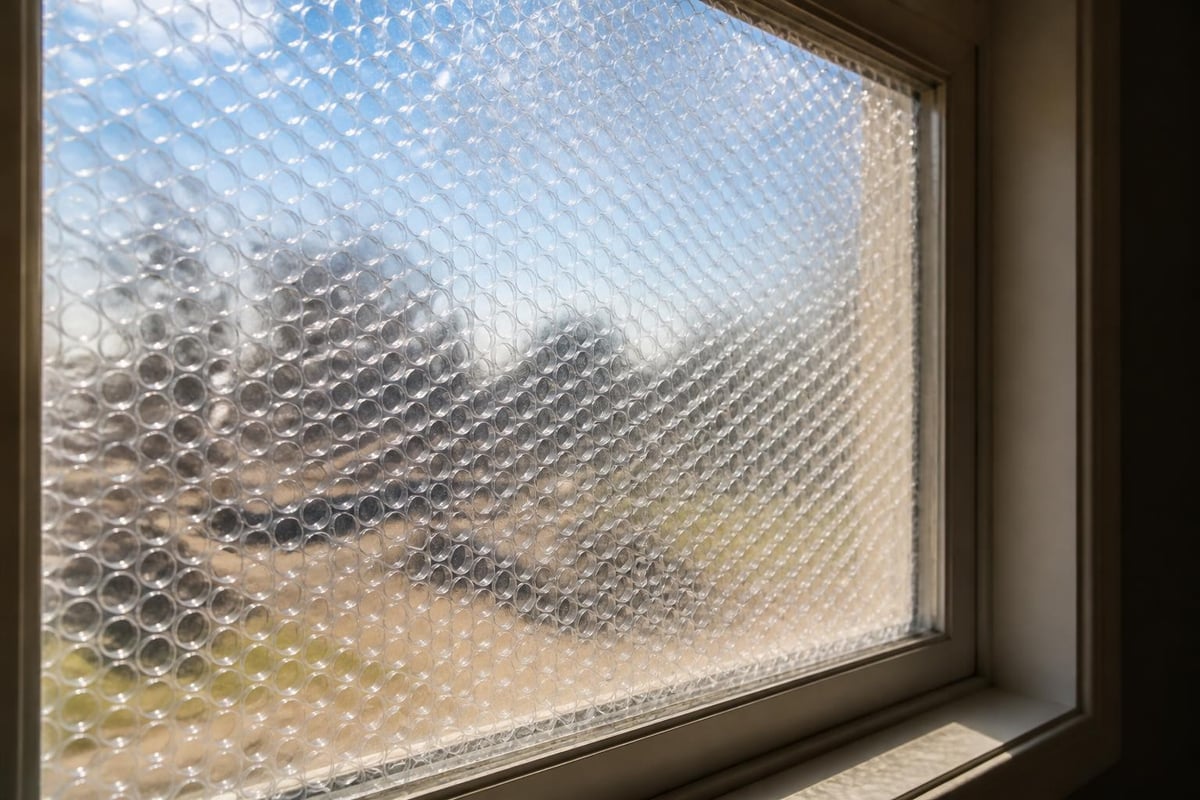
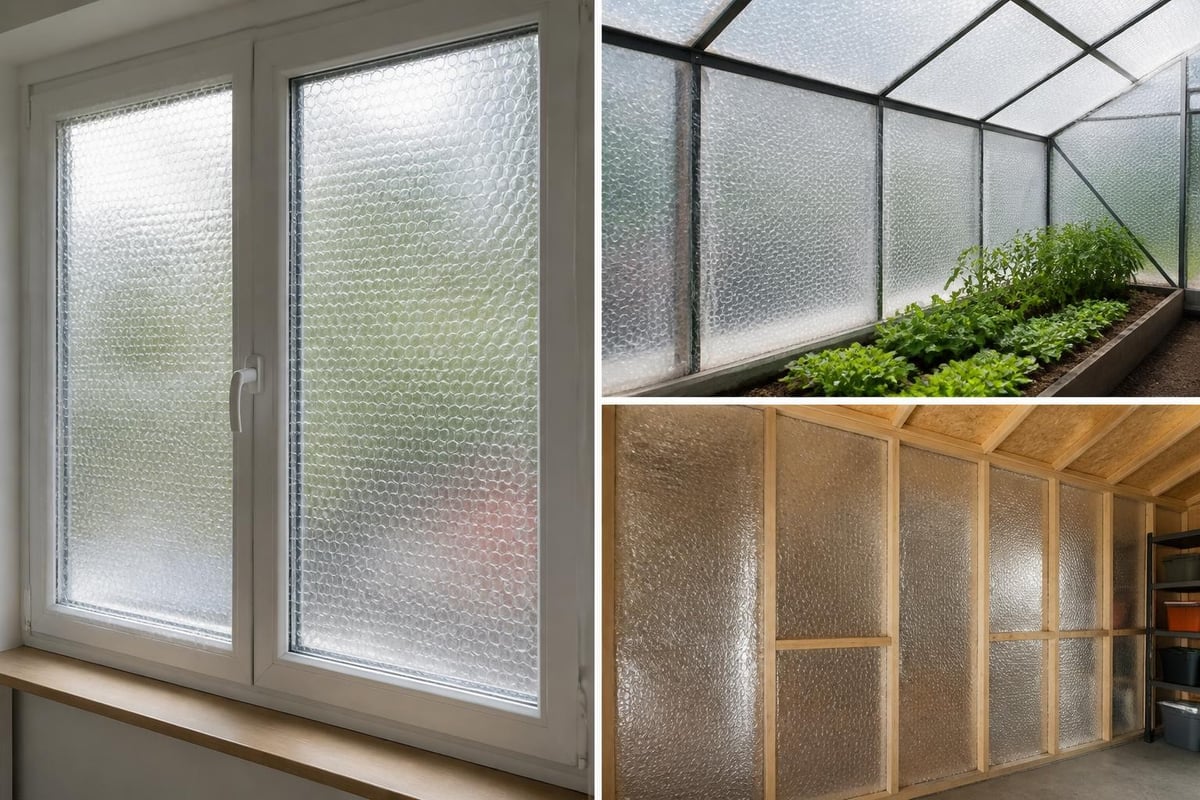
Bubble wrap is most commonly used on windows during winter. You spray water on the glass, press the bubble side against the pane, and the surface tension holds it in place. This creates an insulating air layer and reduces drafts.
Benefits include:
- No adhesive or permanent fixing
- Removes easily without damage
- Lets diffused light through
- Reduces condensation on single-pane glass
It's ideal for renters or anyone unwilling to invest in curtains or blinds. However, it won't match the performance of thermal curtains, double glazing, or purpose-built window films.
Greenhouse and Polytunnel Insulation
Agricultural studies and university extension programs recommend bubble wrap for lining greenhouses in winter. The wrap reduces heat loss at night and moderates temperature swings.
Growers often use horticultural bubble wrap (thicker, UV-stabilised) rather than standard packing material. Case studies from Springer journals show measurable energy savings in controlled trials, with heating costs dropping by 20–40% in small greenhouses.
This is a proven use case, but it's not relevant to your home's building envelope.
Shipping Container and Shed Interiors
Some DIYers line shipping containers or garden sheds with bubble wrap as a cheap vapour barrier and thermal buffer. It reduces condensation on metal walls and makes the space more comfortable.
Important: This is not compliant with the National Construction Code (NCC) for habitable buildings. It's fine for non-habitable storage, workshops, or hobby spaces.
When You Should Never Use Insulation with Bubble Wrap
Bubble wrap is not suitable for structural insulation in Australian homes. Here's where it fails, and why proper insulation products are essential.
Wall and Ceiling Cavities
Using insulation with bubble wrap inside wall or ceiling cavities is unsafe and non-compliant. The material:
- Has no fire rating
- Traps moisture without breathability
- Degrades quickly in enclosed spaces
- Provides negligible thermal resistance compared to rated batts
The NCC requires insulation to meet minimum R-values for different climate zones. In Melbourne (Zone 6), you need at least R2.8 in ceilings and R1.8 in walls for new builds. Bubble wrap doesn't come close.
If you're renovating or upgrading insulation, explore proven solutions like wall insulation batts or underfloor insulation that meet Australian standards.
Underfloor or Under-Slab Use
Bubble wrap will compress under load and loses its air pockets - the very thing that makes it insulate. Under suspended floors, you need materials designed to handle moisture, airflow, and long-term exposure.
For underfloor applications, products like the Sancell Breeze Underfloor combine thermal resistance with draught-blocking and moisture control, engineered specifically for Australian floor systems.
Behind Hot Water Systems or Near Heat Sources
Plastic bubble wrap melts, deforms, and releases fumes when heated. Never use it near hot water pipes, heaters, or any appliance that generates heat.
Reflective Bubble Wrap vs Standard Bubble Wrap
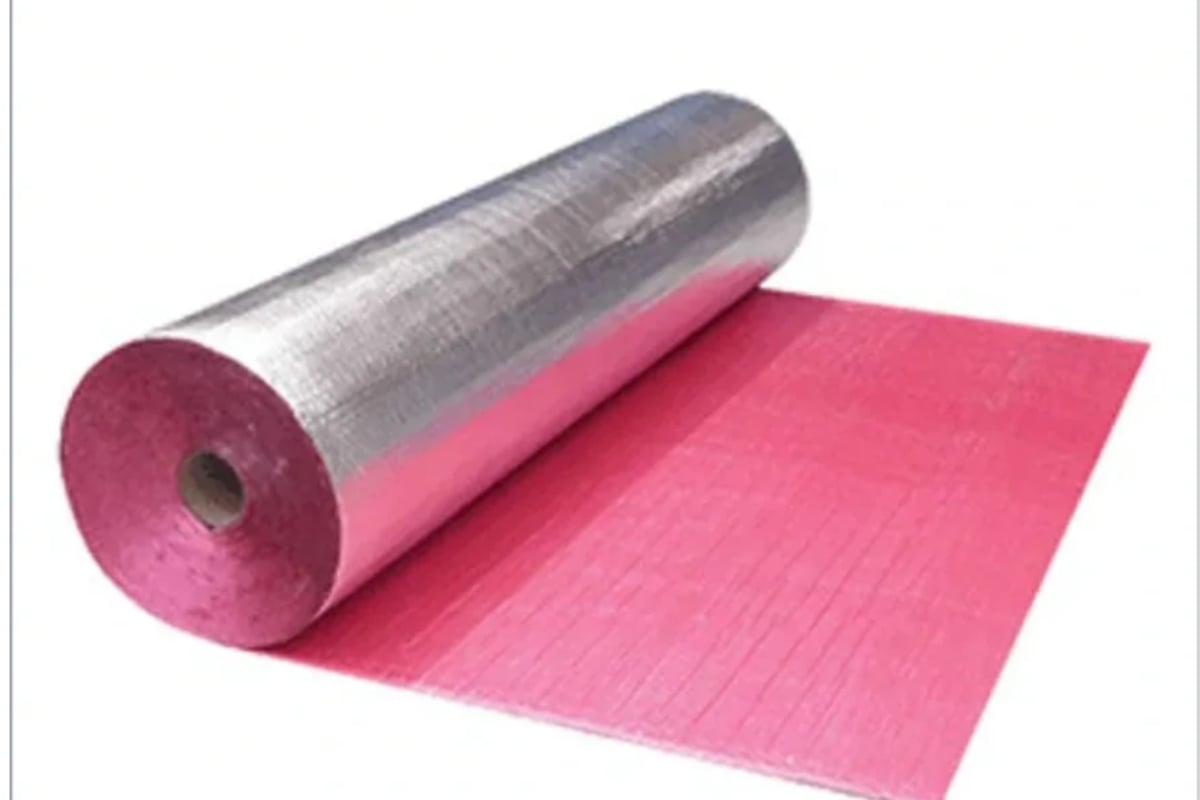
Not all bubble wrap is the same. Reflective bubble insulation is a purpose-made building product, while standard packing bubble wrap is designed for cushioning fragile items.
| Feature | Standard Bubble Wrap | Reflective Bubble Insulation |
|---|---|---|
| Material | Polyethylene film, air pockets | Foil-faced polyethylene, reinforced layers |
| R-Value | R0.5–R1.0 | R1.5–R2.0 (with air gap) |
| UV Resistance | Poor (degrades in weeks) | Moderate to good (treated) |
| Vapour Barrier | Minimal | Yes (when sealed) |
| Fire Rating | None | Some products rated (check spec) |
| Cost | Very low | Low to moderate |
Reflective bubble products are sold for specific uses: sarking, vapour barriers, radiant barriers in roof spaces, and temporary underfloor wrapping. They're still not a substitute for bulk insulation like glasswool or polyester batts, but they're closer to a legitimate building material.
Where Reflective Bubble Insulation Fits
Some builders use reflective bubble wrap as secondary insulation or a radiant barrier under metal roofs, combined with bulk insulation batts. This approach can improve overall thermal performance, especially in hot climates where radiant heat dominates.
The key is installation. Reflective surfaces only work when facing an air gap (minimum 25mm). Without the gap, the reflective layer does nothing.
If you're exploring multi-layer insulation systems, consult the Australian Building Codes Board guidance and consider professionally rated products rather than DIY bubble solutions.
Installation Tips for Insulation with Bubble Wrap
If you've decided bubble wrap suits your needs (windows, greenhouse, or a temporary project), here's how to install it properly.
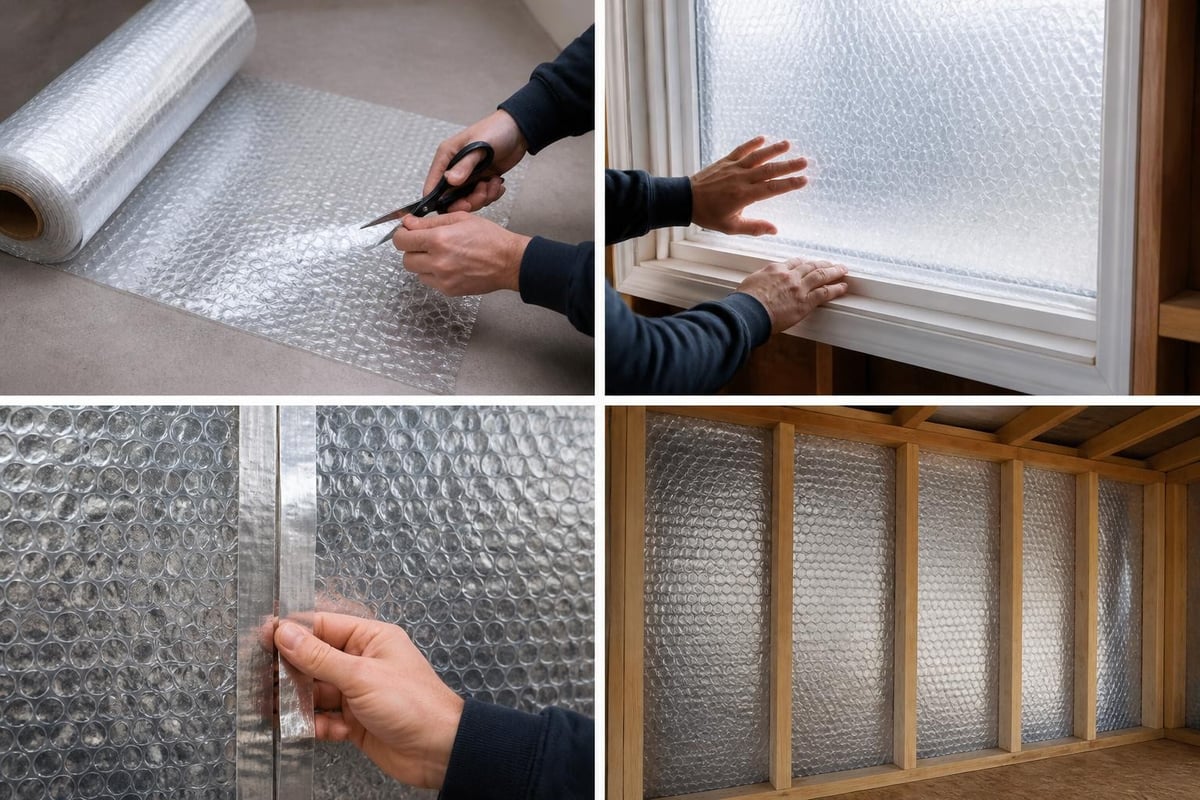
For Window Insulation
- Clean the glass: Remove dust, grease, and grime so the wrap sticks.
- Cut to size: Measure the pane and cut bubble wrap slightly larger.
- Spray water: Mist the glass lightly with a spray bottle.
- Press bubble side in: The bubbles face the glass, flat side faces the room.
- Smooth out air pockets: Work from the centre outward.
The water creates surface tension that holds the wrap in place. It peels off easily and leaves no residue. Replace every season, as the material yellows and loses adhesion over time.
For Sheds and Non-Habitable Spaces
- Use heavy-duty or reflective bubble wrap for better durability.
- Staple or tape to timber framing, leaving a small air gap if possible.
- Overlap seams by at least 50mm and tape with foil tape (not standard sticky tape).
- Avoid puncturing the bubbles - every hole reduces R-value.
Never seal a space completely with bubble wrap without ventilation. Trapped moisture leads to mould, rot, and indoor air quality problems.
Health, Safety, and Environmental Considerations
Insulation with bubble wrap raises some important practical and environmental questions.
Fire Safety
Bubble wrap is combustible. It melts, drips, and releases toxic smoke when exposed to flame. It has no fire rating and should never be installed near electrical wiring, switchboards, or ignition sources.
In habitable buildings, all insulation materials must comply with AS/NZS fire standards. Bubble wrap does not.
Moisture and Condensation
Plastic films are vapour barriers. If installed incorrectly, they can trap moisture inside wall cavities or against cold surfaces, leading to mould and timber decay.
Medical and emergency studies show bubble wrap's insulating properties in controlled settings, but building science is different. Always consider moisture movement, ventilation, and condensation risk.
For moisture-sensitive areas, use breathable products like permeable wall wraps that allow vapour to escape while blocking liquid water.
Recycling and Disposal
Bubble wrap is recyclable, but not in kerbside bins. It belongs in soft plastics recycling programs (like REDcycle drop-off points, when available). Industry guides from Plastic Film Recycling explain collection and processing options.
If you're using large quantities, plan for end-of-life disposal. Bubble wrap from insulation projects can't go in general waste and often ends up in landfill if not recycled properly.
Comparing Bubble Wrap to Rated Insulation Products
To put insulation with bubble wrap in perspective, here's how it stacks up against common Australian insulation materials.
| Insulation Product | R-Value (per 100mm) | Fire Rating | Moisture Resistance | Lifespan | Best Use |
|---|---|---|---|---|---|
| Bubble wrap (standard) | R0.5–R1.0 | None | Poor | <1 year | Windows, temp projects |
| Reflective bubble (foil) | R1.5–R2.0 | Variable | Good | 1–3 years | Sheds, radiant barrier |
| Glasswool batts (R2.5) | R2.5 | Good | Moderate | 50+ years | Walls, underfloor |
| Polyester batts (R2.5) | R2.5 | Excellent | Excellent | 50+ years | Walls, ceilings, acoustic |
| XPS foam board (R2.27) | R2.27 | Good | Excellent | 50+ years | Under slab, wet areas |
Bubble wrap may save you a few dollars upfront, but it doesn't deliver long-term value, safety, or compliance. For serious energy efficiency upgrades, invest in products with proven R-values, fire ratings, and warranties.
Real-World Performance: What the Data Says
While insulation with bubble wrap sounds appealing, measured performance often disappoints. Agricultural case studies show energy savings in greenhouses, but residential applications are harder to quantify.
Window bubble wrap reduces drafts and surface condensation, but it doesn't stop radiant heat loss through the glass itself. Thermal imaging often reveals only marginal temperature differences compared to untreated windows.
In contrast, professionally installed ceiling insulation or wall batts deliver measurable, repeatable R-values that reduce heating and cooling costs year-round.
Novel Research and Future Directions
Emerging research explores advanced bubble-film materials. Studies on infrared-transparent bubble wraps for radiant cooling systems show promise, but these are experimental and not yet available for DIY use.
For now, stick with proven materials for building insulation. Innovation is exciting, but your home's comfort and safety depend on products that meet current standards.
When to Choose Proper Insulation Instead
If you're considering insulation with bubble wrap because you're trying to save money, here are situations where it's worth investing in rated products:
- Renovating or building: Compliance is non-negotiable. Use NCC-rated materials.
- Long-term comfort: Bubble wrap degrades. Batts last decades.
- Energy bill reduction: Proper insulation pays for itself through lower heating and cooling costs.
- Resale value: Buyers expect compliant, professional insulation.
For Melbourne homeowners, achieving R2.5 in walls and R3.5 to R4.0 in ceilings makes a tangible difference in comfort and energy use. Bubble wrap simply can't deliver those results.
Practical Alternatives to Bubble Wrap
If cost is the barrier, there are affordable, compliant insulation products that outperform bubble wrap:
- Polyester batts: Non-itch, easy to install, excellent for DIY projects
- Glasswool batts: Cost-effective bulk insulation for walls, ceilings, and underfloor
- Reflective foil laminates: Purpose-made radiant barriers with proven R-values
- XPS or EPS boards: Great for slab edges, wet areas, or compression zones
All of these are available online, delivered to your door, and backed by technical data and warranties. Explore the full range at Insulation Supplies Australia to compare products, R-values, and prices.
Final Thoughts on DIY Insulation Choices
Insulation with bubble wrap has its place: quick window fixes, greenhouses, hobby sheds, and other low-stakes projects. It's cheap, reversible, and better than nothing when used correctly.
But it's not a building insulation material. It doesn't meet fire codes, doesn't provide adequate thermal resistance, and won't last beyond a season or two. For walls, ceilings, underfloor, and anywhere compliance or performance matters, invest in rated products designed for the job.
Understanding the limits of bubble wrap helps you make informed decisions. Use it where it works, skip it where it doesn't, and prioritise safety, performance, and long-term value in your home.
Insulation with bubble wrap can serve as a temporary fix or a cost-saving measure in specific situations, but it's no substitute for professional-grade insulation when it comes to energy efficiency, safety, and compliance. Whether you're tackling a DIY window project or planning a full home renovation, choosing the right insulation product makes all the difference. Insulation Supplies Australia offers a comprehensive range of wall, ceiling, underfloor, and acoustic insulation solutions backed by expert advice and fast delivery across Victoria. Browse the range online, compare R-values and prices, and find the right insulation to suit your project and budget.