

When you're planning a renovation, building a new home, or upgrading your insulation, you'll come across plenty of R-value ratings. Among these, insulation R7 sits at the high-performance end of the spectrum. But what exactly does R7 mean for your home, where should you use it, and is it always the right choice? This guide unpacks everything you need to know about insulation R7, from technical basics to practical applications across Australian climates.
What Is Insulation R7 and How Does R-Value Work?
R-value measures thermal resistance-the ability of insulation to resist heat flow. The higher the R-value, the better the insulation performs. Insulation R7 provides an R-value of 7.0, which represents substantial thermal resistance.
The Science Behind R-Values
R-value is calculated by dividing a material's thickness by its thermal conductivity (measured as a k-value or lambda value). This gives you a number that shows how well insulation can slow heat transfer per square metre.
- Higher R-value = better insulation performance
- Lower k-value (thermal conductivity) = better insulating material
- Greater thickness = higher R-value for the same material
The ENERGY STAR insulation factsheet provides detailed guidance on how R-values translate to real-world energy savings across different climate zones.
Why R7 Matters in Australian Homes
Insulation R7 is typically used in ceilings and roofs where heat loss (in winter) and heat gain (in summer) are most significant. Australian homes in cold climates or those aiming for high energy efficiency often specify R6.0 to R7.0 for ceiling applications.
According to the RESNET technical requirements, accurately installed and labelled R-values are critical for achieving rated whole-house performance and energy modelling accuracy.
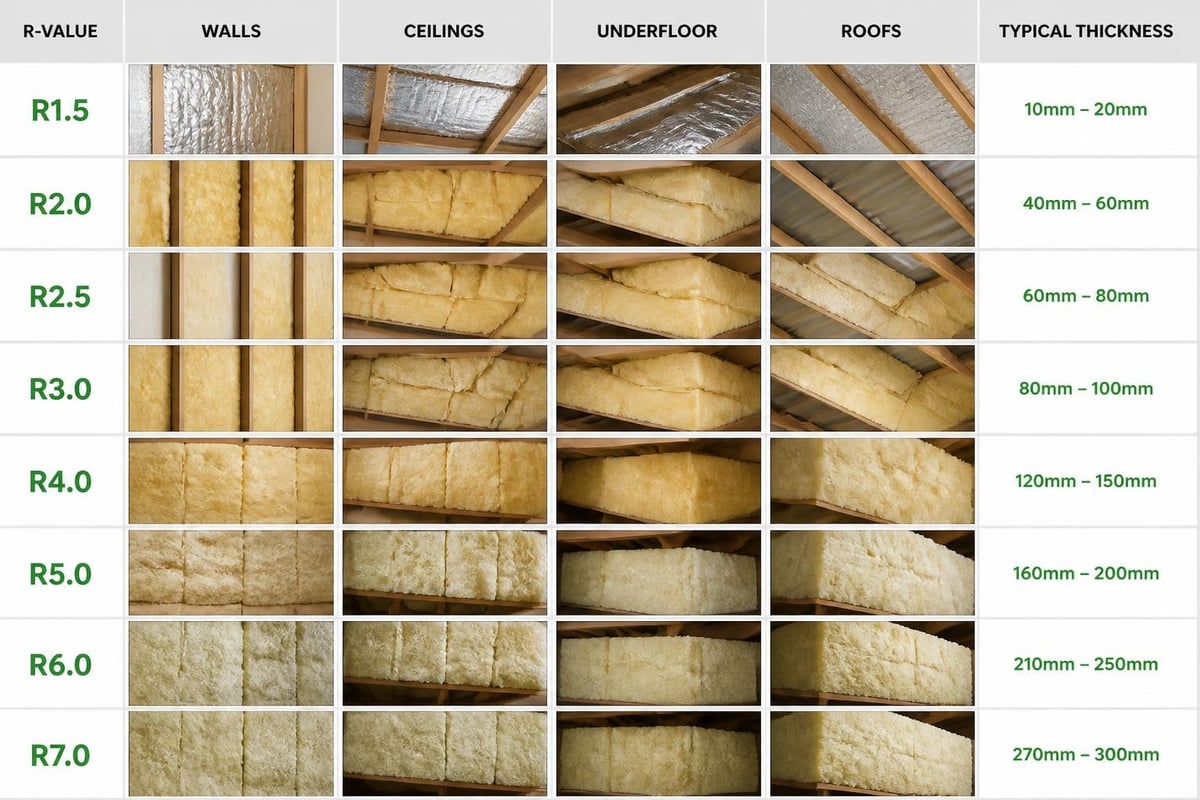
Where Insulation R7 Is Used in Australian Buildings
Insulation R7 is not a one-size-fits-all solution. Its high thermal resistance makes it ideal for specific applications, particularly in areas where heat transfer is greatest.
Ceiling and Roof Applications
The ceiling is where most heat escapes in winter and enters in summer. R7 insulation is most commonly specified for:
- Cold-climate ceiling insulation: Alpine regions, southern Victoria, Tasmania
- High-performance homes: passive solar, low-energy and energy-efficient designs
- Metal roof underlay: where roof space gets extremely hot
If you're looking at lower R-values for comparison, the R6.0 collection offers products that deliver strong performance with slightly less thermal resistance, while the R8.0 collection provides even greater insulation in extreme climates.
Whole-Wall Thermal Performance
Some high-performance wall assemblies incorporate continuous insulation boards rated at R7 or close to it. These boards sit outside the wall frame, reducing thermal bridging through studs.
The ORNL Whole-Wall Thermal Performance Calculator demonstrates how adding continuous insulation (even at R2 to R4) dramatically improves whole-wall R-value by eliminating thermal bridges.
For walls, achieving R7 typically requires:
| Component | R-Value Contribution | Notes |
|---|---|---|
| Cavity insulation (90mm glasswool) | R2.5 - R3.0 | Between studs |
| Continuous board (50mm XPS) | R2.0 - R2.5 | Outboard of frame |
| Air films and finishes | R0.5 - R1.0 | Interior/exterior surfaces |
| Total (assembly) | R5.0 - R6.5 | Effective whole-wall rating |
Even with continuous insulation, reaching a true R7 whole-wall rating is ambitious and often reserved for passive-house or net-zero projects.
Not Typically Used Underfloor
Underfloor insulation rarely requires R7. Most Australian homes use R1.5 to R2.5 for suspended floors. The underfloor insulation range includes products like draught-barrier foils and mid-density batts that deliver cost-effective performance without over-insulating.
Choosing Insulation R7: Material Types and Formats
Insulation R7 can be achieved with several material types. Each has different characteristics, installation methods and costs.
Glasswool and Rockwool Batts
Glasswool and rockwool (mineral wool) are the most common materials for high-R ceiling insulation in Australia. To reach R7, batts are typically 250mm to 300mm thick.
Advantages:
- Cost-effective for large ceiling areas
- Non-combustible and fire-resistant
- Good acoustic performance
- Compressible for transport
Considerations:
- Requires sufficient ceiling cavity depth
- Must be handled carefully (wear gloves and mask)
- Performance drops if compressed or poorly fitted
For ceiling projects, many builders choose products from the Knauf insulation range, which includes high-density ceiling batts manufactured with ECOSE® Technology for reduced dust and easier handling.
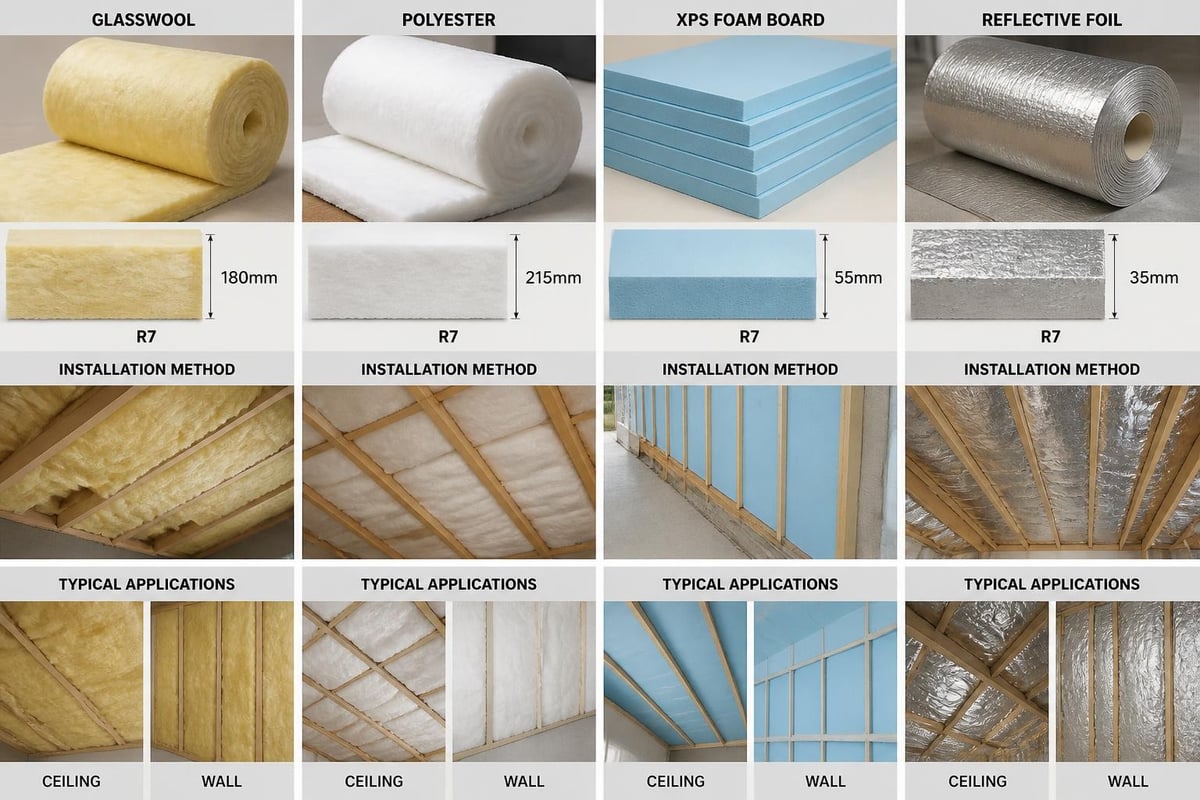
Rigid Foam Boards
Extruded polystyrene (XPS) and polyisocyanurate (polyiso) boards can deliver R7 in a thinner profile than batts. A 75mm XPS board typically provides around R2.2 to R2.5; achieving R7 would require stacking multiple layers or using advanced materials.
Where foam boards excel:
- Continuous insulation outboard of wall framing
- Under concrete slabs (requires high compressive strength)
- Retrofit applications where cavity depth is limited
The under-concrete slab collection includes rigid XPS boards with compressive ratings up to 350kPa, suitable for below-slab applications.
Advanced and Hybrid Solutions
Some high-performance insulation systems use vacuum-insulated panels (VIPs) or aerogel composites to reach R7 in minimal thickness. These are cutting-edge materials often used in commercial or research projects.
Oak Ridge National Laboratory research explores composite foam with VIP cores that can achieve R-values of 10 to 12 per inch-far exceeding traditional materials.
For residential applications, these remain niche and expensive, though they're worth watching as costs drop over time.
Climate Zones and When You Need Insulation R7
Australia's building code divides the country into climate zones, each with different insulation requirements. Insulation R7 is rarely mandatory but often specified for optimal comfort and energy efficiency.
Cold Climate Zones (Alpine, Canberra, Southern Victoria)
In climate zones 7 and 8 (alpine and cold temperate), ceilings in new homes often require R5.0 to R6.0 minimum. Many homeowners and builders upgrade to R7 for:
- Greater winter warmth
- Lower heating bills
- Future-proofing against rising energy costs
Temperate Zones (Melbourne, Adelaide, Hobart)
Melbourne sits in climate zone 6 (mild temperate). Minimum ceiling insulation is typically R3.5 to R4.0, but high-performance homes frequently specify R5.0 or higher.
R7 is overkill for most Melbourne homes unless you're building to passive-house or 7-star-plus energy ratings.
Warm and Hot Zones (Brisbane, Sydney, Perth)
In warmer zones (1-5), the priority shifts from keeping heat in to keeping heat out. Ceiling R-values of R4.0 to R6.0 are common. R7 might be used in:
- Extremely hot inland areas
- Homes with large glazing or minimal eaves
- High-performance builds targeting near-zero cooling loads
| Climate Zone | Region Example | Typical Minimum Ceiling R-Value | When to Consider R7 |
|---|---|---|---|
| Zone 1 (Hot humid) | Darwin | R3.5 - R4.0 | Rarely; focus on ventilation and shading |
| Zone 2-3 (Warm) | Brisbane, Sydney | R3.5 - R5.0 | High-performance or west-facing roof |
| Zone 6 (Mild temperate) | Melbourne | R3.5 - R5.0 | Passive solar, energy-efficient homes |
| Zone 7-8 (Cold/Alpine) | Canberra, Alpine areas | R5.0 - R6.0 minimum | Standard in new builds and renovations |
Installing Insulation R7: Practical Considerations
Achieving the full rated R-value depends on correct installation. Even high-performance insulation R7 will underperform if compressed, gapped or poorly fitted.
Ceiling Cavity Depth
R7 batts are thick-often 250mm to 300mm. Before specifying R7, check your ceiling cavity can accommodate it without compressing the product.
Key checks:
- Measure rafter or truss depth
- Allow clearance for downlights and services
- Ensure adequate ventilation above insulation (for pitched roofs)
Compressed insulation loses R-value. A 300mm batt squashed into a 200mm cavity will not deliver R7 performance.
Avoiding Thermal Bridging
In walls, timber or steel studs create thermal bridges that bypass insulation. Continuous insulation boards outside the frame help, but achieving true R7 whole-wall performance requires careful design.
The PHIUS Certification Guidebook sets out prescriptive layers and inspection protocols for passive-house assemblies, where every thermal bridge is calculated and minimised.
Sealing and Air Barriers
Insulation R7 controls conductive heat transfer, but air leaks bypass insulation entirely. Seal gaps around:
- Ceiling penetrations (downlights, exhaust fans, manhole edges)
- Wall-to-ceiling junctions
- Window and door frames
The U.S. Department of Energy guide on insulation and air sealing highlights the importance of combining insulation upgrades with air-sealing measures for maximum energy savings.
When planning wall insulation, browse the wall insulation collection for mid-to-high R-value batts and boards suited to Australian framing.
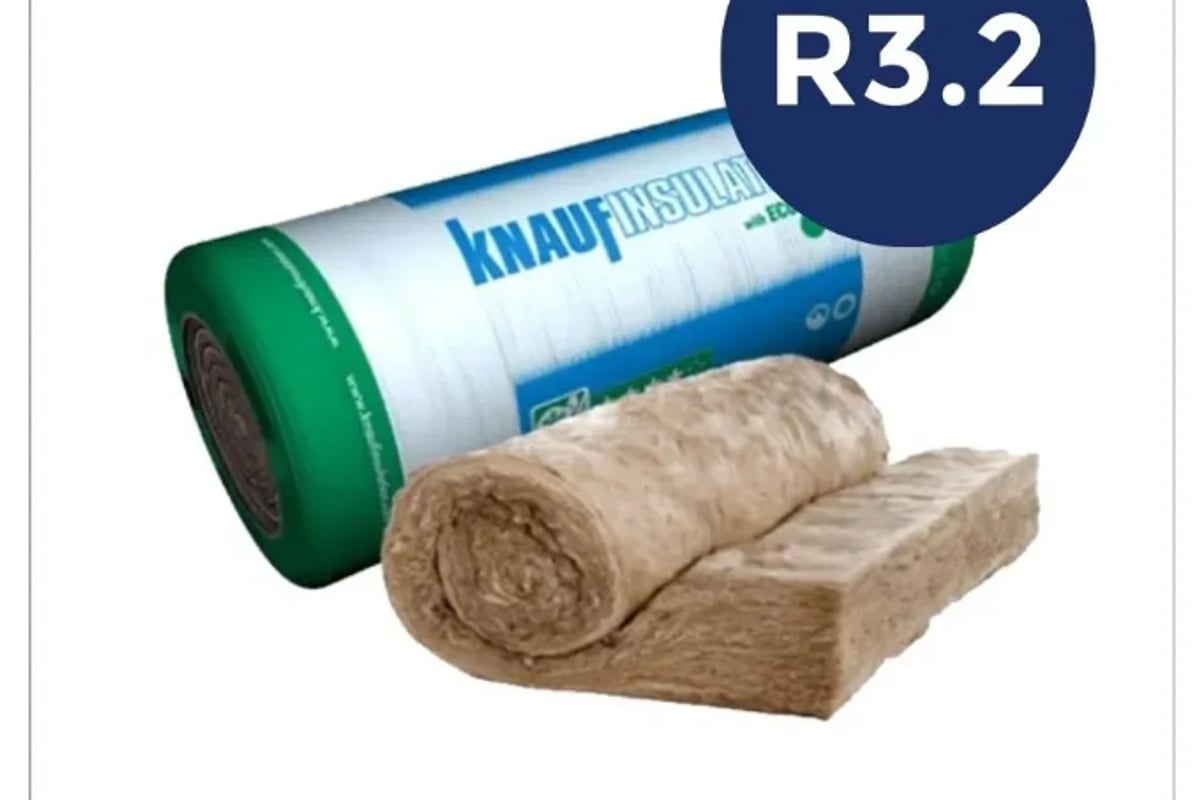
For projects that require a balance between performance and budget, the Earthwool Blanket Unfaced R3.2 130mmx1200mmx13.5m 16.2m² by Knauf delivers strong thermal efficiency in a manageable 130mm thickness, suitable for ceiling and roof applications where space is limited.
Comparing Insulation R7 to Other R-Values
R7 is a high-performance rating, but it's not the only option. Understanding how it stacks up against other common R-values helps you choose the right product.
R7 vs R6.0
R6.0 is often the practical ceiling choice in cold climates. The difference between R6 and R7 is roughly 15% more thermal resistance.
R7 advantages:
- Noticeably warmer ceilings in extreme cold
- Lower heating costs in alpine or high-altitude homes
- Better summer cooling in hot attics
R6 advantages:
- Less expensive
- Easier to fit in standard ceiling cavities
- Still exceeds most building-code minimums
For most Melbourne and regional Victorian homes, R6.0 is excellent. R7 is for those chasing every last bit of performance.
R7 vs R4.0 and R5.0
R4.0 and R5.0 are mid-to-high ratings often used in temperate zones.
| R-Value | Typical Batt Thickness | Best Application | Thermal Resistance (m²·K/W) |
|---|---|---|---|
| R4.0 | 160mm - 180mm | Ceiling (temperate zones) | 4.0 |
| R5.0 | 200mm - 220mm | Ceiling (cold-temperate zones) | 5.0 |
| R6.0 | 240mm - 260mm | Ceiling (cold zones) | 6.0 |
| R7.0 | 250mm - 300mm | Ceiling (alpine, high-performance) | 7.0 |
Upgrading from R4 to R7 requires more space, more material and higher cost-but can cut ceiling heat loss by nearly 45%.
R7 in Context of Advanced Insulation Research
High-performance insulation is an active research area. Next-generation retrofit panels incorporating vacuum insulation cores aim to deliver R10+ in thin profiles, ideal for deep-energy retrofits where adding bulk insulation is impractical.
While these technologies are not yet mainstream in Australia, they show where the industry is heading: thinner, higher-R products that make R7-equivalent performance accessible in tighter spaces.
Cost and Payback of Insulation R7
Insulation R7 costs more than lower-rated products, both in material and installation (due to thickness and handling). Is it worth it?
Material Cost Comparison
Prices vary by brand, format and retailer. As a rough guide:
- R4.0 ceiling batts: $8 - $12 per m²
- R5.0 ceiling batts: $10 - $15 per m²
- R6.0 ceiling batts: $12 - $18 per m²
- R7.0 ceiling batts: $15 - $22 per m²
The price premium for R7 is typically 20-30% over R6, and 50-80% over R4.
Energy Savings and Payback Period
Higher insulation reduces heating and cooling costs. In a cold climate, upgrading from R4 to R7 in a 150m² ceiling might save $200 to $400 per year in energy bills, depending on:
- Local climate severity
- Heating/cooling systems
- Electricity and gas prices
- Home air-tightness
Payback periods range from 5 to 15 years. Homes with high energy use, expensive heating or extreme climates see faster payback.
Non-Financial Benefits
Insulation R7 also delivers:
- Thermal comfort: more stable indoor temperatures
- Acoustic performance: thicker batts dampen noise
- Resale value: high-performance homes appeal to energy-conscious buyers
- Future-proofing: as energy costs rise, high R-values become more valuable
Common Mistakes to Avoid with Insulation R7
Even experienced DIYers and builders can make errors that compromise R7 performance.
Compressing the Insulation
R7 batts are thick. Squashing them to fit a shallow cavity cuts their R-value significantly. Always measure cavity depth first.
Leaving Gaps Around Obstacles
Gaps around pipes, wires, downlights and joists create thermal shortcuts. Use offcuts to pack small spaces and maintain continuous coverage.
Ignoring Ventilation
In pitched roofs, insulation should allow airflow above it to prevent moisture build-up. Block ventilation and you risk condensation, mould and timber rot.
Overlooking Air Sealing
Insulation R7 won't stop draughts. Seal ceiling penetrations, gaps and cracks with caulk, tape or foam to prevent air leakage.
Choosing the Wrong Product for the Application
R7 batts are designed for ceilings, not walls or floors (in most cases). Match the product to the application. For example, check the ceiling insulation range for ceiling-specific products and the acoustic insulation collection if sound control is a priority.
Retrofitting Insulation R7 in Existing Homes
Adding R7 insulation to an existing home is more challenging than installing it during construction, but it's entirely possible.
Accessing the Ceiling Space
Most retrofit insulation goes in through the manhole. You'll need:
- Safe access (ladder, boards to walk on)
- Adequate lighting
- Protective gear (gloves, mask, coveralls)
- Helper to pass batts up
Working Around Existing Services
Older homes have wiring, plumbing and downlights in the ceiling. Take care not to cover recessed lights (unless they're IC-rated for insulation contact) or compress insulation around hot flues.
Removing Old Insulation
If existing insulation is damaged, compressed or contaminated (asbestos, vermin), remove it first. Dispose of asbestos professionally-never DIY.
DIY vs Professional Installation
DIY installation saves labour costs but requires care, time and safety awareness. Professional installers work faster, know building codes and often provide warranties.
For large projects or tricky layouts (cathedral ceilings, multi-level roofs), professional installation is usually worth the cost.
Insulation R7 and Building Codes in Australia
Australian building codes set minimum insulation standards, but they don't mandate R7 in most situations.
National Construction Code (NCC) Requirements
The NCC specifies minimum R-values by climate zone and building element. For ceilings in cold zones, minimum ratings are typically R5.0 to R6.0. R7 exceeds code and is voluntary.
Energy Ratings and Star Ratings
New homes are rated using tools like NatHERS (Nationwide House Energy Rating Scheme). Higher insulation contributes to better star ratings (6-star minimum, with many builders targeting 7-star or higher).
R7 ceilings help achieve top-tier ratings, reducing reliance on active heating and cooling.
Compliance and Verification
The ASHRAE Handbook material properties chapter provides technical definitions and test methods for R-values, used by engineers and certifiers to verify product claims and compliance.
When specifying insulation R7, always choose products with clear labelling, third-party testing and compliance documentation.
Insulation R7 for Different Building Elements
While R7 is most common in ceilings, it can be applied elsewhere with the right design.
Ceilings and Roofs
Primary application. Use R7 batts in cold climates, high-performance homes, or where attic temperatures are extreme.
Walls
Achieving R7 in a wall requires continuous insulation plus cavity fill. Practical for passive-house or commercial buildings, less common in standard residential.
Floors
R7 underfloor is rare. Most suspended floors use R1.5 to R2.5. Exception: highly exposed floors in alpine homes or over unconditioned basements.
Slabs
R7 under-slab insulation would require very thick XPS or EPS, rarely cost-effective. Most slab edge and underfloor insulation sits at R1.0 to R2.5.
For practical slab insulation options, visit the under-concrete slab range.
Environmental and Health Considerations
Insulation R7 products vary in environmental impact and handling requirements.
Glasswool and Rockwool
Both are made from abundant raw materials (sand, recycled glass, or stone). They're non-combustible, durable and often contain recycled content. Some modern glasswool (like Knauf Earthwool) uses plant-based binders, reducing formaldehyde.
Health and safety:
- Wear gloves, long sleeves and a dust mask
- Fibres can irritate skin and airways
- Wash clothes separately after handling
Foam Boards
XPS and polyiso boards are petroleum-based and have higher embodied energy. Some older foams used high-GWP (global warming potential) blowing agents, though modern products are improving.
Handling:
- Low dust, easy to cut
- Off-gassing minimal once installed
- Non-biodegradable; disposal can be tricky
Sustainability and Lifespan
Insulation R7 products typically last the life of the building (50+ years) if installed correctly and protected from moisture, pests and damage.
Choosing high-quality, certified products ensures long-term performance and minimises the need for replacement.
Insulation R7 is a high-performance choice that delivers exceptional thermal resistance, particularly in ceiling and roof applications across cold and temperate Australian climates. By understanding where and when to use R7, how it compares to other ratings, and the practical steps to install it correctly, you can make an informed decision that balances cost, comfort and energy efficiency. Whether you're building new, renovating or retrofitting, Insulation Supplies Australia stocks a comprehensive range of insulation products online, with expert guidance and delivery across Victoria to help you choose the right solution for your project.