

Reflective insulation foil has become an essential component in modern Australian building projects, offering unique thermal protection that traditional bulk insulation alone can't deliver. Unlike standard insulation materials that rely on trapping air to slow heat movement, insulation foil works by reflecting radiant heat away from your living spaces. This technology is particularly valuable in Australia's diverse climate zones, where managing summer heat gain and winter heat loss can make a dramatic difference to home comfort and energy costs. Whether you're building a new home, renovating, or upgrading an existing property, understanding how insulation foil fits into your thermal envelope strategy will help you make smarter, more cost-effective decisions.
What Is Insulation Foil and How Does It Work
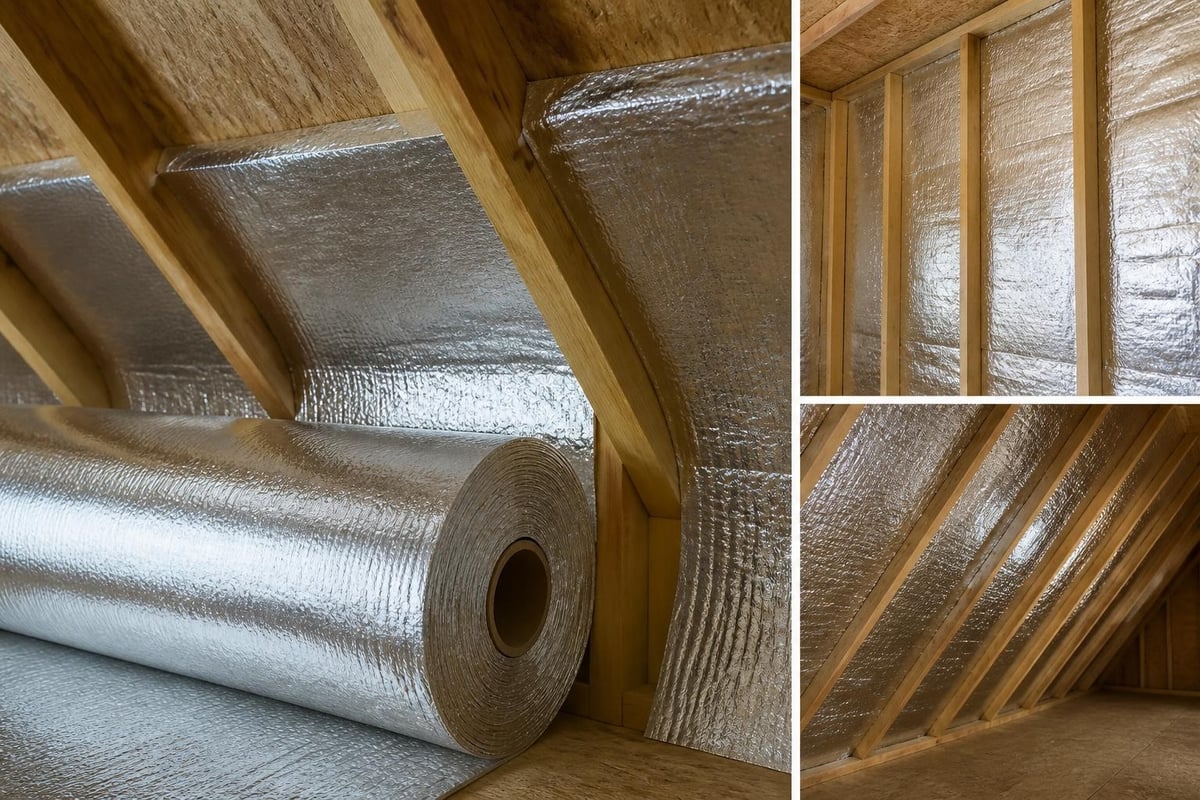
Insulation foil is a reflective barrier material, typically made from aluminium or metallised film, designed to block radiant heat transfer. When installed correctly with an air gap, it can reflect up to 97% of radiant heat, preventing it from entering or leaving your home.
The science behind insulation foil is straightforward. Heat moves in three ways: conduction, convection, and radiation. While bulk insulation like glasswool or polyester batts excel at slowing conduction and convection, they do little to address radiant heat. That's where reflective foil comes in.
Key characteristics of effective insulation foil:
- High reflectivity: Quality foil products reflect between 90% and 97% of radiant energy
- Low emissivity: They emit minimal heat, keeping thermal energy on the desired side
- Moisture resistance: Most foil products also act as vapour barriers or breathable membranes
- Durability: Properly installed foil maintains performance for decades
According to research from PNNL's Building America programme, radiant barriers can reduce ceiling heat gains by 16% to 42% in hot climates, making them particularly relevant for Australian conditions.
The Role of Air Gaps
For insulation foil to work effectively, it must face an air space of at least 25mm. Without this gap, the foil can't reflect radiant heat and may even conduct heat through direct contact.
This requirement shapes where and how you install reflective products. In roofing applications, foil sarking typically sits beneath the roofing material with battens creating the necessary air space. For underfloor installations, the foil hangs beneath floor joists with the reflective surface facing upward into the air cavity.
Types of Insulation Foil Products
The Australian market offers several categories of insulation foil, each designed for specific applications and building requirements. Understanding these differences helps you select the right product for your project.
| Product Type | Structure | Primary Application | Typical Performance |
|---|---|---|---|
| Single-sided foil sarking | Aluminium foil on woven reinforcement | Roof underlayment | Reflects heat, basic moisture barrier |
| Double-sided foil sarking | Foil both sides of core layer | Walls and roofs | Superior radiant protection both directions |
| Foil-faced batts | Bulk insulation with foil facing | Walls and ceilings | Combined bulk and radiant resistance |
| Bubble foil | Foil enclosing polyethylene bubbles | Underfloor, sheds, temporary | Lightweight, easy DIY installation |
Roof Sarking with Foil
Roof sarking represents the most common application for insulation foil in Australian homes. These products sit directly beneath your roof covering, providing multiple benefits beyond thermal performance.
Modern foil sarking products serve triple duty: they reflect radiant heat in summer, act as a secondary moisture barrier protecting against condensation and minor leaks, and reduce air movement within the roof space. Many products also include reinforced tear resistance and comply with Australian Standards for sarking materials.
The National Construction Code requires sarking-type materials in many roof configurations, making foil sarking both a performance upgrade and a compliance necessity in new builds and major renovations.
Underfloor Reflective Systems
Underfloor applications represent another ideal use case for insulation foil. In homes with suspended timber floors, cold air movement beneath the house can create uncomfortable living spaces and significant heat loss during winter months.
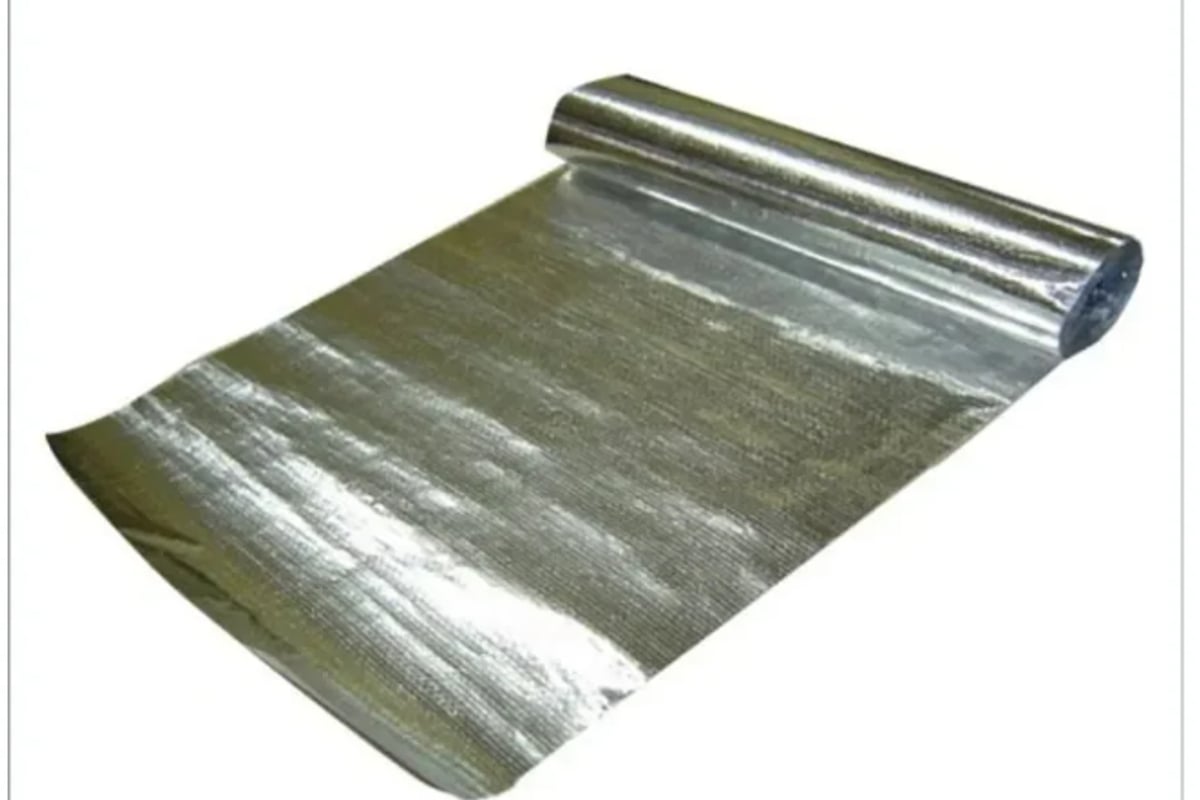
When you combine a quality reflective foil product with proper installation beneath floor joists, you create an effective thermal barrier that reduces heat loss and blocks cold draughts. The Underfloor Wrap Reflective Foil Insulation offers this protection in a format designed specifically for suspended floor systems, where its moisture-resistant properties and reflective performance work together to improve comfort and efficiency.
Where to Use Insulation Foil in Your Home
Strategic placement of insulation foil maximises its thermal benefits while ensuring compliance with building regulations. Different parts of your home present different opportunities and challenges.
Roof and Ceiling Applications
The roof cavity represents the most critical area for reflective insulation in Australian homes. During summer, your roof can reach temperatures exceeding 70°C, with much of that heat radiating down into your ceiling space.
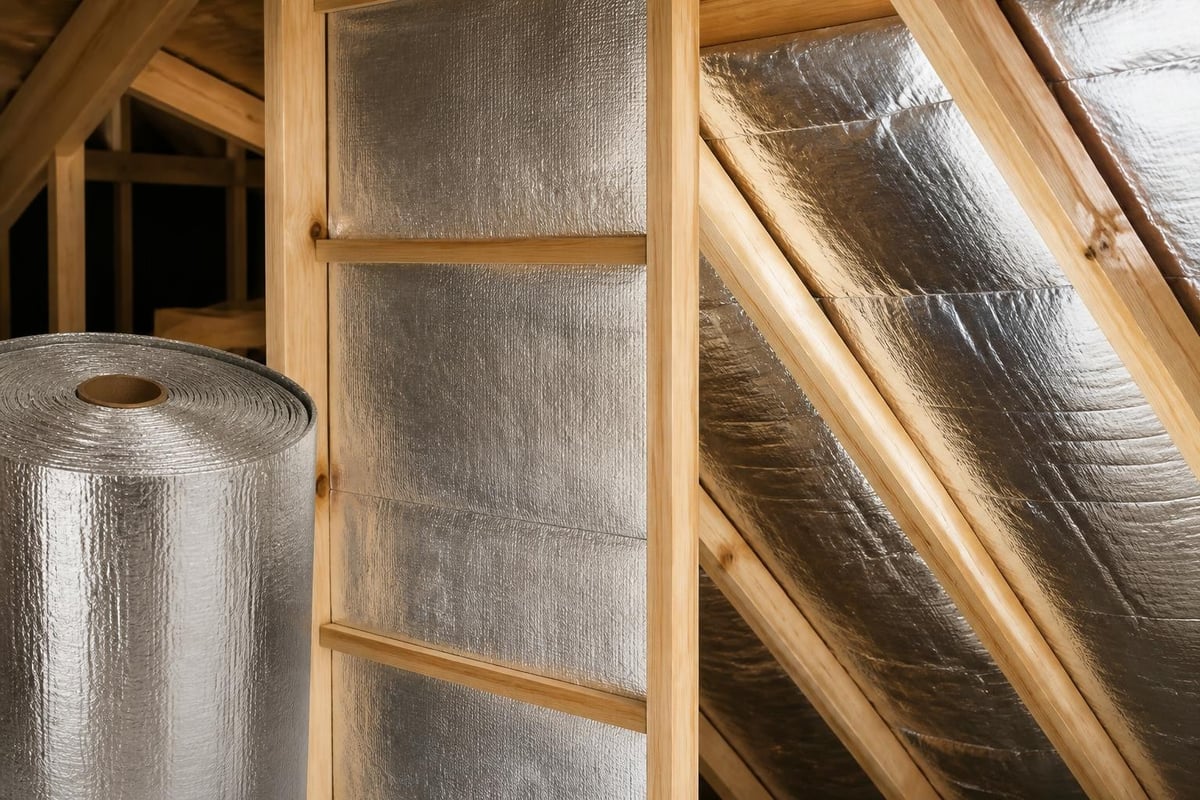
Installing reflective foil sarking beneath your roofing material, combined with bulk insulation like ceiling insulation batts, creates a comprehensive thermal barrier. The foil reflects radiant heat before it reaches the bulk insulation, which then slows any remaining conductive and convective heat transfer.
Installation considerations for roof applications:
- Ensure minimum 25mm air gap between foil and roofing material
- Use battens or counter-battens to maintain airspace
- Overlap seams by at least 150mm to maintain continuous barrier
- Tape all penetrations and joins with compatible reflective tape
- Verify compliance with AS/NZS 4200.2 for sarking materials
Wall Insulation Systems
Wall cavities also benefit from reflective foil, particularly in climates with high summer temperatures. Foil-faced wall batts or separate reflective membranes can reduce radiant heat gain through external walls.
In brick veneer construction, the cavity between the brick outer leaf and timber frame provides an ideal location for reflective performance. The naturally occurring air gap allows the foil to reflect heat away from the internal frame and living spaces.
According to research published in Frontiers in Mechanical Engineering, properly modelled reflective insulation in wall assemblies can significantly reduce heat transfer in steel-framed buildings, with similar principles applying to residential timber-framed construction.
Underfloor Environments
Homes built on stumps or piers with suspended timber floors face unique thermal challenges. Cold air beneath the house can rob heat from floor surfaces, making living spaces uncomfortable and increasing heating costs.
The underfloor insulation category includes products specifically designed for these conditions. Reflective foil installed with the shiny surface facing upward reflects heat back into the floor cavity while blocking cold air infiltration from below.
This application proves particularly valuable in Melbourne and regional Victoria, where winter ground temperatures can significantly impact floor surface temperatures and overall home comfort.
Performance Factors and R-Values
Understanding how insulation foil performs, and how that performance translates into R-values, helps you make informed decisions about product selection and system design.
Radiant Resistance vs Total R-Value
Insulation foil contributes thermal resistance through radiant heat reflection, but this benefit doesn't appear in standard R-value ratings the same way bulk insulation does. R-values measure resistance to conductive heat flow, while reflective products primarily address radiation.
A quality single-sided foil in a roof application might contribute an equivalent resistance of R0.6 to R1.0 when installed with proper airspace. Double-sided systems can achieve higher values, particularly when facing air gaps on both sides.
However, the real performance story lies in how reflective and bulk insulation work together. A roof system combining R3.5 bulk ceiling insulation with properly installed foil sarking outperforms R4.0 bulk insulation alone, particularly during peak summer conditions when radiant loads are highest.
Testing and Standards
Australian manufacturers test reflective insulation products according to specific standards that account for their unique performance characteristics. RIMA International's technical documents provide comprehensive guidance on testing methodologies and performance evaluation for reflective products.
Key Australian Standards include:
- AS/NZS 4200.2: Pliable building membranes and underlays
- AS/NZS 4859.1: Thermal insulation materials for buildings
- AS 2544: Thermal resistance of insulation
When comparing products, look for test data showing emissivity ratings (lower is better, typically 0.03 to 0.05 for quality foil) and reflectivity ratings (higher is better, targeting 95% or above).
Installation Best Practices
Proper installation determines whether your insulation foil delivers its full potential or underperforms. Small mistakes in technique can dramatically reduce effectiveness.
Critical Installation Steps
1. Maintain Air Gaps
The 25mm minimum air gap isn't negotiable. Use battens, spacers, or product-specific installation systems to guarantee this clearance. Compressed foil touching other materials becomes a conductor rather than a reflector.
2. Face the Right Direction
Reflective surfaces must face the air space and the direction of heat flow you want to block. In roof applications, this typically means foil facing down toward the ceiling cavity. For underfloor installations, foil faces up toward the floor.
3. Seal All Joins and Penetrations
Use appropriate reflective tape to seal overlaps, joins, and penetrations. Gaps in the reflective surface allow radiant heat to bypass the barrier. Overlap foil sheets by at least 150mm at joins and secure with tape designed for reflective products.
4. Consider Condensation Management
In some applications, particularly in cool climates or with certain heating systems, reflective foil may create condensation risks. Ensure adequate ventilation in roof spaces and consider whether you need a breathable membrane rather than a non-permeable vapour barrier.
Common Installation Mistakes
Even experienced DIY renovators and owner-builders sometimes make these errors:
- Installing foil directly against surfaces without air gaps
- Using wrong tape products that don't maintain long-term adhesion
- Failing to maintain continuous reflective surface through compromises at penetrations
- Incorrect overlap direction allowing water to track between layers
- Damaging foil during installation, reducing reflective performance
ORNL's technical evaluation of radiant barrier systems demonstrates how installation quality directly impacts measured performance, with poorly installed systems showing significantly reduced effectiveness.
Combining Foil with Bulk Insulation
The most effective thermal envelope strategies combine reflective and bulk insulation products. Each technology addresses different heat transfer mechanisms, creating superior overall performance.
Layered System Design
A comprehensive approach typically includes:
- Reflective foil sarking: Reflects radiant heat before it reaches bulk insulation
- Air gap: Allows reflective surface to function properly
- Bulk insulation: Provides resistance to conductive and convective heat flow
- Ceiling or wall lining: Final thermal boundary and living surface
This layered system works in both directions. During summer, foil reflects outdoor heat away while bulk insulation slows any heat that does conduct through. In winter, the combination prevents indoor heat from escaping while foil reflects warmth back into living spaces.
Quality products from the roof insulation range designed for combined installation ensure compatibility and optimised performance across the complete thermal system.
Optimising for Australian Climates
Australia's diverse climate zones demand tailored approaches. Melbourne's temperate climate with hot summers and cool winters benefits from comprehensive systems addressing both heating and cooling loads.
| Climate Zone | Primary Concern | Recommended Approach |
|---|---|---|
| Hot humid (Darwin) | Year-round cooling | Emphasis on radiant barriers, adequate bulk R-value |
| Temperate (Melbourne) | Heating and cooling | Balanced bulk and reflective, higher R-values |
| Cool (Alpine regions) | Winter heating | Focus on high bulk R-values, foil for moisture control |
The Sustainability Victoria guidelines provide climate-specific recommendations for insulation levels and building envelope strategies relevant to Victorian conditions.
Cost Considerations and Return on Investment
Understanding the economics of insulation foil helps you make investment decisions that balance upfront costs against long-term savings.
Product Costs
Insulation foil products vary significantly in price based on type, quality, and performance characteristics:
- Basic single-sided sarking: $0.80–$1.50 per square metre
- Premium double-sided sarking: $1.50–$3.00 per square metre
- Foil-faced bulk insulation: $8.00–$15.00 per square metre (includes bulk insulation value)
- Bubble foil products: $3.00–$6.00 per square metre
These costs represent material only. Professional installation typically adds $10–$25 per square metre depending on application complexity and accessibility.
Energy Savings Potential
The Virginia Tech Extension research demonstrates that properly installed radiant barriers can reduce cooling costs by 5% to 10% in hot climates. In Australian conditions, combined systems delivering this performance typically achieve payback periods of 3 to 7 years through reduced energy consumption.
For a typical Melbourne home with ducted heating and cooling, the annual saving might be:
- Without foil system: $1,800 annual energy costs
- With optimised foil + bulk system: $1,550 annual energy costs
- Annual saving: $250
- System cost: $1,500–$2,000
- Payback period: 6–8 years
Beyond direct energy savings, improved comfort, reduced HVAC system wear, and increased property value contribute to overall return on investment.
Moisture Control and Building Science
Insulation foil products often serve dual roles as thermal barriers and moisture management tools. Understanding these interactions prevents building defects and ensures long-term performance.
Vapour Barriers vs Breathable Membranes
Some reflective foil products act as vapour barriers, preventing moisture movement in either direction. Others are breathable, allowing water vapour to pass through while blocking liquid water.
The right choice depends on your climate, wall construction, and internal moisture loads. In heated buildings in cool climates, you typically want vapour control on the warm (internal) side to prevent condensation within the building envelope. In hot humid climates, the opposite may apply.
Key considerations:
- Homes with high internal moisture loads (large families, drying laundry indoors) may need different strategies than low-moisture households
- Brick veneer construction typically benefits from breathable external membranes
- Lightweight cladding systems may require different approaches
- Always ensure adequate ventilation regardless of vapour barrier strategy
Recent research in Scientific Reports examines enhanced composite systems combining reflective barriers with expanded polystyrene, highlighting the importance of material compatibility in moisture and thermal performance.
Condensation Risk Management
Reflective surfaces can create condensation risks in certain conditions. When warm, moist air contacts the cold surface of reflective foil, condensation forms. This commonly occurs in roof spaces during winter in homes with inadequate ceiling sealing or excessive moisture generation.
Preventing condensation requires:
- Adequate ventilation: Roof spaces need sufficient airflow to remove moisture
- Air sealing: Seal ceiling penetrations to prevent moist indoor air entering roof cavity
- Appropriate product selection: Use breathable membranes where condensation risk is high
- Humidity control: Manage indoor moisture sources through exhaust fans and lifestyle adjustments
Product Selection Guide
Choosing the right insulation foil product requires matching product characteristics to your specific application, climate, and performance goals.
Decision Framework
For roof applications:
- New construction or re-roofing: Premium double-sided foil sarking for maximum radiant protection both directions
- Budget-conscious projects: Quality single-sided sarking meeting Australian Standards
- High moisture environments: Breathable foil membrane with water resistance
- Combination systems: Foil sarking plus separate bulk ceiling insulation for optimal performance
For wall applications:
- External walls with cladding: Wall wrap with reflective properties for weather protection and radiant control
- Cavity brick construction: Double-sided foil facing cavity for summer radiant reduction
- Insulated panel systems: Foil-faced insulation boards for combined bulk and radiant resistance
For underfloor applications:
- Suspended timber floors: Dedicated underfloor reflective wrap designed for this application
- High moisture exposure: Products with enhanced water resistance and anti-fungal properties
- Easy DIY installation: Lighter-weight products with user-friendly fixing systems
Quality Indicators
Look for these markers of quality products:
- Compliance certification: AS/NZS 4200.2 and related standards
- Published test data: Emissivity, reflectivity, and water resistance specifications
- Reinforcement: Woven or scrim reinforcement for tear resistance and durability
- UV stability: If any exposure to sunlight is possible during or after installation
- Manufacturer support: Installation guides, technical data sheets, and warranty information
Retrofit and Renovation Applications
Adding insulation foil to existing homes presents unique challenges and opportunities. Retrofit projects require different approaches than new construction.
Roof Retrofits
Adding foil sarking to an existing roof typically requires either:
During re-roofing: The ideal time to add foil sarking. With roof covering removed, installation follows new-construction procedures with proper air gaps and sealing.
From inside: Some products allow installation from within the roof cavity, though this proves more difficult and may not achieve ideal air gaps. This approach works best in accessible roof spaces with adequate working room.
The National Park Service case study on radiant barrier retrofits provides valuable lessons for retrofit installations in older homes, demonstrating both opportunities and limitations.
Underfloor Retrofits
Suspended floor retrofits offer more straightforward installation. Working from beneath the house, you can install reflective underfloor products with relative ease provided:
- Adequate under-floor access exists
- Sub-floor height allows comfortable working conditions
- Services (plumbing, electrical) don't prevent continuous installation
- Moisture conditions aren't excessive (address drainage first if needed)
Wall Cavity Retrofits
Retrofitting reflective foil into existing wall cavities proves extremely difficult without major renovation work. Most retrofit strategies focus on adding bulk insulation where possible or incorporating reflective products during recladding or internal lining replacement.
Compliance and Building Regulations
Understanding regulatory requirements ensures your insulation foil installation meets legal requirements and performs as intended.
National Construction Code Requirements
The NCC (Building Code of Australia) sets minimum insulation standards based on climate zone. For Victoria (predominantly Climate Zone 6 and 7), these include:
- Roofs/ceilings: Minimum R3.5 (Zone 6) to R4.5 (Zone 7)
- Walls: Minimum R1.5 to R2.0 depending on wall type and zone
- Floors: Minimum R1.0 to R1.5 for suspended floors
Reflective foil can contribute to meeting these requirements when properly accounted for in thermal calculations. However, most designs rely primarily on bulk insulation to achieve compliance, with foil providing supplementary performance.
Sarking Requirements
In many roof configurations, the NCC requires sarking or equivalent water-resistant underlayment. This requirement creates an ideal opportunity to use reflective foil products that serve both thermal and compliance functions.
Ensure products carry appropriate CodeMark certification or demonstrate compliance through alternative assessment pathways recognised by building surveyors.
Thermal Calculations
For building approval, thermal performance must be demonstrated through:
- Deemed-to-Satisfy provisions: Following prescriptive requirements for insulation R-values
- Performance Solution: Computer modelling showing compliance with energy efficiency targets
When using reflective insulation as part of your thermal strategy, work with your building designer or energy assessor to correctly account for its contribution in compliance calculations.
Maintenance and Long-Term Performance
Once installed, insulation foil requires minimal maintenance but benefits from occasional inspection to ensure continued performance.
Expected Lifespan
Quality insulation foil products typically last the life of the building when properly installed and protected from damage. Aluminium foil doesn't degrade from age, though:
- Physical damage from roof maintenance can compromise performance
- Dust accumulation on surfaces may reduce reflectivity over decades
- Tape and seam seals may deteriorate in extreme conditions
Inspection Points
Check your reflective insulation systems during routine home maintenance:
Every 2-3 years:
- Look for visible damage or displacement in accessible areas
- Check for moisture staining that might indicate condensation issues
- Verify ventilation systems remain clear and functional
After storms or significant roof work:
- Inspect for damage from falling branches or roof repairs
- Ensure any roof penetrations maintain proper sealing
- Check that air gaps haven't been compromised
Performance Degradation
Dust accumulation represents the primary performance concern for long-term installations. According to guidance from ENERGY STAR, reflective products can maintain 85% to 90% of initial performance after 20 years in typical roof installations.
In particularly dusty environments or where ventilation draws excessive dust through roof spaces, periodic performance reduction may be more pronounced, though still minor compared to bulk insulation compression or moisture damage.
Insulation foil offers Australian homeowners a proven technology for managing radiant heat, improving comfort, and reducing energy costs when installed correctly as part of a comprehensive thermal envelope strategy. By understanding how reflective products work, where they deliver the best results, and how to combine them with bulk insulation, you can make informed decisions that suit your climate, budget, and performance goals. Insulation Supplies Australia stocks a wide range of quality reflective and bulk insulation products backed by expert advice to help you choose the right solution for your project, with fast delivery across Victoria and competitive prices that make upgrading your home's thermal performance both practical and affordable.