

Choosing the right wall insulation for your home or renovation project can feel overwhelming, especially with so many products claiming to offer the best performance. Earthwool wall insulation has earned a strong reputation among Australian homeowners, renovators and builders for its combination of thermal efficiency, acoustic control and environmental credentials. Manufactured using advanced ECOSE Technology, earthwool products are designed to be soft to handle, low in dust and easy to install while delivering reliable long-term performance. Whether you're insulating a new build, upgrading an older home or soundproofing between rooms, understanding how earthwool wall insulation works and which R-values suit your project is essential for making an informed decision.
What Makes Earthwool Wall Insulation Different
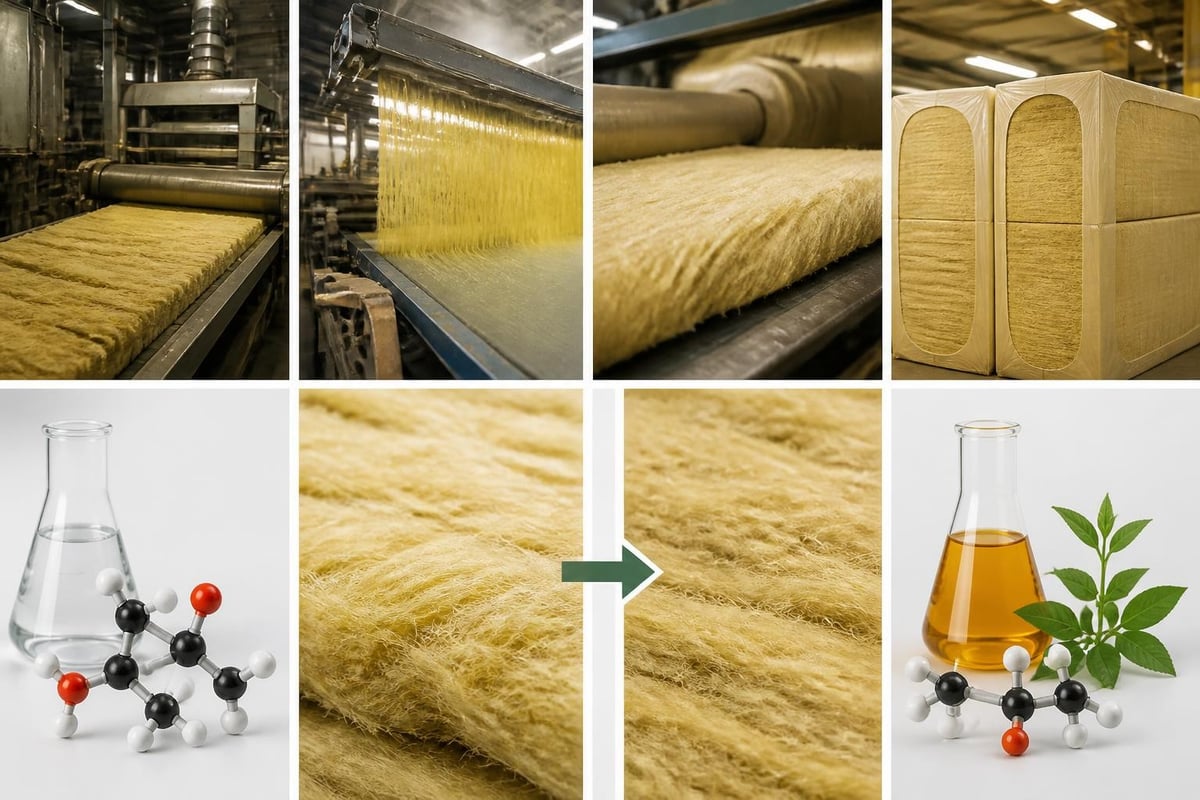
Earthwool wall insulation is a glasswool product manufactured by Knauf Insulation using a bio-based binder technology known as ECOSE. Unlike traditional glasswool insulation that relies on formaldehyde-based resins, the ECOSE binder uses rapidly renewable materials, resulting in a product that's noticeably softer to touch, generates less dust during handling and carries no added formaldehyde.
Key characteristics that set earthwool apart include:
- Softer, less itchy fibre structure compared to conventional glasswool
- Low dust formulation for improved installer comfort
- No added formaldehyde in the binder chemistry
- Superior thermal performance across a range of R-values
- Excellent acoustic absorption properties
- Non-combustible classification (AS/NZS 3837)
The manufacturing process bonds recycled glass fibres with the ECOSE binder to create a resilient, flexible batt or blanket that fits snugly between wall studs. This tight fit minimises air gaps and thermal bridging, helping to maintain consistent thermal resistance throughout the wall cavity. For anyone who's worked with older glasswool products, the handling improvement alone makes earthwool wall insulation a preferred choice on site.
Understanding R-Values for Wall Applications
R-value measures thermal resistance-the higher the number, the better the insulation's ability to resist heat flow. Australian building regulations specify minimum R-values for walls based on climate zone, and choosing the correct value ensures your home meets energy efficiency standards while maximising comfort and running cost savings.
Common Earthwool Wall R-Values
| R-Value | Thickness | Typical Application | Climate Zones |
|---|---|---|---|
| R1.3–R1.8 | 50–75mm | Mild climates, internal walls | Zone 1–3 |
| R2.0–R2.5 | 75–105mm | Standard external walls | Zone 4–5 |
| R2.7–R4.0 | 90–140mm | High-performance walls, acoustic control | Zone 6–8 |
For most Victorian homes, R2.0 to R2.5 earthwool wall insulation provides a solid balance between compliance, thermal comfort and cost-effectiveness. If you're in a cooler regional area or prioritising maximum energy efficiency, stepping up to R2.7 or higher delivers noticeable improvements in winter warmth and summer heat rejection. The R2.5 90mm earthwool batts are particularly popular for standard 90mm timber-framed walls.
When planning a retrofit, it's worth checking what's already installed (if anything) and comparing it to current standards. Many older homes have little or no wall insulation, meaning even a modest R-value upgrade can cut heating and cooling costs significantly.
Acoustic Performance and Soundproofing Benefits
Thermal insulation isn't the only reason to choose earthwool for your walls. Glasswool's fibrous structure excels at absorbing airborne sound, making it an effective solution for reducing noise transfer between rooms, from street traffic or from neighbouring properties.
Higher-density earthwool products deliver stronger acoustic control. The Sound Shield range, for example, uses densities between 18 and 27 kg/m³ to achieve superior sound absorption across speech and music frequencies. Installing earthwool wall insulation in bedrooms, home theatres, offices or any space where noise control matters can noticeably improve acoustic comfort and privacy.
Soundproofing applications where earthwool performs well:
- Party walls between bedrooms or living spaces
- Walls adjoining bathrooms or laundries
- External walls facing busy roads or commercial areas
- Home office partitions requiring privacy
- Media rooms and home cinemas
For maximum acoustic benefit, pair earthwool with resilient channels, acoustic-rated plasterboard and proper sealing of gaps around electrical outlets and services. The insulation itself absorbs sound energy, but the overall wall system design determines the final acoustic rating.
Environmental Credentials and Sustainability
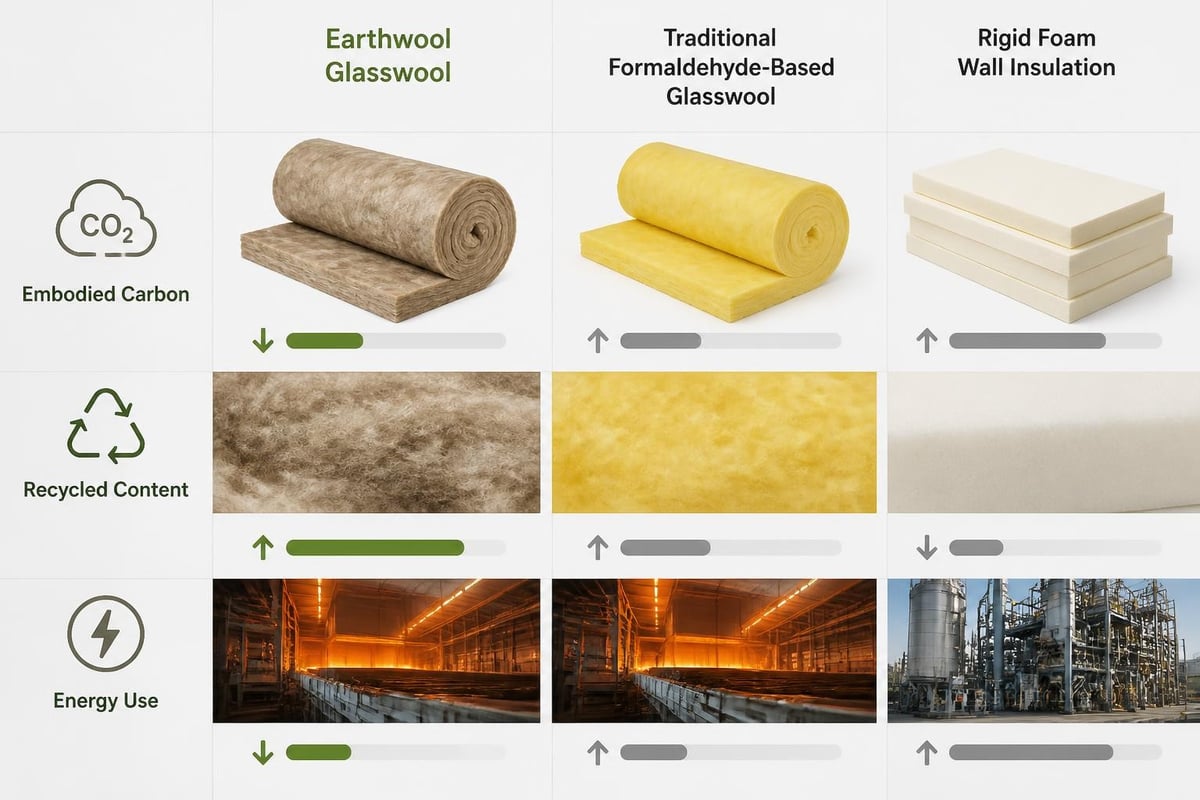
Sustainability is a growing priority for Australian homeowners and builders, and earthwool wall insulation delivers measurable environmental advantages over many alternative materials. The ECOSE binder reduces embodied carbon compared to traditional formaldehyde-based resins, and Knauf publishes verified Environmental Product Declarations (EPDs) that transparently report lifecycle impacts.
Earthwool products typically contain 60–80% recycled glass content, diverting waste from landfill and reducing raw material extraction. The manufacturing process also uses less energy than many rigid foam alternatives, contributing to a lower overall carbon footprint. For projects targeting green building certifications or simply aiming to reduce environmental impact, earthwool offers a credible, well-documented option.
The BRE Green Guide rates glasswool insulation products favourably for environmental performance, and earthwool's formaldehyde-free chemistry adds further appeal for health-conscious renovators and builders. These credentials don't just tick boxes-they translate into healthier indoor air quality and reduced chemical exposure during installation.
Installation Techniques and Best Practices
Installing earthwool wall insulation correctly is straightforward, but attention to detail makes the difference between good and excellent thermal and acoustic performance. The batts are designed to friction-fit between timber or steel studs, holding themselves in place without additional fasteners in most applications.
Step-by-Step Installation Process
- Measure stud spacing and confirm batt width matches (typically 430mm or 580mm centres)
- Cut batts to length using a sharp insulation knife or handsaw for clean edges
- Fit batts snugly between studs, ensuring full contact with the top and bottom plates
- Work around obstacles such as electrical outlets, pipes and bracing by cutting neat clearances
- Avoid compression when lining-compressed insulation loses R-value
- Seal gaps around services with acoustic caulk or expanding foam
Earthwool's soft, flexible nature makes it easier to handle and fit than stiffer products, and the low-dust formulation improves site conditions and installer comfort. That said, basic PPE-gloves, long sleeves and a dust mask-remains good practice, particularly in poorly ventilated spaces.
For walls with irregular stud spacing or obstructions, blanket formats (like the unfaced earthwool blankets) offer flexibility, allowing you to cut custom widths and lengths. Blankets work particularly well for retrofitting older homes where stud spacing may vary or where you're insulating continuous runs without breaks.
Choosing Between Batts and Blankets
Earthwool wall insulation is available in two main formats: pre-cut batts and continuous blankets. Each has advantages depending on your project scope, wall construction and installation preference.
Batts are factory-cut to standard lengths (typically 1160mm or 1350mm) and widths (430mm or 580mm), making them quick to install in new builds or renovations with consistent framing. They're ideal for residential timber-framed walls with regular stud spacing and where you want minimal cutting and waste.
Blankets come in long rolls (up to 30m in some cases) and can be cut to any length on site. This flexibility suits retrofit projects, irregular wall heights or situations where you're insulating large areas continuously. Blankets also reduce packaging waste and can be more cost-effective for bigger jobs.
| Format | Best For | Advantages | Considerations |
|---|---|---|---|
| Batts | Standard timber frames, new builds | Pre-cut, fast installation, minimal waste | Less flexible for odd dimensions |
| Blankets | Retrofits, irregular spacing, long runs | Custom lengths, less packaging, economical | Requires more on-site cutting |
When ordering from Insulation Supplies Australia, check the product specifications to confirm dimensions and coverage per pack. This helps ensure you order the right quantity and format for your project without over- or under-ordering.
Thermal Bridging and Wall System Design
Even the best earthwool wall insulation can underperform if thermal bridging isn't addressed. Thermal bridges occur wherever conductive materials (like timber or steel studs) bypass the insulation layer, creating paths for heat to escape or enter.
In a typical 90mm timber-framed wall, the studs themselves represent about 10–15% of the wall area. While earthwool fills the cavities effectively, the studs still conduct heat. Upgrading to higher R-value batts helps offset this effect, but for truly high-performance walls, consider:
- External continuous insulation (rigid boards over sheathing) to wrap the studs
- Staggered stud framing where internal and external studs don't align
- Thermal breaks or insulated timber composites in the framing itself
The UK's Approved Document L outlines rigorous U-value standards that account for thermal bridging, and while Australian regulations differ, the principles remain relevant. Pairing earthwool cavity insulation with thoughtful framing design and air sealing maximises whole-wall thermal performance and energy savings.
Wall Insulation Retrofit Strategies
Retrofitting wall insulation into an existing home presents unique challenges, but the payoff in comfort and energy savings often justifies the effort. Earthwool wall insulation is well-suited to retrofit projects thanks to its flexibility, soft handling and range of available thicknesses.
Common retrofit approaches include:
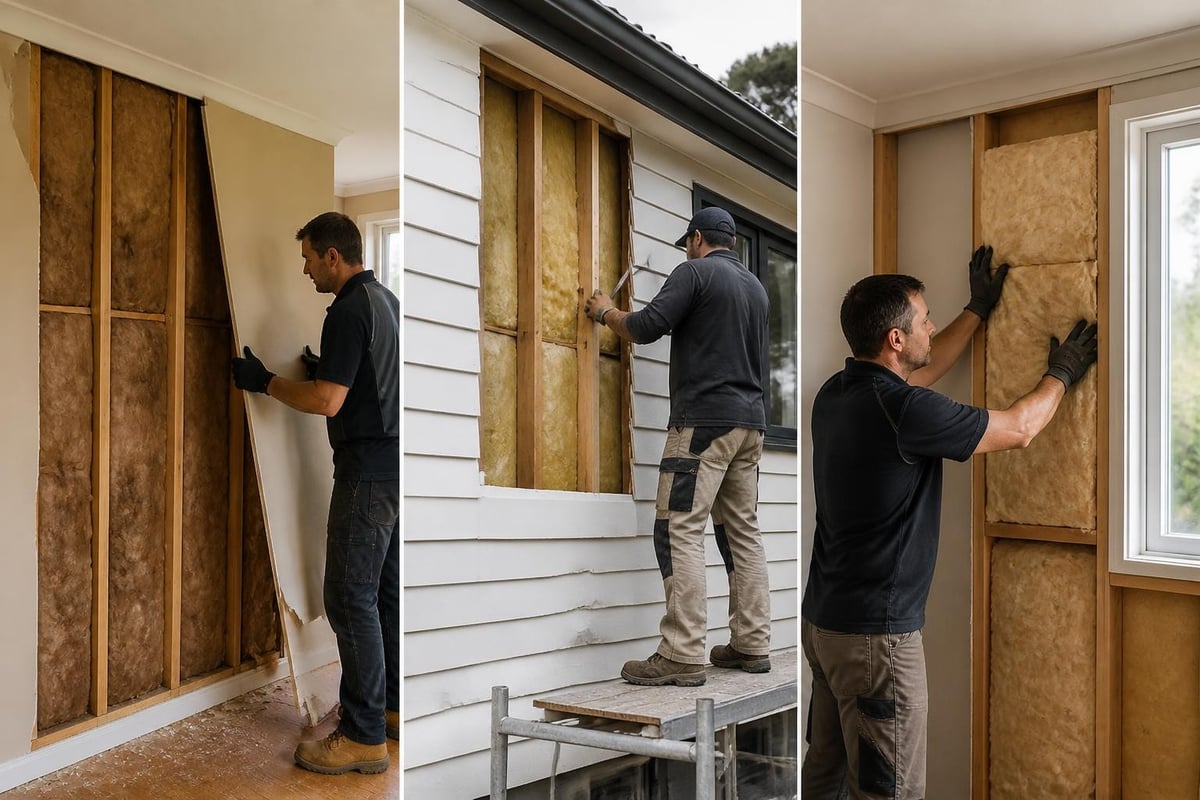
- Accessing cavities from inside by removing internal linings (plasterboard)
- External access by removing cladding or weatherboards
- Injection or blown methods (though earthwool batts/blankets require cavity access)
- Partial upgrades focusing on the most thermally critical walls (south-facing, bedrooms)
The California Energy Commission's research on wall retrofit strategies highlights the importance of careful planning, air sealing and moisture management-lessons equally applicable to Australian retrofits. Before starting, assess your wall construction (brick veneer, weatherboard, cavity, solid masonry) to determine the best access method and whether earthwool is suitable or if cavity-fill alternatives are needed.
For timber-framed walls with accessible cavities, earthwool batts or blankets can be friction-fitted between studs just as in new construction. If you're removing internal linings anyway for other renovations, adding wall insulation represents excellent value for minimal extra effort.
Fire Safety and Non-Combustibility
Fire safety is a critical consideration for any building material, and earthwool wall insulation performs well in this regard. Glasswool is inherently non-combustible, classified as AS/NZS 3837 non-combustible, meaning it won't ignite, spread flame or contribute fuel to a fire.
This characteristic provides valuable passive fire protection within wall cavities, helping to slow the spread of fire between rooms and through building voids. In multi-residential buildings, commercial fitouts and homes where bushfire safety is a concern, non-combustible wall insulation adds an extra layer of protection.
Unlike some foam-based insulation products, earthwool doesn't require flame retardant additives to meet fire safety standards-it's non-combustible by nature. This also means it doesn't emit toxic smoke or fumes when exposed to heat, an important consideration for occupant safety during a fire event. The ASHRAE Handbook guidance on synthetic vitreous fibres provides technical background on glasswool's fire performance and health safety profile.
Moisture Management and Vapour Permeability
Wall cavities need to manage moisture effectively to prevent condensation, mould growth and long-term durability issues. Earthwool wall insulation is vapour-permeable, meaning it allows water vapour to pass through rather than trapping it within the wall assembly. This is generally beneficial in Australian climates, especially when paired with breathable wall wraps and appropriate vapour control layers.
Glasswool doesn't absorb significant moisture the way some organic insulation materials can, and it retains thermal performance even in humid conditions. However, bulk water (from leaks, poor flashing or rising damp) can still cause problems, so earthwool should always be installed in conjunction with:
- Weatherproof cladding and flashing to keep bulk water out
- Breathable wall wraps that block wind and rain but allow vapour to escape
- Adequate drainage behind brick veneer or other cladding systems
- Proper detailing around windows, doors and penetrations
If you're retrofitting walls in an older home, check for existing moisture issues before insulating. Adding insulation to a wall with unresolved leaks or rising damp can trap moisture and accelerate deterioration. Fix the moisture source first, then insulate with confidence.
Comparing Earthwool to Other Wall Insulation Options
Homeowners and builders often compare earthwool wall insulation to alternatives like polyester batts, rigid foam boards, natural fibre products and other glasswool brands. Each has strengths and trade-offs, so understanding where earthwool excels helps clarify the best fit for your project.
Earthwool vs polyester batts: Polyester is non-allergenic and handles moisture well, but typically offers lower R-value per millimetre and weaker acoustic performance. Earthwool delivers better thermal and sound insulation in the same cavity depth.
Earthwool vs rigid foam (EPS/XPS): Foam boards provide high R-value in thin profiles and are ideal for continuous external insulation, but they're more expensive per square metre, less flexible for irregular cavities and don't offer the same acoustic benefits. Earthwool is the practical choice for standard wall cavities.
Earthwool vs natural fibres (wool, hemp): Natural fibre insulation appeals for sustainability and low embodied energy, but earthwool typically costs less, is more widely available and offers consistent performance and fire safety credentials.
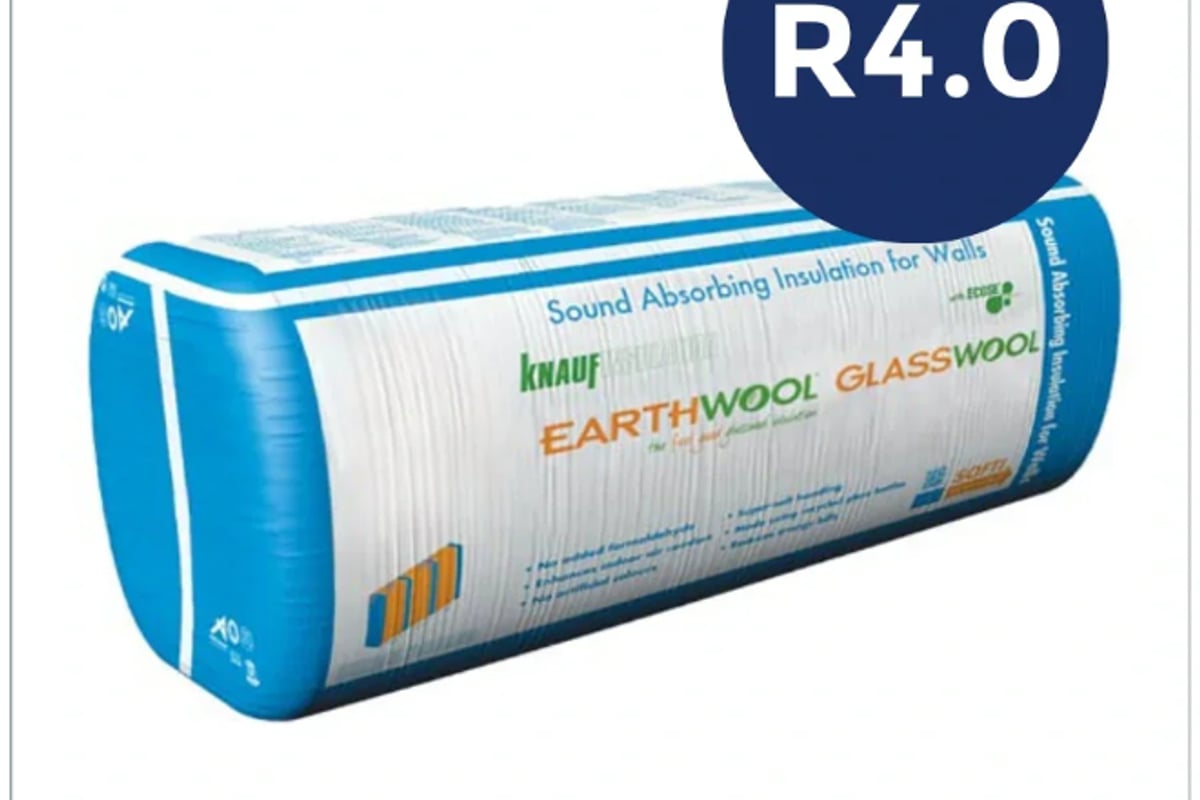
When choosing wall insulation, balance thermal performance, acoustic needs, budget, installation ease and environmental priorities. For most residential wall applications in Victoria, earthwool strikes an excellent balance across these criteria. The Earthwool Sound Shield R4.0 batts combine high thermal resistance with premium acoustic control, making them a top choice for high-performance walls.
Health and Handling Considerations
While earthwool wall insulation is significantly softer and less irritating than older glasswool formulations, installers should still follow basic handling and safety practices. The ECOSE binder eliminates added formaldehyde, reducing chemical exposure, and the low-dust design minimises airborne particles during cutting and fitting.
Recommended handling practices:
- Wear gloves and long sleeves to minimise skin contact
- Use a dust mask or respirator in enclosed spaces
- Ensure adequate ventilation during installation
- Wash hands and exposed skin after handling
- Avoid rubbing eyes or face while working with batts
The ASHRAE guidance on synthetic vitreous fibres confirms that modern glasswool products like earthwool pose minimal health risk when installed with appropriate precautions. The shift away from formaldehyde binders and the reduction in airborne dust have made glasswool insulation far more user-friendly than products from previous decades.
For DIY renovators or owner-builders working with earthwool wall insulation for the first time, the improved handling characteristics make it a realistic option even for those with limited trade experience. Taking your time, cutting accurately and maintaining good site hygiene ensures a comfortable installation process and professional results.
Cost Considerations and Project Budgeting
Earthwool wall insulation represents a mid-range investment in terms of material cost, typically less expensive than premium natural fibres or closed-cell foam but more costly than basic polyester batts. The long-term value proposition hinges on thermal performance, acoustic benefits, durability and energy savings over the life of the building.
When budgeting for a wall insulation project, factor in:
- Material cost per square metre (varies with R-value and density)
- Coverage and waste (order 5–10% extra for cuts and odd areas)
- Installation labour (DIY vs professional installer rates)
- Ancillary materials (wall wraps, fixings, sealants, PPE)
- Potential energy savings (heating and cooling cost reductions)
A typical 100m² wall insulation project using R2.5 earthwool batts might cost $800–$1,200 in materials, with installation labour adding $500–$1,000 depending on complexity. The payback period through reduced energy bills is typically 3–7 years in Victorian climates, with ongoing comfort and acoustic benefits well beyond that.
Shopping online through Insulation Supplies Australia allows you to compare products, check R-values and coverage, and calculate quantities accurately before ordering. Transparent pricing and detailed specifications help ensure you're getting the right product at a fair price.
Compliance with Building Codes and Standards
Australian residential buildings must comply with the National Construction Code (NCC), which sets minimum energy efficiency standards including wall insulation R-values. These requirements vary by climate zone, with Victoria spanning zones 6 and 7 depending on location.
For external walls in Victoria, the NCC typically requires:
- Zone 6 (Melbourne metro): R1.5–R2.0 minimum
- Zone 7 (cooler regional areas): R2.0–R2.5 minimum
These are baseline requirements, and exceeding them improves comfort and energy performance. High-performance homes and renovations often target R2.5 to R4.0 in walls, delivering superior thermal control and future-proofing against rising energy costs.
Earthwool products carry BRANZ appraisals and comply with relevant Australian Standards for thermal performance (AS/NZS 4859.1) and fire safety (AS/NZS 3837). When specifying or purchasing earthwool wall insulation, verify the stated R-value matches your climate zone requirements and project goals.
For trade customers and builders working across multiple projects, Insulation Supplies Australia's trade application provides access to competitive pricing and streamlined ordering for regular insulation needs.
Practical Tips for DIY Installation Success
DIY installation of earthwool wall insulation is achievable for most competent homeowners, especially if you're comfortable with basic carpentry and have renovated before. The key is careful planning, accurate measuring and taking your time to ensure batts fit snugly without gaps or compression.
Top DIY installation tips:
- Measure twice, cut once-accuracy reduces waste and ensures tight fits
- Use a sharp insulation knife or fine-tooth handsaw for clean cuts
- Install batts from the top down, allowing them to rest on the bottom plate
- Don't over-compress batts when fixing linings-compressed insulation loses R-value
- Seal around electrical boxes, pipes and penetrations with acoustic sealant
- Check for gaps with a torch or light source before closing up the wall
For larger projects or walls with complex framing, consider hiring a professional installer for at least part of the job. Watching an experienced installer work can teach valuable techniques and help build confidence for future DIY projects.
Online resources, installation guides and video tutorials (available through manufacturers and retailers like Insulation Supplies Australia) provide step-by-step guidance tailored to specific products and applications. Don't hesitate to reach out for advice if you're unsure about a particular aspect of the installation.
Maintenance and Long-Term Performance
Once installed correctly, earthwool wall insulation requires virtually no maintenance and retains its thermal and acoustic performance for decades. Unlike some organic insulation materials, glasswool doesn't settle, compress or decompose over time, and it's resistant to mould, pests and moisture damage (provided the wall cavity remains dry).
Factors that support long-term performance:
- Keeping wall cavities dry through proper weatherproofing and drainage
- Avoiding mechanical damage during renovations or service work
- Ensuring adequate ventilation to prevent condensation buildup
- Inspecting after major weather events or leaks for any displacement
If you do need to remove linings for electrical or plumbing work down the track, earthwool batts can usually be lifted out, stored temporarily and reinstalled without significant degradation. This flexibility makes future renovations or upgrades easier and reduces waste.
The durability and longevity of earthwool wall insulation contribute to its overall value proposition. While the upfront cost may be higher than some alternatives, the lack of ongoing maintenance, consistent performance and extended lifespan deliver excellent return on investment.
Earthwool wall insulation delivers proven thermal efficiency, acoustic control and environmental credentials that make it a smart choice for Australian homeowners, renovators and builders. From understanding R-values and installation techniques to comparing formats and managing moisture, this guide equips you with the knowledge to specify and install earthwool with confidence. Whether you're building new, retrofitting an older home or soundproofing between rooms, earthwool offers reliable, long-lasting performance across a wide range of applications. Insulation Supplies Australia stocks a comprehensive range of earthwool batts and blankets with transparent specifications, competitive pricing and delivery across Victoria-browse the range online, compare R-values and order the right products for your next project today.