

Noise pollution is one of the most common complaints among Australian homeowners, whether it's traffic rumble, noisy neighbours, or simply sound travelling between rooms in your own home. Acoustic batts offer a practical, cost-effective solution to this growing problem. These specialised insulation products are designed specifically to reduce sound transmission through walls, ceilings, and floors, creating quieter, more comfortable living spaces. Unlike standard thermal insulation, acoustic batts are engineered with higher density materials and specific structures that absorb and dampen sound waves, making them an essential component for anyone serious about noise control in their home or renovation project.
Understanding How Acoustic Insulation Works
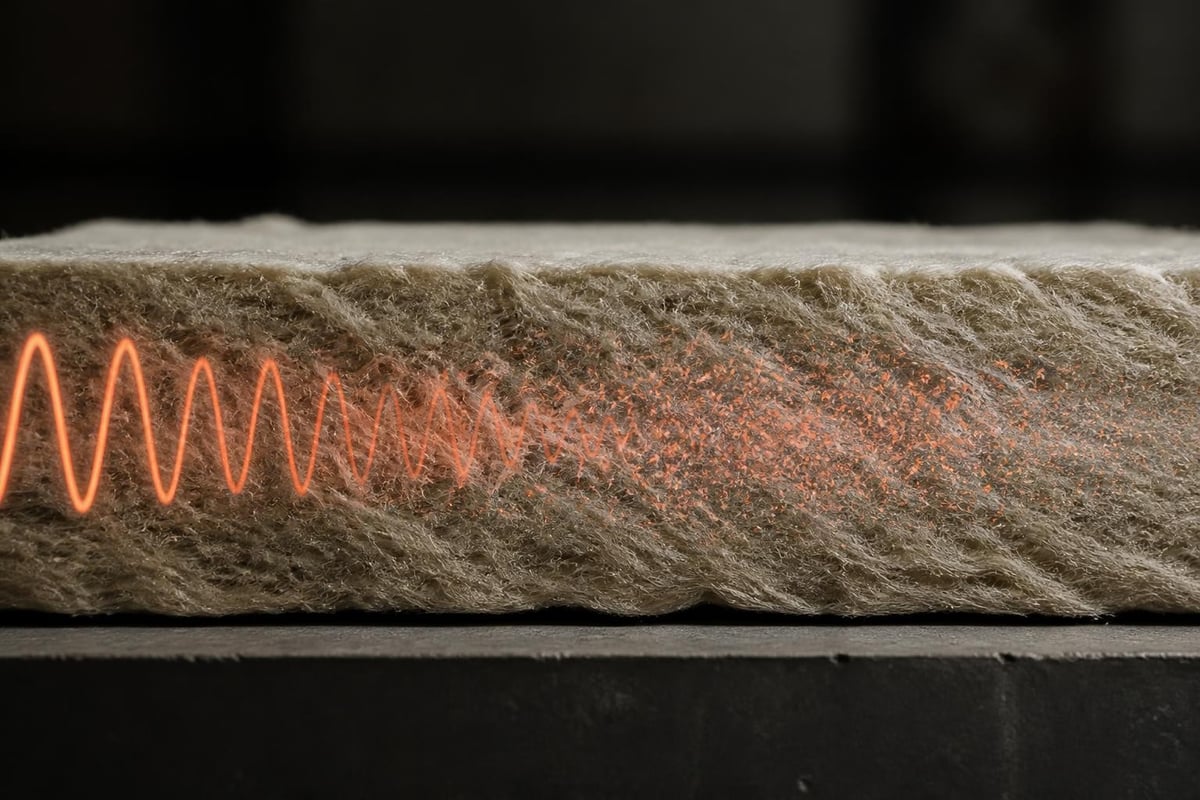
Sound travels through the air as vibrations, and when these vibrations hit solid surfaces like walls or ceilings, they can either reflect, absorb, or transmit through to the other side. Acoustic batts work primarily through sound absorption, using their dense, fibrous structure to trap sound waves and convert sound energy into minimal heat energy through friction.
The effectiveness of acoustic batts depends on several key factors:
Material density: Higher density batts contain more fibres per cubic metre, providing more material for sound waves to interact with
Thickness: Thicker batts offer longer pathways for sound to travel through, increasing absorption
Fibre structure: The arrangement and composition of fibres determine how effectively sound energy is converted
Installation quality: Gaps, compression, or poor fitting significantly reduce acoustic performance
When sound waves enter the acoustic batt material, they cause the individual fibres to vibrate. These vibrations create friction between the fibres and the air trapped within the batt structure. This friction converts the sound energy into tiny amounts of heat that dissipate harmlessly, preventing the sound from continuing through to the other side of the wall or ceiling.
The Science Behind Sound Reduction
Traditional fibrous insulation materials such as glasswool and polyester acoustic batts remain among the most effective solutions for residential noise control. When correctly installed within wall, ceiling, or floor systems, acoustic insulation can significantly reduce airborne sound transfer between rooms and adjoining properties. For most Australian homes, glasswool and polyester acoustic batts offer proven acoustic performance, energy efficiency, and value for money. More information on improving acoustic comfort in Australian homes can be found through YourHome's guide to insulation and sound control
The sound reduction performance of acoustic batts is typically measured in two ways:
Measurement |
What It Measures |
Typical Range |
|---|---|---|
STC Rating |
Airborne sound transmission across a complete wall assembly |
40-60+ |
NRC Rating |
Sound absorption within a space (0.0 to 1.0, higher is better) |
0.7-0.95 |
Rw Rating |
Weighted sound reduction index (similar to STC, used in Australia) |
45-55+ |
Understanding these ratings helps you select the right product for your specific noise control needs.
Types of Acoustic Insulation Available
Not all acoustic batts are created equal. The Australian market offers several distinct types, each suited to different applications and noise control requirements.
Glasswool Acoustic Batts
Glasswool sound insulation are the most common type found in Australian homes. Made from recycled glass and sand, they're manufactured into fine fibres and formed into batts. Modern glasswool products use ECOSE® Technology, which eliminates formaldehyde and uses bio-based binders, making them softer to touch and lower in dust.
Key characteristics include:
Excellent sound absorption across mid to high frequencies
Non-combustible and won't contribute to fire spread
Moisture resistant and won't promote mould growth
Cost-effective for most residential applications
Available in various densities from 11kg/m³ to 27kg/m³
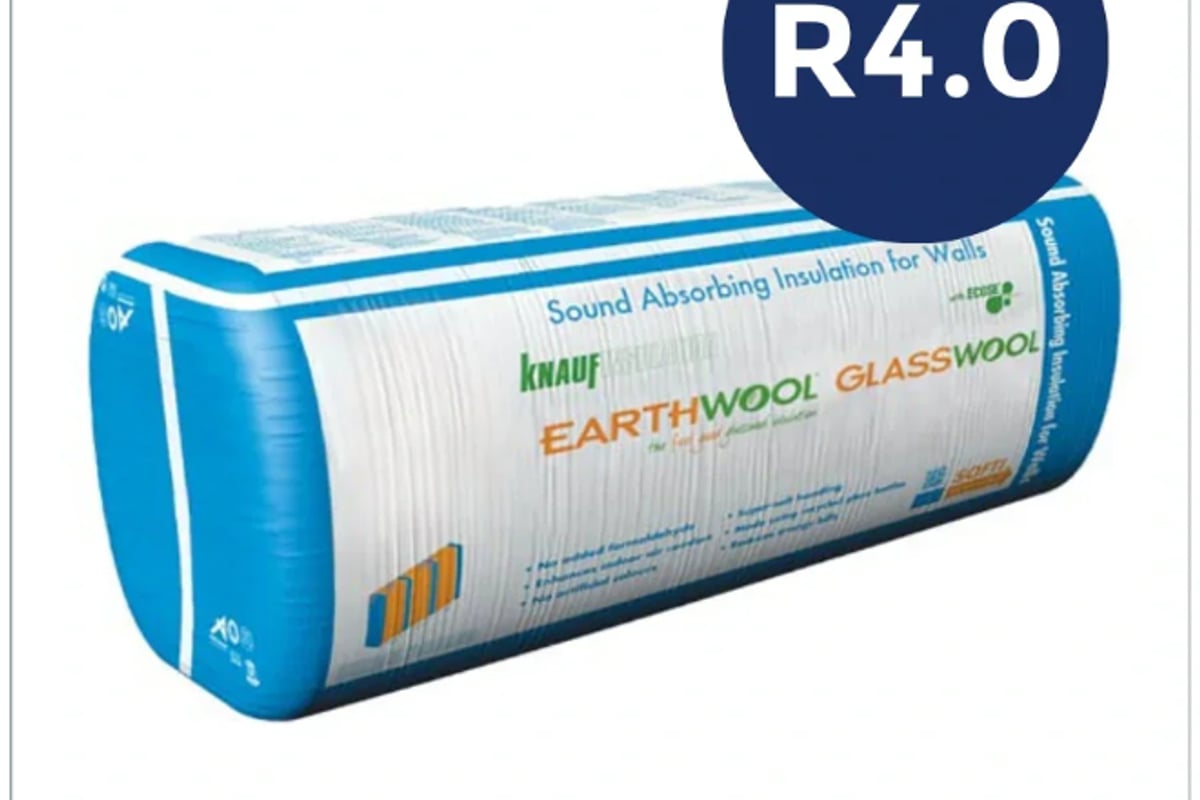
Higher density glasswool acoustic batts, typically rated at 22kg/m³ or above, deliver superior acoustic performance. These products excel in party walls, home theatres, and bedrooms where noise reduction is a priority. The Earthwool Sound Shield R4.0 by Knauf represents a premium option in this category, combining high-density construction with advanced manufacturing technology for outstanding noise reduction and thermal efficiency in demanding residential and commercial applications.
Polyester Acoustic Batts
Polyester acoustic batts are made from recycled PET plastic bottles, making them an environmentally friendly choice. They're completely non-irritating to skin, contain no breathing fibres, and are safe to handle without protective equipment.
Advantages: Non-allergenic, easy handling, excellent for DIY installation, Class 1 fire rating
Best uses: Internal walls, ceilings in living areas, children's rooms
Density range: Typically 30-60kg/m³ for acoustic grades
Considerations: Generally more expensive than equivalent glasswool products
Rockwool Acoustic Batts
Rockwool batts are manufactured from volcanic rock and recycled slag, spun into fibres at high temperatures. They offer exceptional fire resistance and acoustic performance.
Performance characteristics:
Superior fire resistance (non-combustible up to 1000°C)
Excellent high-frequency sound absorption
Water repellent properties
Higher density options for maximum sound blocking
Ideal for commercial and high-performance residential applications
The choice between these types often comes down to specific project requirements, budget, and personal preferences regarding handling and installation.
Choosing the Right Acoustic Batts for Your Project
Selecting the right sound insulation requires understanding your specific noise control needs and matching them to product specifications. Simply choosing the thickest or densest option isn't always the best approach.
Assessing Your Noise Control Requirements
Start by identifying the type of noise you're trying to control:
Airborne noise includes voices, television, music, and traffic. This sound travels through the air and requires dense, thick batts installed in wall cavities or ceiling spaces.
Impact noise includes footsteps, dropped objects, and vibrations. While acoustic batts help, impact noise often requires additional solutions like floating floors or resilient channels.
Flanking noise travels around insulation through structural elements. Even the best acoustic batts won't fully eliminate flanking noise without proper sealing and construction techniques.
Noise Source |
Recommended Density |
Minimum Thickness |
Installation Priority |
|---|---|---|---|
Neighbouring conversations |
18-22kg/m³ |
90mm |
Party walls |
Home theatre |
22-27kg/m³ |
140mm |
All surrounding walls + ceiling |
Street traffic |
18kg/m³ |
90mm |
External walls |
Between bedrooms |
11-18kg/m³ |
75-90mm |
Internal walls |
Understanding R-Values in Acoustic Applications
While R-value primarily indicates thermal resistance, it can provide useful information for acoustic products too. Higher R-values in acoustic batts generally correlate with greater thickness and mass, both beneficial for sound control.
However, don't rely solely on R-value for acoustic selection. A high R-value thermal batt at lower density won't perform as well acoustically as a purpose-designed acoustic batt with higher density but potentially lower R-value.
Wall Cavity Considerations
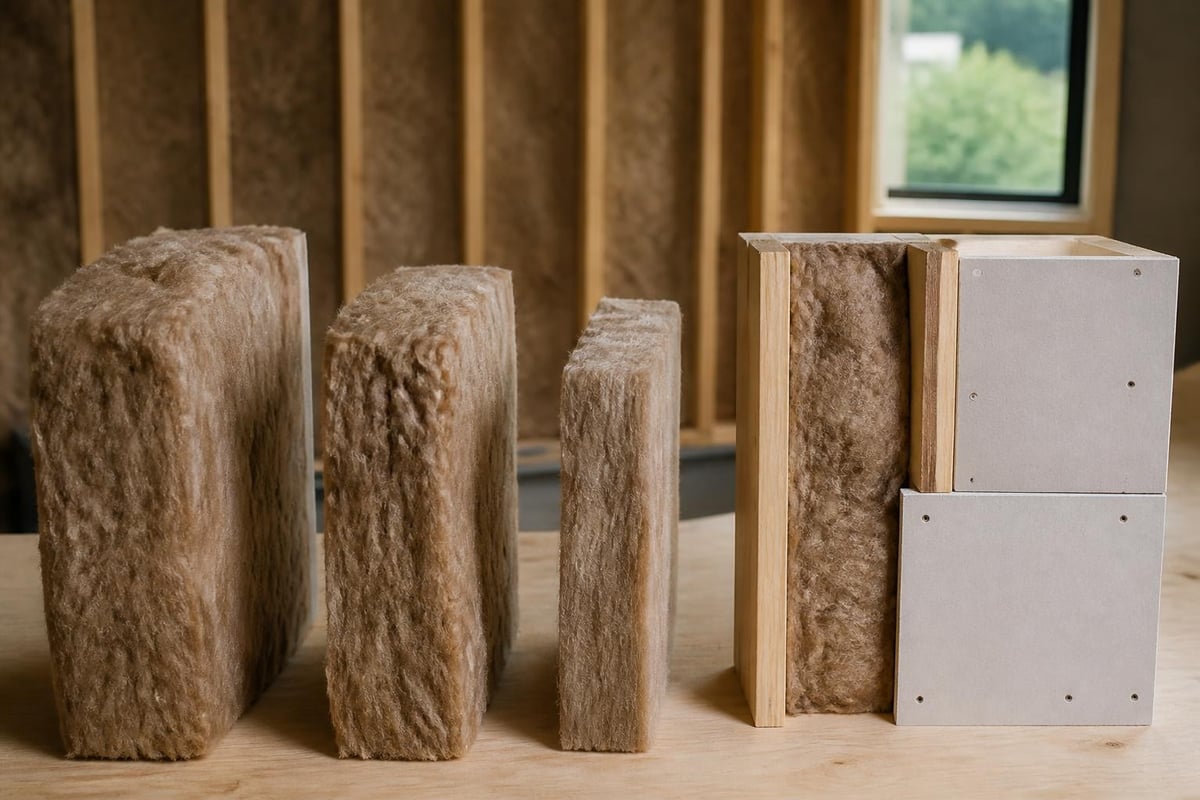
The wall cavity depth determines which acoustic batts you can install. Standard Australian timber frame walls (90mm studs) and steel frame walls (75mm studs) limit your thickness options.
90mm timber frame: 75mm or 90mm batts (90mm batts friction-fit)
75mm steel frame: 75mm batts (avoid compression)
140mm timber frame: 140mm batts for maximum performance
Cavity masonry walls: Specific cavity batts designed for these applications
Never compress insulation products to fit them into shallower cavities. Compression reduces the air space between fibres, significantly degrading acoustic performance. If your cavity is 75mm deep, use 75mm batts, not compressed 90mm batts.
Installation Best Practices for Maximum Performance
Even premium acoustic insulation products will underperform if poorly installed. Proper installation techniques are crucial for achieving the noise reduction you're expecting.
Preparation and Safety
Before starting installation, ensure you have the appropriate personal protective equipment. While modern ECOSE® glasswool products are much softer and less dusty than older fibreglass, basic protection remains sensible:
Long-sleeved shirt and long trousers
Dust mask (particularly in confined roof spaces)
Safety glasses
Work gloves (optional with modern glasswool, recommended for extended handling)
Clear the work area and have all materials ready. Insulation products perform best when installed continuously without gaps or compression, so calculate coverage carefully to avoid gaps.
Cutting and Fitting Techniques
For wall cavities, measure the distance between studs accurately. Most Australian studs are spaced at 450mm or 600mm centres, and acoustic batts are manufactured to suit these spacings.
Cutting steps:
Measure the exact height from bottom plate to top plate
Mark the cutting line on the batt using a straight edge
Use a sharp insulation knife or handsaw for clean cuts
Cut slightly oversize (5-10mm) for friction fit
Avoid multiple small pieces where one larger piece would work
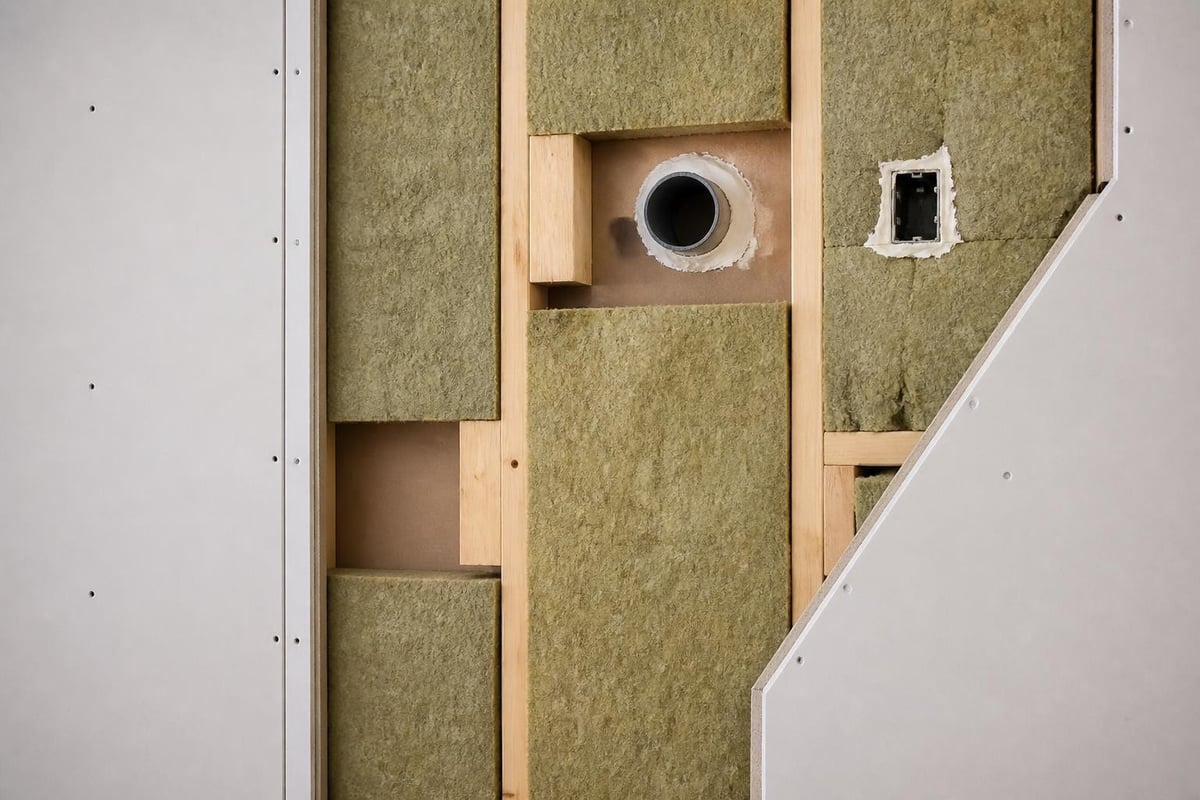
When fitting acoustic batts into wall cavities, they should friction-fit snugly without compression. The batts should fill the entire cavity depth and extend from the bottom plate to the top plate without gaps. Pay special attention around electrical outlets, switches, and service penetrations, cutting carefully to fit around these obstacles.
Addressing Common Installation Challenges
Electrical cables and pipes: Where services run through wall cavities, split the batt around them rather than compressing it. Acoustic batts can safely touch electrical cables in wall cavities (they're non-conductive), but avoid covering junction boxes.
Windows and doors: Cut batts to fit above and below windows and around door frames. These areas are crucial for preventing sound flanking paths.
Wall intersections: At corners where walls meet, ensure batts are pushed firmly into the corner intersection. Gaps here create acoustic weak points.
Ceiling installations: When installing acoustic batts in ceilings, support them with wire or battens to prevent sagging. Sagging batts create air gaps that allow sound transmission. For more comprehensive guidance on ceiling applications, review strategies for ceiling insulation in Melbourne that can be adapted for acoustic purposes.
While research into innovative acoustic materials is ongoing, Australian building acoustics guidance consistently highlights that the performance of fibrous insulation depends heavily on correct installation. Factors such as insulation density, cavity depth and complete coverage all contribute significantly to reducing airborne noise transmission through walls, floors and ceilings.
Combining Acoustic Batts with Other Soundproofing Strategies
While sound insulation products form the foundation of most soundproofing projects, combining them with complementary strategies delivers the best results.
Wall Construction Techniques
The wall assembly itself significantly impacts acoustic performance. A standard single-layer plasterboard wall with acoustic batts might achieve an Rw rating of 45-48. Enhanced construction techniques can improve this substantially:
Wall Construction |
Typical Rw Rating |
Cost Factor |
|---|---|---|
Single plasterboard + acoustic batts |
45-48 |
1.0x |
Double plasterboard + acoustic batts |
50-53 |
1.4x |
Staggered stud + acoustic batts |
52-55 |
1.6x |
Double wall + acoustic batts |
55-60+ |
2.2x |
Staggered stud walls use alternating studs for each plasterboard layer, reducing direct structural connection between the two sides. This breaks the sound transmission path while maintaining structural integrity.
Double plasterboard layers add mass to the wall assembly, which helps block lower frequency sounds that acoustic batts alone struggle with. Install layers with staggered joints for best performance.
Sealing Air Gaps
Sound travels readily through air gaps, making sealing as important as the acoustic batts themselves. Common air gap locations include:
Top and bottom plate junctions
Electrical outlet and switch boxes
Door and window frames
Service penetrations (pipes, cables, ducts)
Skirting board junctions
Use acoustic sealant rather than standard gap filler for these applications. Acoustic sealant remains flexible, preventing sound transmission through cracks that develop as buildings settle.
Door and Window Upgrades
Doors and windows often represent the weakest acoustic points in otherwise well-insulated walls. For comprehensive noise control:
Solid core doors instead of hollow core doors (15-20 Rw improvement)
Door seals around all edges, including a drop seal at the bottom
Double-glazed windows with different glass thicknesses in each pane
Window reveals filled with acoustic batts before architrave installation
Understanding how to properly approach wall insulation in Melbourne provides valuable context for these integrated soundproofing approaches.
Acoustic Performance in Different Applications
The effectiveness of acoustic batts varies depending on where and how you use them. Understanding application-specific considerations helps optimise your soundproofing investment.
Internal Walls Between Rooms
Standard internal walls between bedrooms, living areas, and bathrooms benefit significantly from acoustic batts. These applications typically don't require the highest-density products, making them cost-effective projects.
For bedroom-to-bedroom walls, 90mm acoustic batts at 11-18kg/m³ density combined with standard plasterboard provide comfortable noise reduction for typical household activities. This level of insulation won't create complete sound isolation, but it significantly reduces the intrusion of conversations, television, and general movement.
Budget-conscious approach: Standard acoustic batts + single plasterboard + acoustic sealant (Rw 45-47)
Enhanced approach: High-density acoustic batts + double plasterboard + acoustic sealant (Rw 50-52)
Party Walls in Townhouses and Duplexes
Party walls separating different dwellings require more robust acoustic treatment. Building codes mandate minimum performance levels, but exceeding these minimums creates better living conditions and potentially higher property values.
The minimum requirement for Class 1 buildings (houses and townhouses) is typically Rw 45, but Rw 50 or higher provides noticeably better noise isolation. According to the Australian Government's Your Home guidance, higher levels of sound insulation are achieved through a combination of wall mass, multiple plasterboard layers, quality acoustic insulation, and effective construction detailing rather than relying solely on insulation density.
For party wall applications:
Install high-density acoustic batts (22kg/m³ or higher) throughout the cavity
Use double plasterboard layers on both sides
Consider staggered stud construction if building new
Seal all penetrations and junctions meticulously
Ensure electrical boxes on opposite sides are offset, not back-to-back
Home Theatres and Music Rooms
Purpose-built entertainment spaces demand maximum acoustic performance. These rooms benefit from comprehensive treatment including acoustic batts in walls and ceilings, plus additional sound control measures.
Beyond standard acoustic batts, consider:
Ceiling treatment: Install acoustic batts above the ceiling with resilient channels to decouple plasterboard from joists
Wall treatment: 140mm acoustic batts at maximum density ratings (22-27kg/m³)
Floor treatment: Acoustic underlay beneath flooring to reduce impact transmission
Bass traps: Additional corner treatment for low-frequency sound control
The goal isn't just to prevent sound escaping to other rooms, but also to improve the acoustic quality within the space itself. This dual purpose makes acoustic batts essential in these applications.
Apartment and Multi-Storey Applications
Floor-ceiling assemblies in apartments require both impact and airborne sound control. While acoustic batts excel at airborne sound, they need support from other elements for impact noise.
Effective apartment floor assemblies typically combine:
Acoustic batts between floor joists (filling the cavity completely)
Resilient channels or rubber mounts for ceiling attachment
Mass-loaded vinyl or acoustic mat on the floor above
Proper sealing of all service penetrations
Many older apartment buildings lack adequate acoustic treatment between levels. Retrofit solutions often focus on improving the ceiling below rather than the floor above, where acoustic batts installed between joists provide significant improvement.
Comparing Acoustic Batts to Other Soundproofing Materials
Sound insulation is one category within the broader range of soundproofing materials available for residential and commercial projects. Understanding how they compare to alternatives helps you make informed decisions for your project.
Acoustic Batts vs. Acoustic Foam
Acoustic foam panels, often seen on studio walls, serve a fundamentally different purpose from acoustic batts. This distinction confuses many homeowners researching soundproofing options. For a detailed comparison, see our guide on acoustic insulation foam.
Acoustic foam:
Improves sound quality within a room (reduces echo and reverberation)
Poor at preventing sound transmission through walls
Applied to existing wall surfaces
Generally used in recording studios and dedicated listening spaces
Acoustic batts:
Prevent sound transmission between spaces
Installed within wall, ceiling, or floor cavities
Minimal impact on sound quality within the room itself
Used in residential, commercial, and industrial applications
For sound isolation between rooms, acoustic batts are the appropriate choice. For improving the acoustic quality within a single room, acoustic foam panels or similar surface treatments are more suitable.
Acoustic Batts vs. Mass Loaded Vinyl
Mass loaded vinyl (MLV) is a heavy, flexible sheet material designed to block sound transmission through mass rather than absorption. It's often used in combination with acoustic batts for maximum performance.
Feature |
Acoustic Batts |
Mass Loaded Vinyl |
|---|---|---|
Primary function |
Sound absorption |
Sound blocking (mass barrier) |
Installation |
Within cavities |
Against studs or between plasterboard layers |
Weight |
Light (11-27kg/m³) |
Heavy (5-10kg/m²) |
Best frequencies |
Mid to high |
Low to mid |
Cost per m² |
Low to moderate |
Moderate to high |
For Australian homes, the most effective soundproofing usually comes from a complete wall or ceiling system rather than one product alone. Acoustic batts help absorb sound energy inside the cavity, while added mass from plasterboard layers or acoustic barriers can help reduce sound transfer. Australian Government guidance also notes that high-mass materials and careful construction detailing are important for reducing airborne noise transmission.
Acoustic Batts vs. Spray Foam Insulation
Spray foam insulation primarily serves thermal purposes, though it does provide some acoustic benefit through air sealing. However, its acoustic performance doesn't match purpose-designed acoustic batts.
Spray foam's acoustic limitations:
Lower density per dollar compared to acoustic batts
Hard when cured, so less effective at absorbing sound vibrations
Difficult to achieve optimal density for acoustic performance
Significantly more expensive than acoustic batts for equivalent coverage
When both thermal and acoustic performance are priorities, combining standard spray foam with acoustic batts in critical areas often delivers better value than spray foam alone.
Cost Considerations and Return on Investment
Quality acoustic insulation represents a relatively modest investment for the comfort improvement it provides, but understanding the full cost picture helps with project planning.
Direct Product Costs
Acoustic batt prices vary based on density, thickness, and brand. As a general guide for 2026 Australian prices:
Standard density (11-14kg/m³): $8-12 per m²
Medium density (18-20kg/m³): $12-16 per m²
High density (22-27kg/m³): $16-24 per m²
These prices reflect product only and don't include associated materials like plasterboard, studs, or installation labour if you're hiring professionals.
For a typical bedroom measuring 3.5m x 3.5m with 2.4m ceiling height, you'd need approximately 26m² of wall insulation. Using medium-density acoustic batts at $14/m², the material cost would be around $364 for that single room.
Installation Costs
Professional installation costs vary significantly based on project complexity, accessibility, and location. Melbourne and Sydney typically command higher rates than regional areas.
DIY installation is straightforward for acoustic batts in accessible wall and ceiling cavities. Homeowners with basic tools and safety equipment can complete most installations competently, saving significant labour costs.
Professional installation becomes worthwhile for:
Large-scale projects (multiple rooms or whole-house installations)
Difficult access areas (high ceilings, tight roof spaces)
Projects requiring building permits and inspections
Situations where wall linings need removal and replacement
Professional installation might cost $15-30 per m² including labour, depending on project complexity. This typically includes the batts themselves, but confirm what's included in quotes.
Property Value Impact
Quality acoustic treatment adds tangible value to properties, particularly in higher-density living situations like townhouses, apartments, and homes on smaller blocks where noise from neighbours is more prevalent.
Real estate agents consistently report that homes with superior acoustic comfort:
Sell faster when listed
Achieve higher prices relative to comparable properties
Generate fewer buyer objections during inspections
Appeal to quality-focused buyers willing to pay premium prices
While difficult to quantify precisely, the investment in quality sound insulation typically returns 150-200% of its cost in added property value, in addition to the quality-of-life improvements during ownership.
Regulations and Building Code Requirements
Australian building regulations include specific acoustic performance requirements for certain applications. Understanding these requirements ensures compliance and helps you specify appropriate products.
National Construction Code Provisions
The National Construction Code (NCC) includes deemed-to-satisfy provisions for sound insulation in Class 1 (houses and townhouses) and Class 2 and 3 buildings (apartments and hotels).
For Class 1 buildings with a separating wall between dwellings (townhouses, duplexes):
Minimum Rw + Ctr rating of 45 for airborne sound
Ln,w + Ci rating of 62 or less for impact sound (floors)
For Class 2 and 3 buildings:
Rw + Ctr of 45 minimum for walls separating dwellings
Rw + Ctr of 45 minimum for floors separating dwellings (airborne)
Ln,w + Ci of 62 maximum for floors (impact sound)
Meeting these minimum requirements typically involves combining acoustic insulation with an appropriately designed wall, floor, or ceiling system. Factors such as insulation density, framing method, plasterboard layers, and acoustic sealing all contribute to the overall sound performance of the assembly. In many cases, a standard single-layer plasterboard wall with basic insulation may not be sufficient to achieve the required acoustic ratings for separating walls between dwellings. For current acoustic performance requirements, refer to the Australian Building Codes Board (ABCB) and the National Construction Code (NCC), which outline the minimum sound insulation standards for residential construction.
Victorian-Specific Requirements
Victoria follows the NCC provisions but adds state-specific guidance through the Victorian Building Authority. Projects in Victoria should reference current VBA publications for specific compliance pathways.
Local councils may also impose additional acoustic requirements beyond the NCC minimums, particularly in developments near high-noise areas (airports, rail lines, busy roads) or in high-density residential zones.
Documentation and Compliance
For projects requiring building permits (such as adding new party walls or significant renovations), you'll likely need:
Acoustic report: Prepared by an acoustic consultant showing predicted performance
Product specifications: Demonstrating chosen acoustic batts meet performance requirements
Installation details: Showing how batts integrate with wall/ceiling assembly
Testing provisions: For some projects, post-construction acoustic testing may be required
Working with experienced builders and acoustic consultants familiar with local requirements streamlines the compliance process and prevents costly rectification work.
Maintenance and Longevity
One of the major advantages of quality acoustic insulation is their minimal maintenance requirements and exceptional longevity. Understanding their long-term performance helps appreciate their value proposition.
Expected Lifespan
Quality acoustic insulation products from reputable manufacturers like Knauf maintain their acoustic performance for the building's lifetime. The materials don't degrade, compress, or lose effectiveness over time when properly installed.
Expected performance life:
Glasswool: 50+ years
Polyester: 50+ years
Rockwool: 100+ years
This longevity means acoustic batts installed today will still be performing when the building requires major renovation or even demolition decades from now.
Factors That Don't Affect Performance
Unlike some building materials, acoustic batts are remarkably resilient:
Temperature fluctuations: No impact on acoustic performance
Humidity changes: Modern acoustic batts won't hold moisture or promote mould
Settling: Properly installed batts won't compress or sag over time
Pests: Vermin don't nest in or damage glasswool or rockwool batts
Situations Requiring Attention
While acoustic batts themselves need no maintenance, certain situations might require inspection:
Water damage: If significant water enters wall cavities (from leaks, flooding, or major plumbing failures), batts should be inspected. Modern glasswool and rockwool batts won't hold water and will dry naturally, but polyester batts might retain moisture longer.
Renovation work: When walls are opened for electrical work, plumbing modifications, or other trades access, ensure batts are properly replaced in their original positions without gaps or compression.
Pest investigations: If pest control work requires wall cavity access, ensure batts are refitted correctly afterwards.
For homeowners exploring broader insulation strategies across different applications, Insulation Supplies Australia's blog offers comprehensive guidance on various insulation types and uses.
Environmental Considerations and Sustainability
Modern acoustic batts align well with sustainable building practices, particularly products manufactured with advanced technologies that reduce environmental impact.
Manufacturing Process Improvements
Contemporary acoustic batt manufacturing has evolved significantly from older fibreglass production methods:
Recycled content: Many glasswool products contain a high proportion of recycled glass.
Bio-based binders: ECOSE® Technology uses rapidly renewable plant-based materials instead of petroleum-based binders
Reduced emissions: Modern manufacturing processes significantly reduce VOC emissions
Lower embodied energy: Improved production efficiency reduces the energy required per square metre
These improvements make acoustic batts among the more environmentally responsible building material choices available.
End-of-Life Considerations
While acoustic batts typically remain in buildings for their entire lifespan, they can be recycled if removed during demolition or renovation:
Glasswool batts: Can be returned to glass recycling processes or ground for reuse in new batt production
Polyester batts: Already made from recycled PET bottles, they can be recycled again through PET recycling streams
Rockwool batts: Can be crushed and used in landscaping applications, road base, or reprocessed into new rockwool
Health and Safety Profile
Modern acoustic batts meet stringent health and safety standards:
No asbestos (never contained asbestos)
No formaldehyde in ECOSE® products
Non-combustible (won't contribute to fire spread)
No toxic fumes if exposed to fire
Safe for installation without specialised equipment
The health and safety improvements in products manufactured over the past decade represent significant advances over older insulation materials, making acoustic batts a sound choice for health-conscious homeowners.
Quality acoustic insulation delivers proven, cost-effective noise reduction that improves daily comfort and adds lasting value to your property. Whether you're managing noise between bedrooms, creating a peaceful home theatre, or meeting building code requirements in a new townhouse, selecting the right acoustic insulation solution and installing it correctly can significantly improve comfort and acoustic performance. Insulation Supplies Australia offers a comprehensive range of acoustic batts suitable for every application, backed by expert advice to help you choose the perfect solution for your noise control needs. With competitive pricing, fast delivery across Victoria, and straightforward online ordering, getting professional-grade soundproofing has never been simpler.